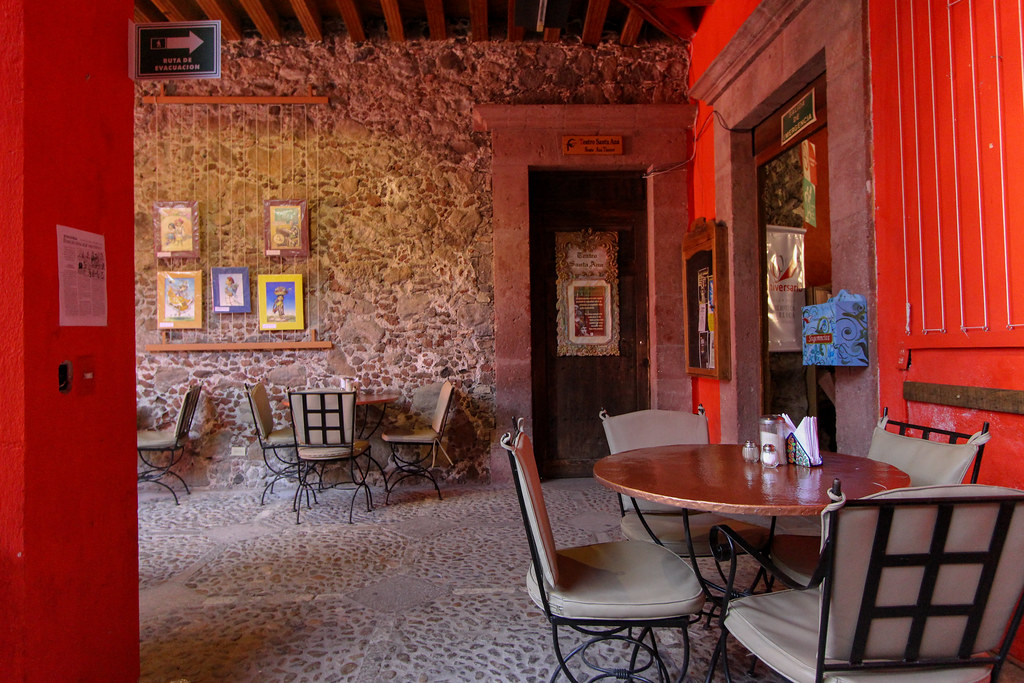
photo: Kent Owings
Español
December 21, 2025
Read chapter one
Read chapter two
by Allen Zeesman
When I drove to San Miguel that morning, I didn't understand what had happened to me by the side of the road. Nor did I try to understand it. I just took the feeling and placed it somewhere deep inside, like a stone falling to the bottom of a river. I had practical things to do: find the house keys, see the landlord, buy food, open the windows to let out the stale air. Life resumed its familiar form. On the surface, nothing had changed.
San Miguel was still what it had been four years before: a town suspended between Mexico and the world, a blend of colonial beauty and North American comfort. English in the cafes. English in the shops. English floating between the cobblestones, like a soft net that caught any foreigner who didn't want to fall completely. I slipped back effortlessly. A man can live comfortably for a long time in a place that never confronts him. And yet, something inside me had shifted. San Miguel wasn't my destination. It was my threshold. I didn't tell anyone. I didn't even know how to explain it. San Miguel held me calmly, but not completely. It touched me gently, without demanding anything of me. It was a beautiful room in a house that wasn't mine.
The expat world is a soft cocoon: it offers community without complexity, friendliness without intimacy, culture without immersion. For a long time, it was enough. It suited the version of me I never expected to belong to. But after the sign on the highway, that version no longer fit. I sat in cafes listening to English swirl around me and felt a subtle discomfort, as if the sound were separating me from something I needed to touch. The conversations were familiar, predictable, safe… but I no longer felt they were mine.
I began to listen more closely to Spanish: its cadence, its warmth, the playful lightness of certain phrases. I didn't understand everything, but there was something there that pulled me in, like a plant turning toward the light. It wasn't ambition. It wasn't cultural curiosity. It was something simpler: I wanted to belong to the place where I lived. But belonging required more than just proximity. It required stepping outside the soft, invisible bubble that foreigners build in towns like this.
For a long time, I believed that belonging was something you earned through effort. That if you showed up, contributed, taught, helped—if you offered your best—then a place would sooner or later open its arms and claim you. So in San Miguel, I tried. Not half-heartedly. Not cautiously. I gave it my all.
I taught the Enneagram, something I had studied for years, refined, and used to help people understand themselves better. My classes were filled with seekers, artists, retirees, travelers: people trying to find meaning in that stage of their lives. I dedicated myself to those sessions. I prepared thoroughly. I listened deeply. I offered what I had. The work mattered. People thanked me, sometimes with tears. I felt grateful for the opportunity to serve.
I also volunteered at a food program, week after week, helping to provide food to those in need. I served in management. It grounded me; it reminded me that dignity lives in small acts, not grand speeches. That work connected me to lives far removed from the expat world. I felt useful there.
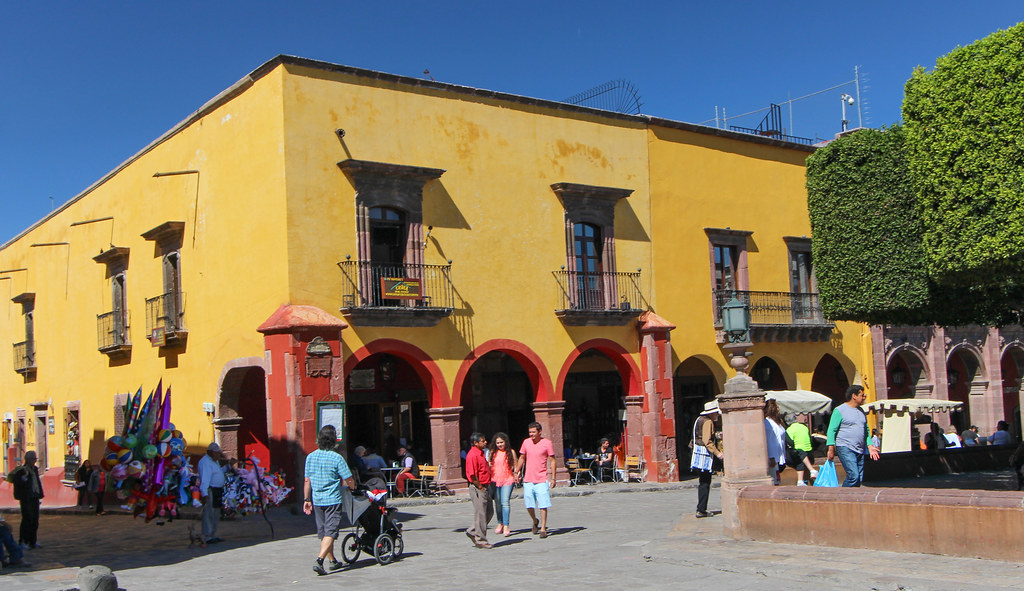
photo: Kent Owings
*
I joined the Unitarian Universalists, a community where questions were welcome and beliefs were personal. I participated, spoke, and helped wherever I could. I wasn't a spectator. I was involved, carrying some of the weight. I worked long hours. I was elected president. And all this despite the fact that their central organization in the United States is riddled with the new liberal antisemitism.
I also taught English to Mexican adults, a simple and straightforward job that connected me with people living far outside the expat world. It was an honest exchange: they learned from me, and I learned from them—their rhythm, their humor, the way they saw life without complicating it. Those classes, more than anything else, showed me that real Mexican life was just steps away, if I had the courage to step into it. And every conversation, every shared laugh, every small step forward in my learning made me feel that the world where I truly wanted to live wasn't in English-speaking cafes, but at those tables where life was discussed with sincerity.
And perhaps more than anything, my daughter needed me for her schoolwork. I spent day after day teaching her how to learn, how to think, how to research, how to write, and how to construct an argument. Now she's finishing her Master's in Public Policy at the University of British Columbia. As I write this, she's in Norway writing her thesis on Arctic conservation.
From the outside, anyone would have said I belonged. And in a sense, I did. But belonging has two halves: the effort you make and the land that welcomes you. San Miguel welcomed me politely, even warmly. But it didn't claim me.
I felt it in the quiet moments: after teaching, after distributing food, after talking on a Sunday morning. The gratitude was real. The people were kind. The work had meaning. But when the day ended and I walked alone along the cobblestone streets, I still felt like a visitor. I had done everything a person must do to be part of a place, and yet the place remained... beside me.
The breaking point wasn't dramatic. It was quiet, almost imperceptible: a slight shift in the air, a loosening, the feeling that the chapter was closing. I began to feel that my time in San Miguel had a purpose—to prepare me, to soften me, to open me up—but that that purpose was already being fulfilled. The expat world had taught me how to connect with Mexico. Service had taught me how to give. Teaching had taught me how to connect. Community had taught me how to introduce myself. All of it mattered. All of it was real. All of it was incomplete.
A new horizon was beginning to form, blurry, nameless. But I could feel it calling to me. I didn't know where it would lead me. I didn't know who it would lead me to. But I knew one thing: San Miguel allowed me to begin. Beatriz would allow me to arrive.
Continuation
**************
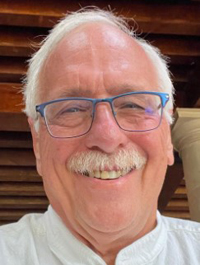
Allen Zeesman has been a regular visitor to Mexico since 1995. He worked for 30 years for the Canadian Federal Government before retiring in San Miguel in 2011. He played piano and bass in an Elvis impersonator band, which some say was the reason he left town. He now lives in Querétaro.
**************
*****
Please contribute to Lokkal,
SMA's online collective:
 ***
***
Discover Lokkal:
Scroll SMA's Community Wall below.
Mission

Visit SMA's Social Network
Contact / Contactar