 Español
August 2, 2026
by Charles Miller
By now I had rather expected that I might have received at least one comment to the effect that my writing has been a little rough around the edges for the last few weeks. The reason for that is that one of my much-appreciated proofreaders passed away unexpectedly, and so these recent columns have not had the benefit of Athea's review. For years I could depend on each of my weekly columns coming back to me with suggested clarifications, and always at least half a dozen added commas.
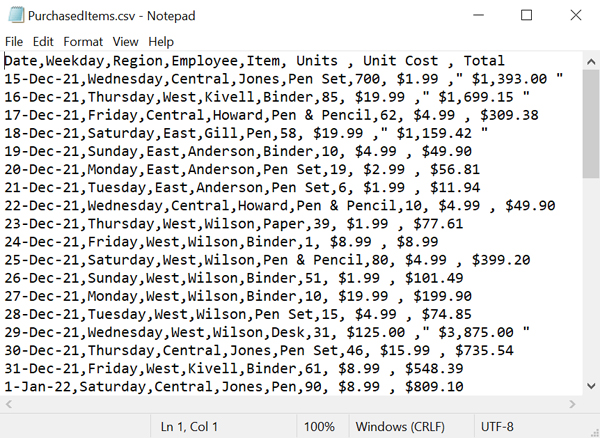
Athea thought that people should use a lot more commas than most of us do, and I have to admit I now use more than I did before I met Athea. Commas have their place in prose, and are in fact very important in computing as well. The most common of the simple database file formats is the CSV (Comma Separated Values) file, used by countless programs. CSV files are used for many purposes because the file is nothing more than simple text, and that makes it universally usable across different Operating Systems including MacOS, Windows, iOS, Android, Linux, etc. If you download records from your bank's website, or call logs from your smartphone, it is likely what you download is a CSV-format file.
The structure of a CSV is absolutely as simple as it gets (in the world of computing). Each line of data in the file is one record. The record takes the form of information delimited by commas. For example, a record would read like "name coma address comma phone comma" until the line is terminated with a carriage return. This simple file can be understood by spreadsheet programs, word processors, address books, calendars, and many more. A CSV file does not include any of the more complicated options such as formatting bold or italic, different fonts, colors, etc. though programs that can open a CSV file can add such attributes.
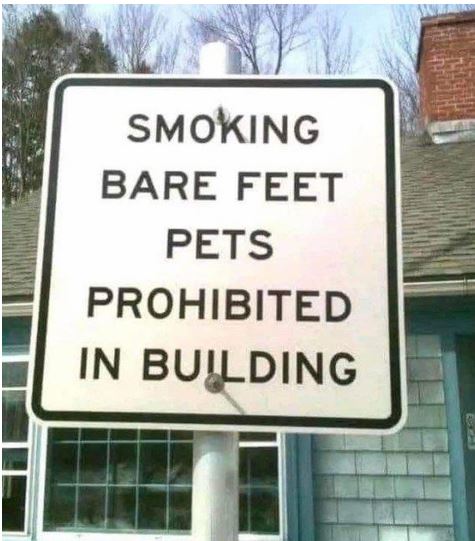
The use, or absence of use, of commas recently came up on one of the tech podcasts I follow when it showed a picture of a warning sign and asked the rhetorical question "Would some commas be asking too much?" The sign read "Smoking Bare Feet Pets Prohibited in Building." I can imagine that the creators of that sign would be glad to know that cigar-chomping bulldogs with muddy bare feet would be barred from entering their building, but the real intent of that sign would actually be clearer with the addition of two commas. In the 1970s the local multi-screen cinema near my hometown listed the names of three current feature films on its marquee. Blazed in all caps, the alarming message read "ALIEN MEATBALLS ESCAPE FROM ALCATRAZ." Fortunately, enough of the people driving by the theater recognized that as the names of three separate feature films, so another War-of-the-Worlds panic did not ensue.
Athea would have been quick to point out that marquee was yet another example of a place where two small commas could have helped ensure clarity.
**************

Charles Miller is a freelance computer consultant with decades of IT experience and a Texan with a lifetime love for Mexico. The opinions expressed are his own. He may be contacted at 415-101-8528 or email FAQ8 (at) SMAguru.com.
**************
*****
Please contribute to Lokkal,
SMA's online collective:
 ***
***
Discover Lokkal: Mission

Visit SMA's Social Network
Contact / Contactar