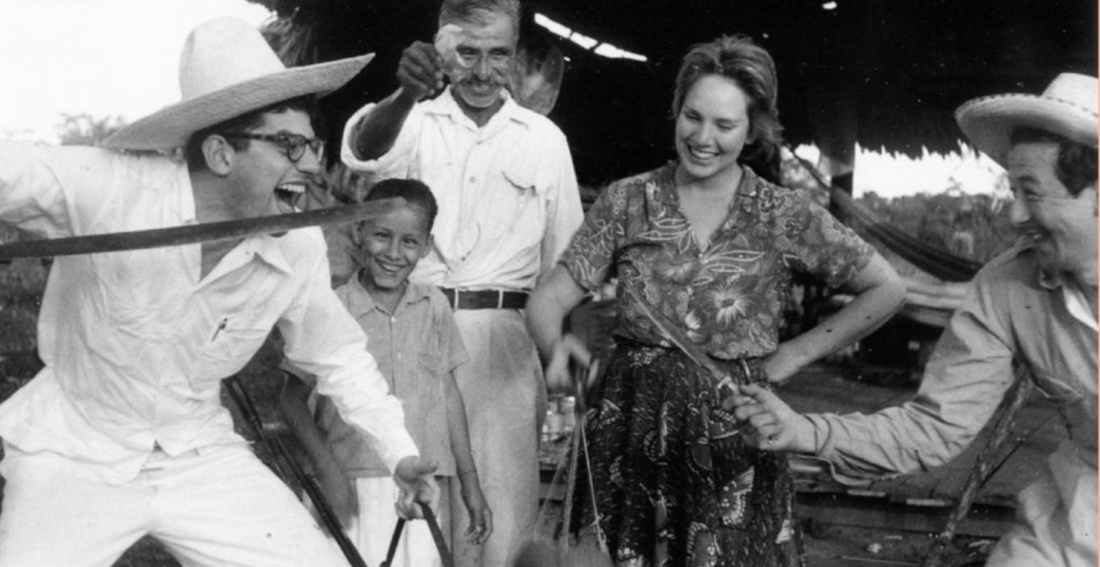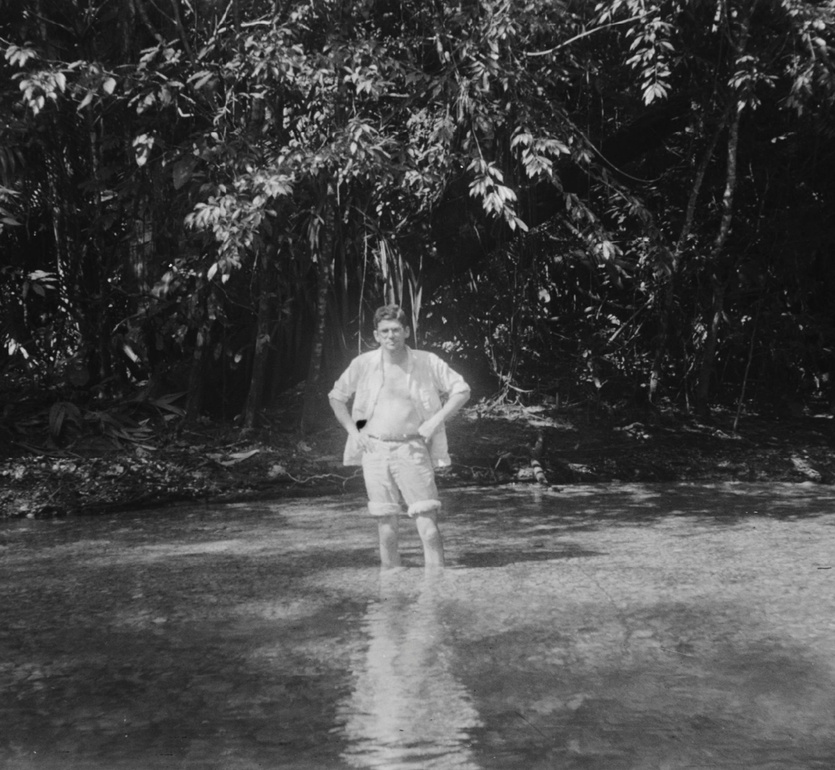
Ginsberg near Palenque, Chiapas, February 1954
Español
August 9, 2026
by Philip Gambone
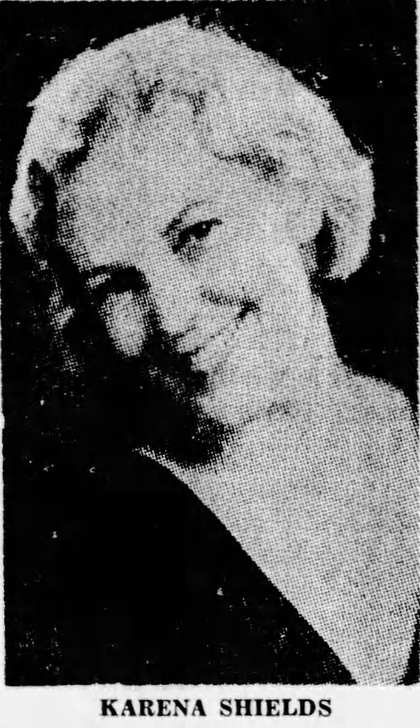
Toward the end of January 1954, during his second visit to Mexico, Allen Ginsberg met an American woman named Karena Shields, who invited the young poet to stay at her finca deep in the jungle near Palenque. The machete-toting Shields was "a strange case, some good and some nutty and some tiresome," as Ginsberg noted. Nevertheless, he liked her pioneering spirit and her sincere though "perhaps indefinite mystic hang-up."
During the time he stayed with her, Ginsberg helped Shields, whom he called "the white goddess," in her cocoa and banana groves, "cutting, pruning, gathering the bunches." For a while, he even considered buying a farm of his own and going into the cocoa business. Most of his time, he passed carefreely, riding horses and lounging in a hammock, which he called "a friendly womb for repose." His meals consisted of tortillas and frijoles. On hikes, he would walk naked "up a mile of rocky clear stream, bluey sky, with lianas and elephant ear trees and angel hair trees of plantain leaves and giant saibol (mahogany) trees filled with monkeys." At night, he would go out with the natives to catch crawfish.
In a letter to his friends Jack Kerouac and Neal and Carolyn Cassady, Ginsberg described how he idled away the time with his log drums. "I play several hours daily … and when a file of Indians rides in thru the trails from Agua Azul, Eden-like little town in hills an hour ride away, I break out in African reverberations which can be heard for miles around. Am known as Señor Jalisco." In his journal, he wrote: "To let the mind wander into its solitude & vacancy with the sheer idea of finding an ungraspable spirit."
One night, a meteor—"big as star of Bethlehem"—streaked across the sky illuminating half the horizon. Another time, an earthquake, one of many in the region that winter of 1954, rattled the nearby town of Yajalón. There were reports of severe damage, lava flows, and deaths. Further adventures ensued. A young boy arrived at Shields' plantation with bullet holes in his hand and arm (he had avenged the death of his father). Shields operated on him with a Gillette double-edged blade, which left Ginsberg, who was attending her, at the point of fainting.
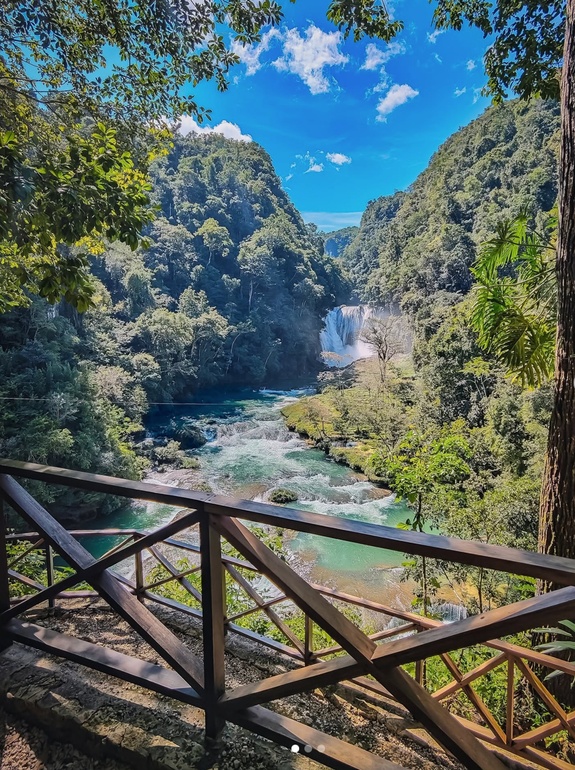
Salto de Agua
*
Ginsberg left Shields' place in late March and went on to Salto de Agua and then, with "100 pesos and no toothbrush and dirty clothes on my back," hitchhiked a biplane ride to Yajalón. He was intent of seeing firsthand what the earthquake had done. Once there, he told the mayor that he was a journalist and wanted to visit a mountain range sacred to the Mayan people, where a volcano had supposedly been awakened by the earthquake. The mayor provided a guide and off Ginsberg went. Halfway there, a passing Mexican offered him his mule ("true courtesy of local road") and followed behind the would-be reporter on foot.
The ascent included "Indians all beautiful and numberless boys and dogs … everybody scared," he wrote to his friends. The men made Ginsberg their leader. Despite his lack of experience with horses and mountain climbing, they deferred to him, the "mysterious white man with beard."
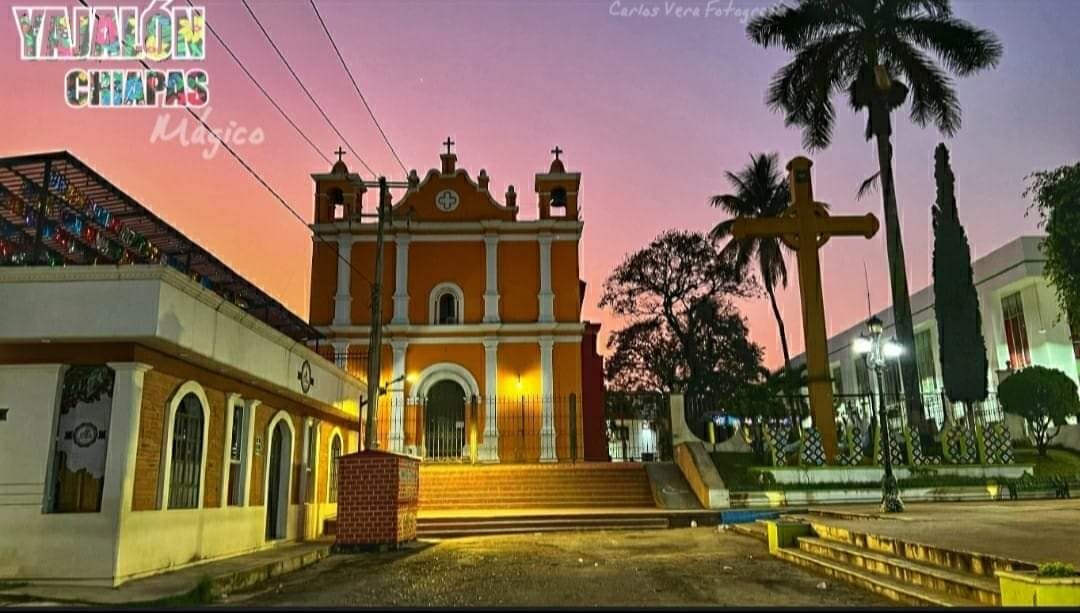
Yajalón
*
The point of the climb was to assess whether the earthquakes had rekindled a volcano at the top of the mountain, a suspicion which was terrifying the natives of the region. When Ginsberg's party found nothing, they mischievously set fire to a great cedar tree, a joke to scare the people below. Afterwards, they wrote up an official declaration that reported on the actual situation. The climb proved to be "a great trip into rarely seen parts more obscure than where I've been all along," Ginsberg noted.
The next day, Ginsberg and another group of men went to explore a legendary cave on the other side of the mountain: "An immense cavern," he wrote to his friend Lucien Carr, "great as a cathedral." He believed he was the first white man ever to see it. Returning to Yajalón, the young would-be poet, now with a reputation as an intrepid explorer, received a hero's welcome and was given a room in the mayor's house. "Everybody in town wants to talk with me and invites me for coffee."
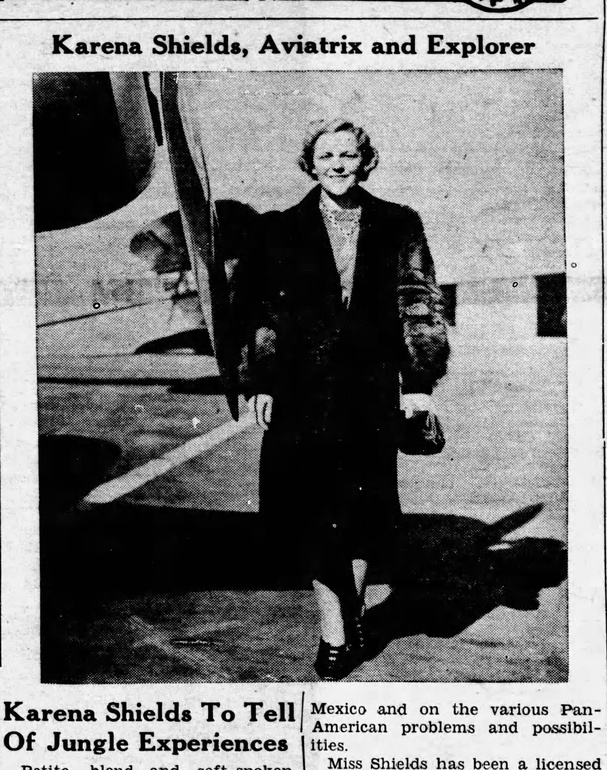
With ten pesos left and suspecting that his welcome in Yajalón was wearing thin, Ginsberg returned to Karena Shields' finca, where he waited for the arrival of some money from the States. Meanwhile, for the next six weeks, he worked for five to ten hours a day on a long poem about his visits to the Mayan ruins.
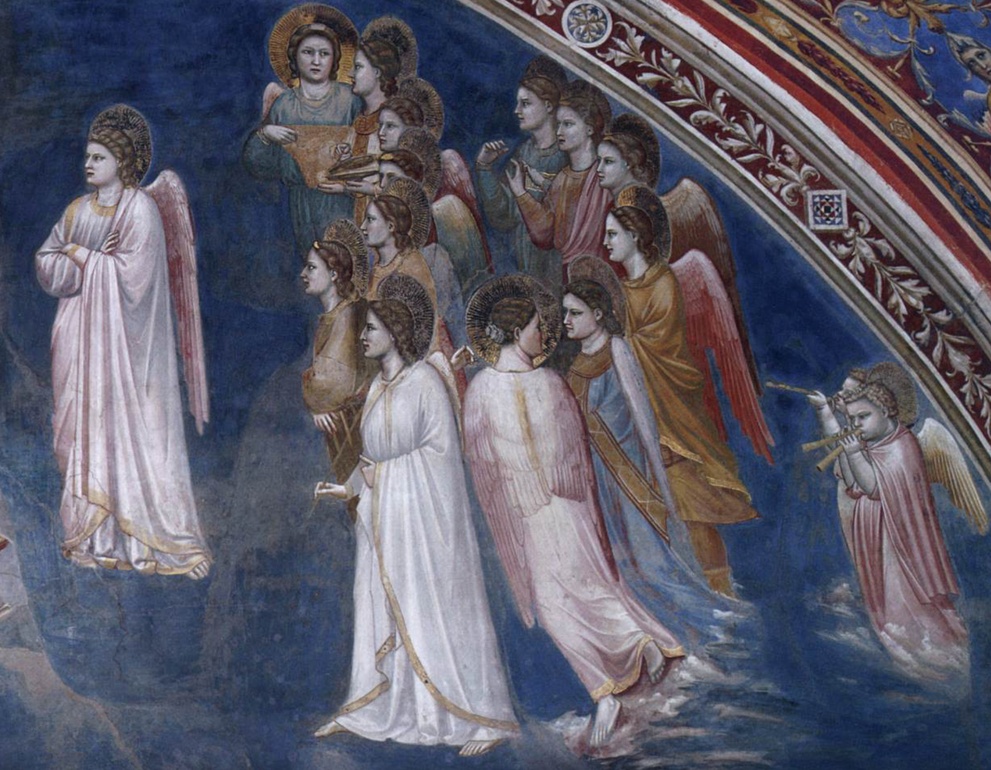
Giotto - female saints
*
When the money came and with another loan from Shields, he finally had the wherewithal to leave Mexico. On May 13, he took a train from Salto de Agua to Coatzcoalcos and then a bus to Veracruz, where, high on codeine, he experienced an image, "as in a Giotto painting … of a heavenly file of female saints ascending a starry gold stairway." The vision moved him to write out his theological credo: "The weight of the world is love."
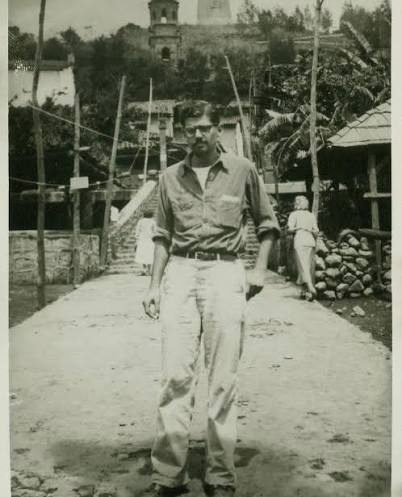
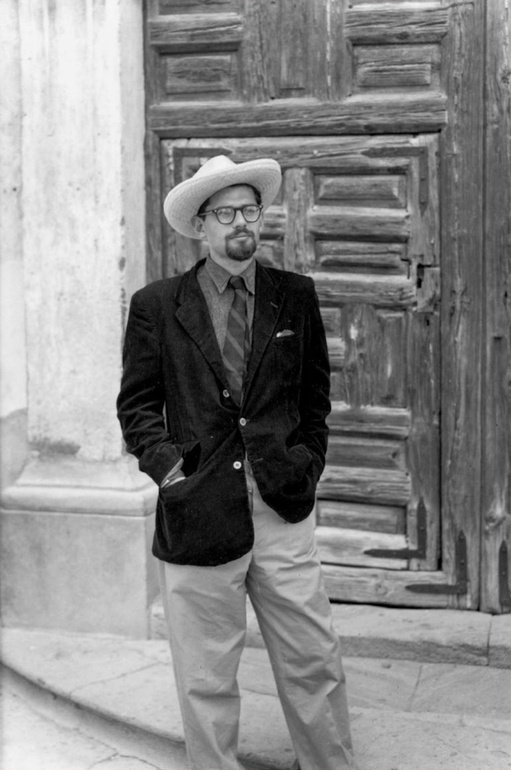
Ginsberg in Pátzcuaro, May 1954
*
From Veracruz, Ginsberg moved on to Mexico City. There, in a cheap hotel, he fought off bedbugs, loneliness, and ongoing worries about money. Travelling on, he stopped for three days in Pátzcuaro and, during the early part of June, spent three more days in San Miguel de Allende, where he visited the artist's colony. While in San Miguel, he continued working on his long poem, which included a voyeuristic incident that took place during his brief stay.: