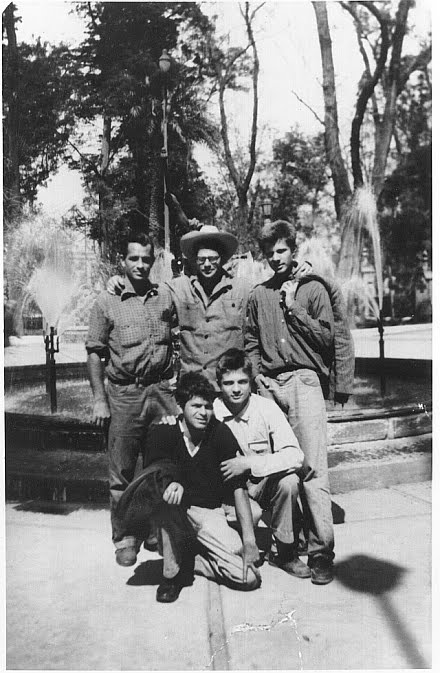
Ginsberg and Beat friends in Mexico City, 1956
Español
August 16, 2026
by Philip Gambone
Allen Ginsberg's 1954 trip to Mexico was one of the highlights of his early years as a struggling poet. (See "The Hero of Yajalón: Allen Ginsberg in Mexico - Part 2," Lokkal, August 9, 2026.) The visit, almost six months long, included a stay with a machete-wielding American woman named Karena Shields on her cocoa plantation in the state of Chiapas. Ginsberg was still unpublished and unrecognized, but his time with Shields proved to be crucial for his poetry. He later recalled, "Like Shelley in Italy, I was busy poking around big history-less ruins and wandering all over alone, absorbing that kind of antiquity and sense of transience and thinking up big long poems about native grounds."
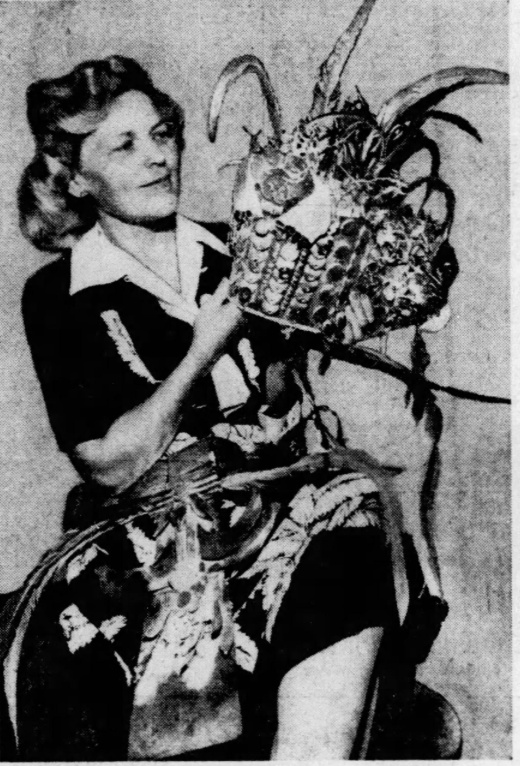
Karena Shields with Mayan headdress
*
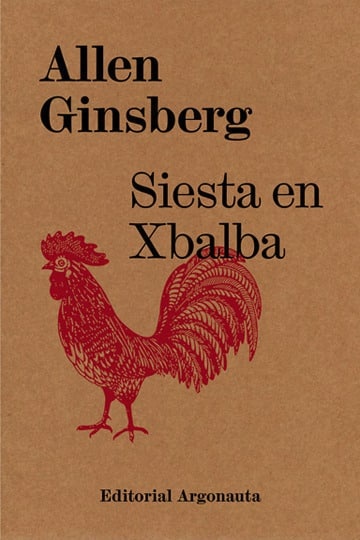
One of those big long poems was "Siesta in Xbalba," which he dedicated to Shields and which he published in the Evergreen Review in 1957. It is considered by some to be one of Ginsberg's finest achievements.
"Siesta in Xbalba" begins with a description of Ginsberg opening a blank notebook and letting his "mind fall down / doing nothing but lying in a hammock / reading prose with the white doves / copulating underneath / and monkeys barking in the interior / of the mountain." He recalls a party—probably the New Year's party in Mérida that he attended when he first arrived in Mexico—full of "laughter in drunkenness."
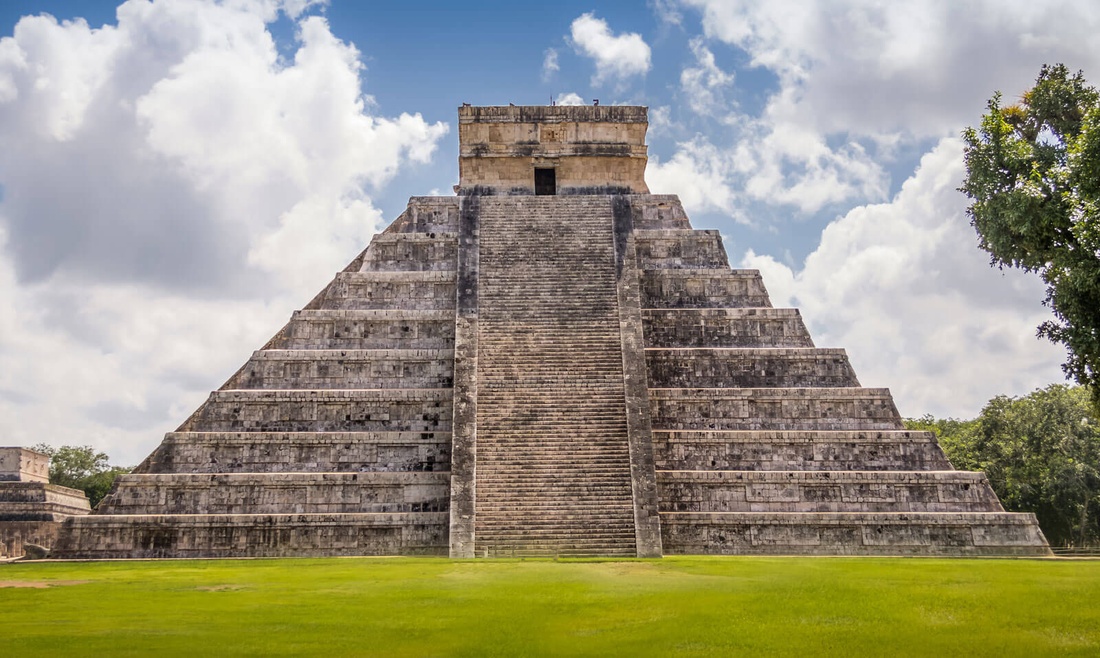
Castle at Chichén Itzá
*
The focus shifts and suddenly he's in Palenque, "measuring my fate, / wandering solitary in the wild." And aware of "the vast / movement of divinity." He spends a moonlit night ("with drug and hammock") at Chichén Itzá. Ginsberg describes the stone portals, the bas-reliefs, and "entablatures of illegible scripture." In front of a death head "half a thousand years old," he sits "in skully meditation." In the bleak Yucatán night, the "alien hieroglyphs of Eternity" capture his attention. His meditation is interrupted by the nocturnal sounds of chicharras, crickets, and "weird birdsong / or reptile croak."
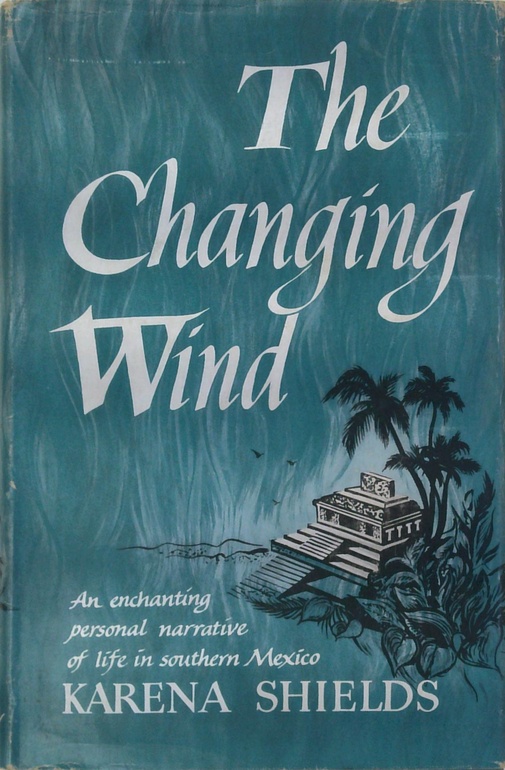
The poem continues with other sites he visited during his stay in Mexico: Uxmal ("unhistoric, like a dream"), Tulum, "lone Kabah by the highway," Piedras Negras, Yaxchilan, and "all the limbo of Xbalba still unknown." Xibalba (Ginsberg got the spelling wrong) was the Mayan underworld. Karena Shields must have told him about it. In her memoir The Changing Wind (1959), she described it as "the place where man must find himself, and find himself by forgetting all he imagines himself to be."
With images of his ancestors' embarkation to America in his mind, the questing but still rootless young Ginsberg asks, "Toward what city / will I travel? / What wild houses / do I go to occupy?" The first half of the poem ends with the reassurance that a future, unimaginable God is beckoning him out to pilgrimage.
In the second half of the poem, Ginsberg, "penniless and with / a disconnected manuscript," returns to the United States: "The nation over the border / grinds its arms and dreams /of war." Already in this early poem (it's about 13 pages long), many of Ginsberg's major themes are present: his openness to spiritual awakening, his intense interest in the cultures of non-European civilizations, life as pilgrimage, and his fierce anti-establishment politics.
Ginsberg's 1954 trip to Mexico served as a way to escape the rut he'd fallen into and helped him to find a place to settle his poetic feet. Indeed, by the time he returned to the United States, he was profoundly changed, spiritually and artistically. He began another long poem, which became "Howl," his powerful breakout poem, which he published two years later. "Howl" is a lament for "the best minds of my generation" destroyed by materialism and conformity, "burning for the ancient heavenly connection to the starry dynamo." It's hard not to see in the poem evidence of his sojourn amid the starry-skied ruins of southern Mexico.
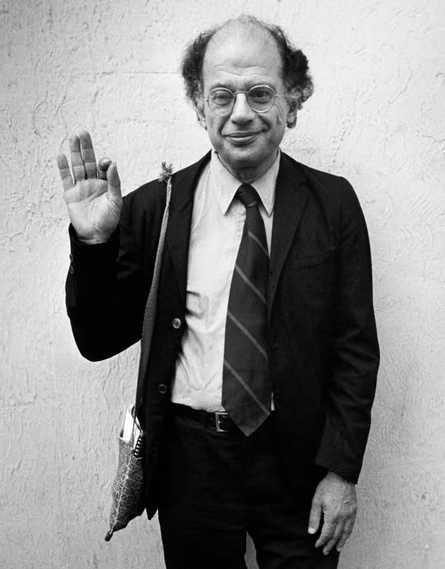
Ginsberg made several more trips to Mexico, all short visits. In the fall of 1956, he set off for Mexico City with poet Gregory Corso. On the way, they stopped in Los Angeles to do a reading. Howl and Other Poems had just been published. "It was the day Allen had waited for," writes biographer Bill Morgan, "and he was bursting with pride to have his own poetry between the covers of a real book." Afterwards, with two other friends, Peter and Lafcadio Orlovsky, Ginsberg moved on to the capital, where, playing the tourist, he wandered with his guidebook.
"Walked late at night down grand street all lit up full of tortilla and sweater stands and cheesy mex burlesque and comedian theatres, ate big steaks cheap at expensive restaurant," Ginsberg wrote. He "met the fairies" and participated in orgies, which he characterized as "not much of one really."
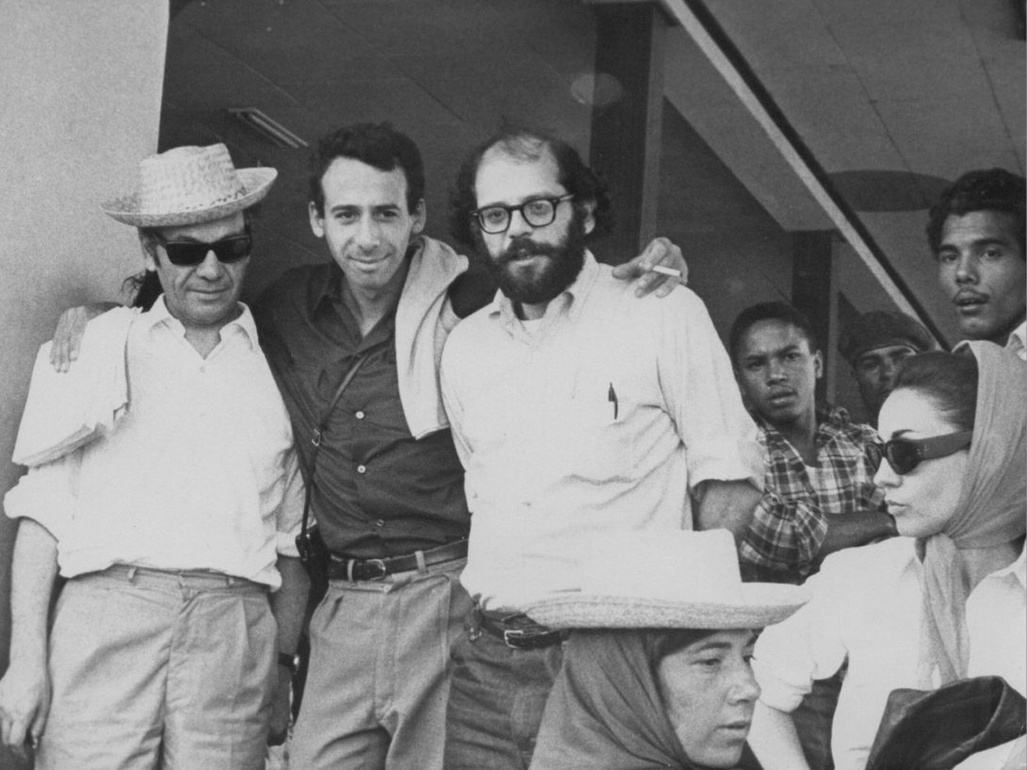
Ginsberg in Cuba (1965)
*
A decade later, in 1965, Ginsberg, now a world-famous poet, was invited to judge a literary contest in Cuba. He decided to combine that event with a weekend stop in Mexico City. "I forgot how beautiful and relaxed Mexico City is," he wrote. By day, he wandered the streets and visited museums. At night, he hoped to go to some of the nightclubs he had frequented on previous visits, but they were now closed. "He felt as if he were living in another lifetime now," writes Morgan, "far removed from the old one, which had become a distant memory."
Three years later, in July 1968, Ginsberg made another trip to Mexico, this time with his brother and his nephews in a VW bus. "Allen sat just back of the driver's seat," recalled nephew Alan Brooks, who was twelve at the time. Along the way, the conversations became quite animated, as they listened to news of the protests against the Vietnam War. When they got to the Mexican border, the authorities took Allen away to have his hair and beard trimmed. "When he reappeared," Brooks remembered, "he was smiling. Now we could enter the country."
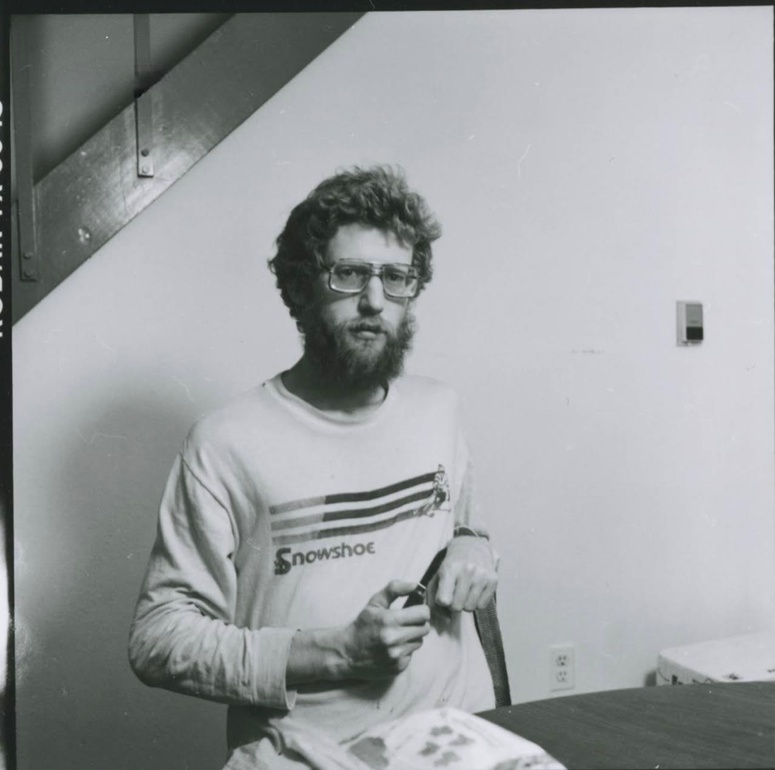
Alan Brooks (Ginsberg's nephew) 1990
*
The family visited the Pyramid of the Moon and spent several days in Mexico City. "The only shocking event I recall," Brooks says, "was at a checkpoint somewhere when a Mexican child reached in a window of our van and grabbed a stick of margarine, wolfing it down as if it were a candy bar. No one said anything about it. Then he ran away."
Out of that trip came a few more poems about Mexico. One, titled "Violence," ends: