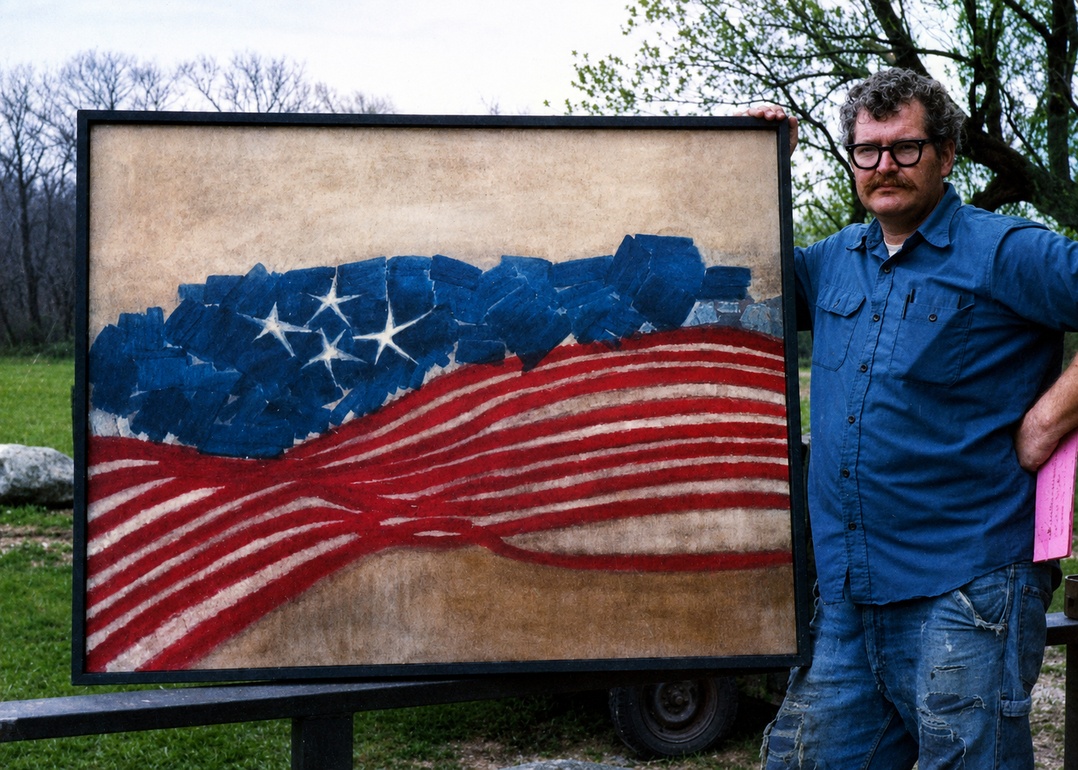
Louis Hills with "Banner Mountain" 1976
Español
August 16, 2026
by Marni Hills
San Miguel is filled with talented artists, and their studios are filled with a lifetime of work. What happens to all of it when they die?
My father was an artist. When he passed away seven years ago, he left behind six decades of work — squirreled away in every corner of our Wisconsin farm: rafters, sheds, garages, bedrooms, stacked in corners, stuffed in drawers, boxed in attics, overflowing from every possible space on "The Compound," as we lovingly called it — with zero direction on what to do with any of it.
His art turned out to be only a fraction of what we inherited. My siblings pitched in where they could, but sifting through the estate fell mostly to me.
An Overwhelming Estate
In 2019, my father passed at the age of 83, after a long decline with dementia. Louis Thayer Hills was a fascinating, complicated, and difficult man.
In the aftermath, our family didn't simply inherit a collection of beautiful paintings. We inherited the impossible task of untangling the lifetime of an unbelievably prolific artist who was also - I'll just say it - a Depression-era hoarder. If he found something interesting, beautiful, or potentially useful, he kept it. And he created art nearly every day for decades.
One Man's Treasure
Along with thousands of paintings, prints, and sketchbooks came 87 automobiles, in various states of collectibility vs. decay; 35,000 vinyl records; countless collections of tchatchkes; and a multi-ton 1930s fire engine - so heavy it was now sunken several feet into the ground. Sheds, barns, and the farmhouse were filled to the rafters.
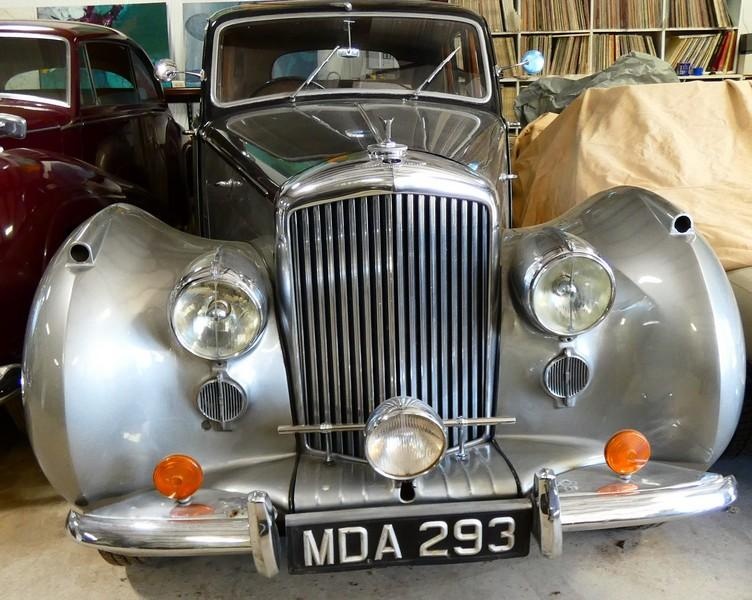
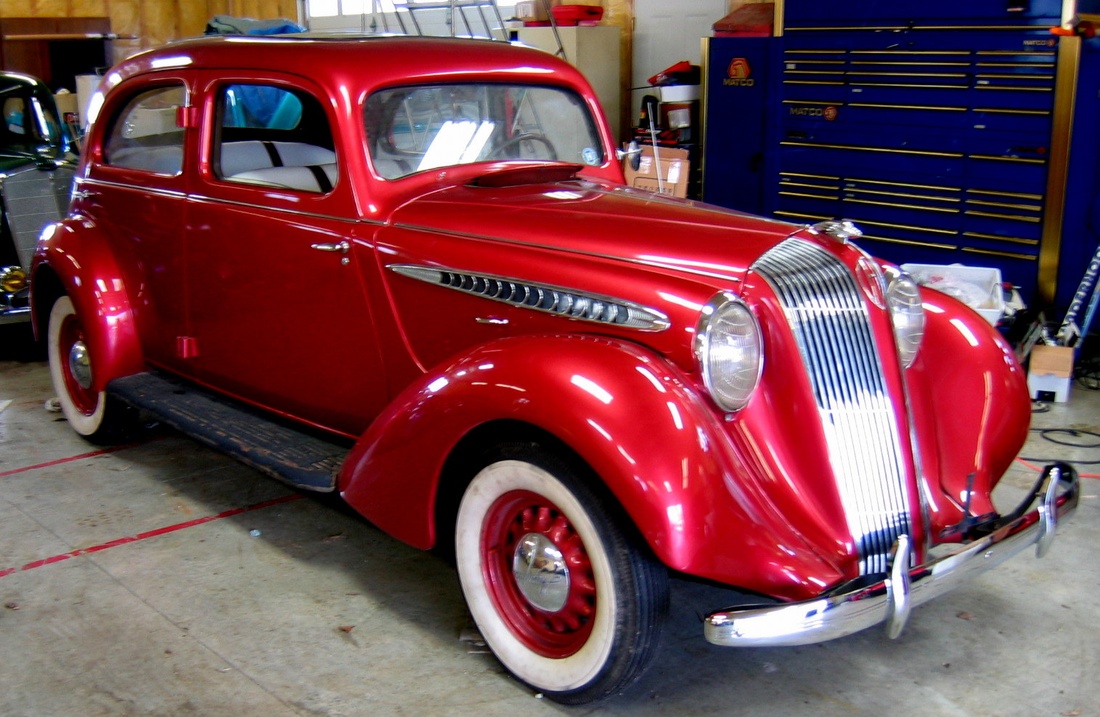
The cars told their own story. Some were beautiful and pristine —a 1953 Bentley, a 1930s Hupmobile—lovingly packed so tightly you couldn't walk between them. Others were old family castoffs that were never traded in or sold; every single one was kept. They were lined up in rotting rows in the fields. You could actually see the true scale of the scene using Google Earth. Volkswagens were his favorite: Buses, Karmann Ghias, Type II's, Things, Rabbits, Sciroccos and Beetles that, years earlier, would have commanded respectable collector prices. But they had spent so many Wisconsin winters outdoors that most were barely towable by the scrap truck, and many broke in half when hooked up to pull onto a trailer.
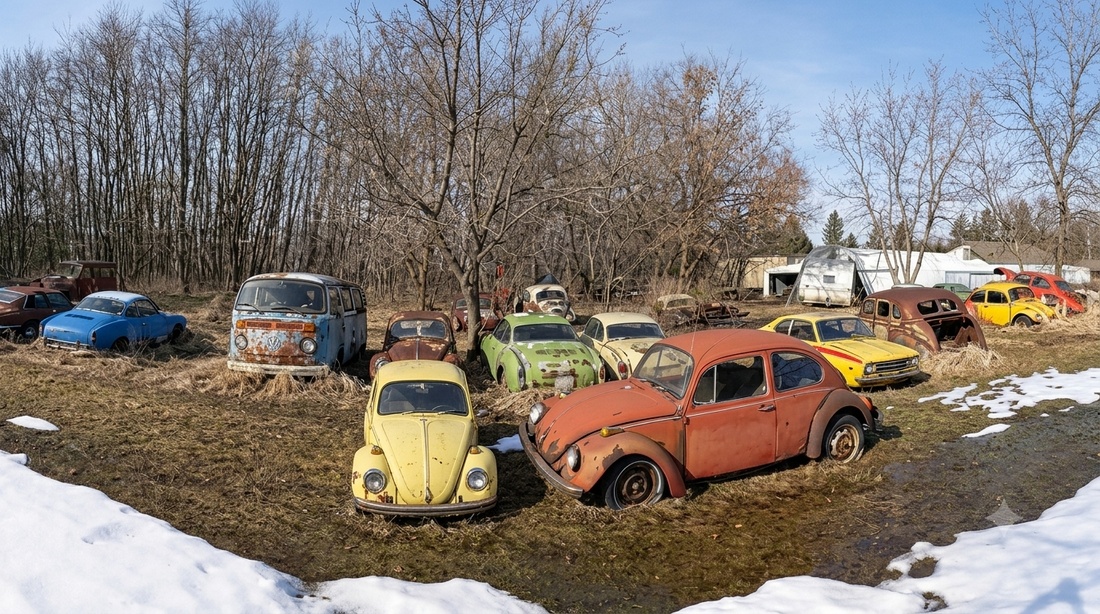
Rotting Rows of Rust
*
One by one we sold what we could. The valuable cars took months of conversations, eBay listings, inspections, and negotiations before being picked up by a buyer. The others were hauled away by interested locals or metal yards, for only forty or fifty dollars each.
You may ask, and rightly so, "Why didn't you begin getting rid of all this stuff much earlier?"
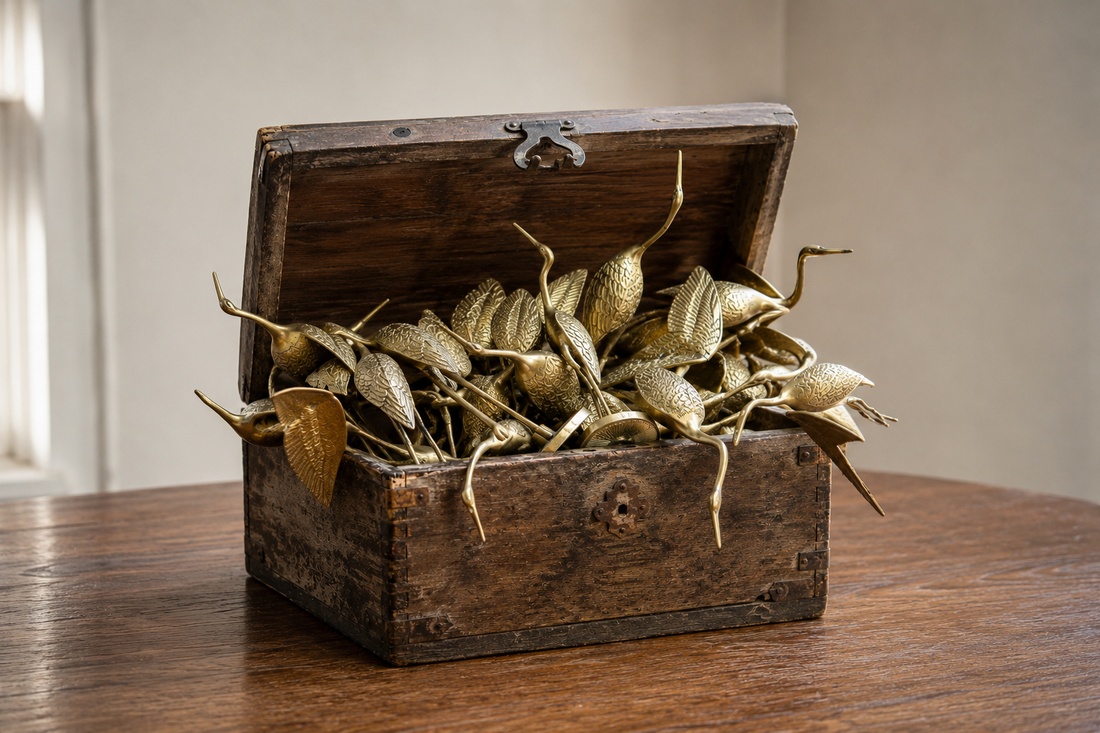
The Crane Incident
In 2015, the dementia really began taking hold of his brain. I figured he would never notice things disappearing, so I started with something seemingly insignificant - brass crane bird figurines lining shelves and windowsills throughout the house. One day, about to haul the box over to the thrift store, my skullduggery was discovered.
I froze when, from all the way on the opposite side of the house, I heard him scream into the void, "WHERE ARE ALL MY GODDAMN BRASS CRANES!!!???? WHO TOOK THEM!!! WHERE ARE THEY!!!???? MARNI????????" and he continued tantrumming and screeching until I was forced to sheepishly produce the box. This was an affront of the highest magnitude. He gave me a scorching look of rage, pure betrayal, as he snatched the box from my arms and placed it under his desk. He kept it there until he died
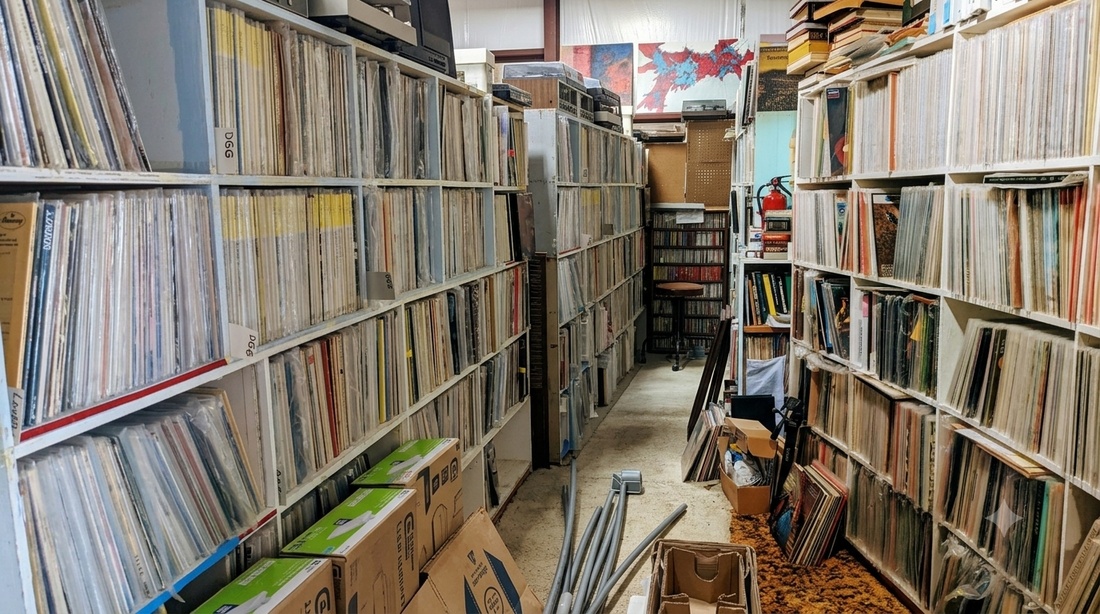
Just one aisle of the record collection
The Vinyl Countdown
When his acquisitions and creations burst through the seams of our family farmhouse, my father erected entirely new buildings to house the cars, art, and collections. For the albums alone, the shelves stretched into infinity like library stacks.
Oh, and lest I forget, perched higgledy-piggledy on top of the record shelves sat hundreds of pieces of vintage stereo equipment. I became an expert at listing and shipping everything from delicate Thorens turntables to massive 1970s wood-cabinet speakers.
Dad loved mostly classical music, and you might assume there was a fortune sitting on those shelves. The reality was quite different. Record shops turned their noses up, auction houses couldn't sell them, and I got exactly zero responses to online listings. Surprise! Nobody wanted thousands of classical albums with no resale value.
At the end, we were saved when a local gentleman in his 80s arrived with a huge trailer and enthusiastically hauled away a staggering number of album-filled boxes to his own home, for pennies a piece. We gifted him the record shelves to house his new collection. I've often wondered what his wife thought when he pulled up to their house with that load.
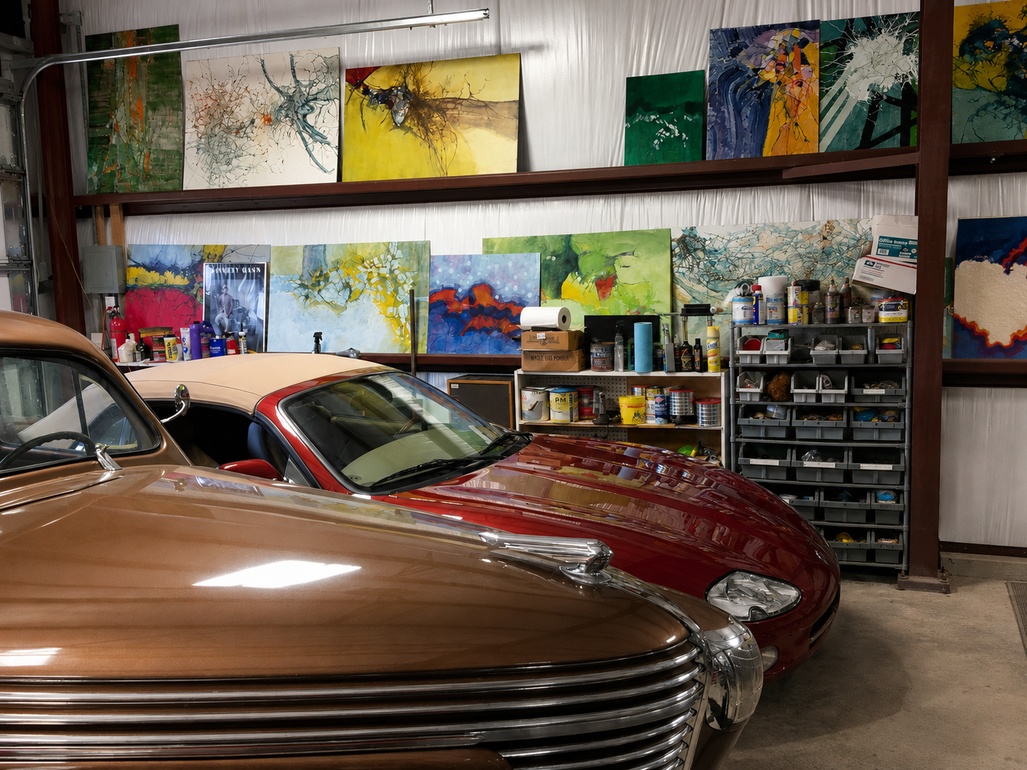
Paintings were blocked by other collections
Artwork Über Alles
The cars and records were liquidation projects. The art was its own monster. It was only after the rust and record shelves had been cleared away that I would be required to step into my ultimate mission as its steward. I could finally concentrate on how to rescue and present his work.
My father rarely exhibited or sold because, as he often said, selling one felt like "chopping off his arm." He created because he had to, not because he wanted to market himself. Later I found rejection letters and journal entries wondering why galleries had turned him away.
As a result, decades of work simply accumulated, surviving the years remarkably well. The real challenge wasn't preserving it; it was figuring out how anyone would ever see it. My siblings helped, of course, but between full-time jobs and maintaining the farm, they had zero bandwidth left for acting as curators. I shudder to think what would have happened to my dad's work if I were not involved. Each time I visited home and began poking through the art, I wracked my brain on how to give his legacy a future.
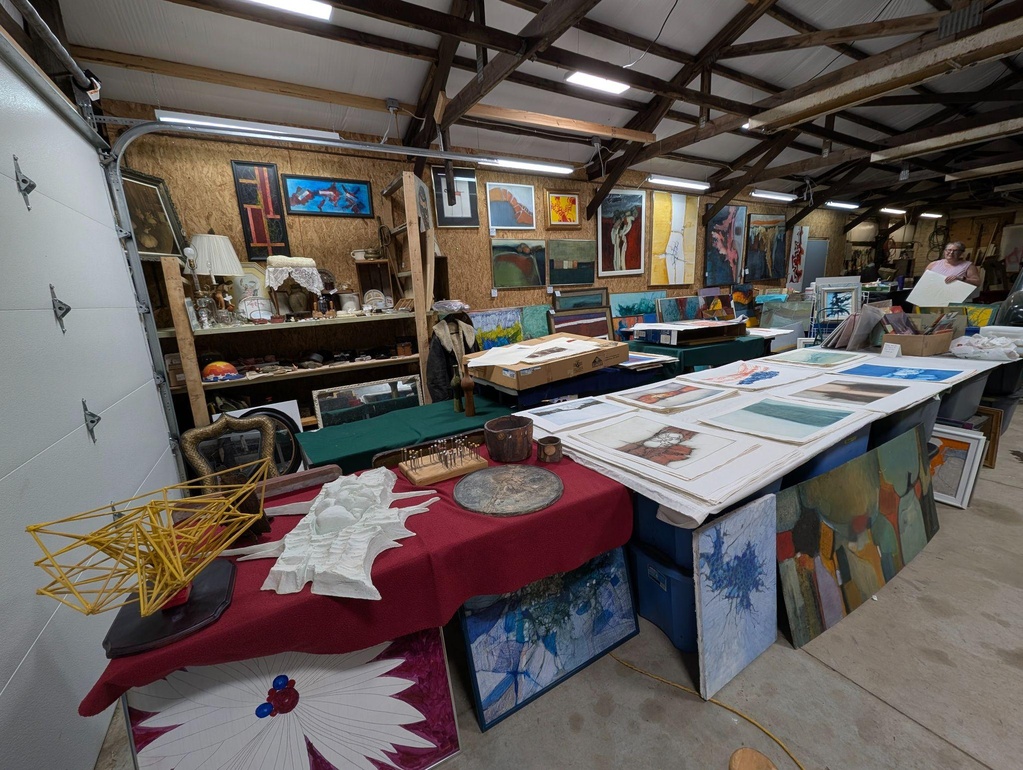
First Art Sale: A Low Tech Affair
*
Our first art sale took place in Spring 2025, on the farm. It was a super low-tech affair. Friends, neighbors, curious locals, and a handful of collectors wandered through, discovering an artist no one had heard of. But it paid off big time. One enthusiastic new fan suggested I contact Milwaukee's Jazz Gallery Center for the Arts. "They're exactly the kind of community place that would understand selling this work in its 'as is' state," he told me. He was right.
A year later, this past June, 2026, seven years after my father's death, the gallery partnered with us to exhibit his first major retrospective. I gave a presentation about his life, including a short film I created.
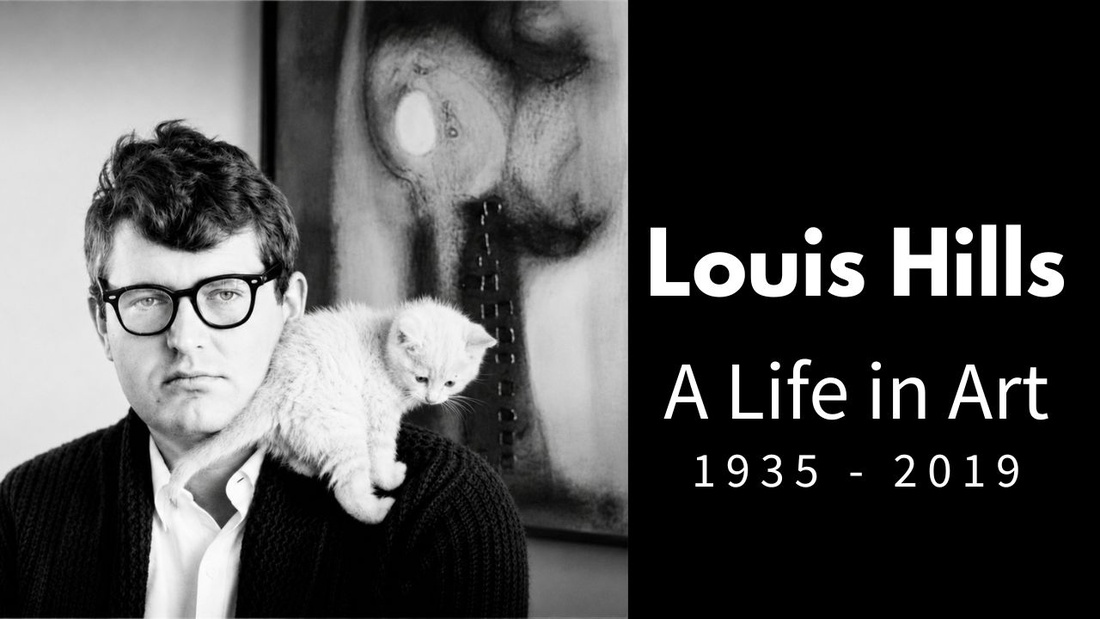
The time was right for his work. Visitors asked interesting questions, stood quietly in front of canvases, talking about the color, the emotion, and the imagination they found there. A line formed - people purchasing multiple pieces each. A few felt compelled to price-shame me: "You're charging far too little," one officious attendee insisted. "These should cost much more." In my head I responded sarcastically, "Well, honey, you're welcome to pay more…how much do you feel you should pay?"
I'm well aware of the true value of my dad's work. But the people who couldn't fathom why I hadn't contacted this or that gallery or museum weren't accounting for what was still waiting in barns, the years of unpaid work, the storage, the transportation, or the simple reality that every piece would require expensive custom framing before a gallery would even consider exhibiting it, priced at its true value. We weren't chasing profit; we were trying to rescue a lifetime of work before the elements claimed it. We had to get it into the hands of the community.
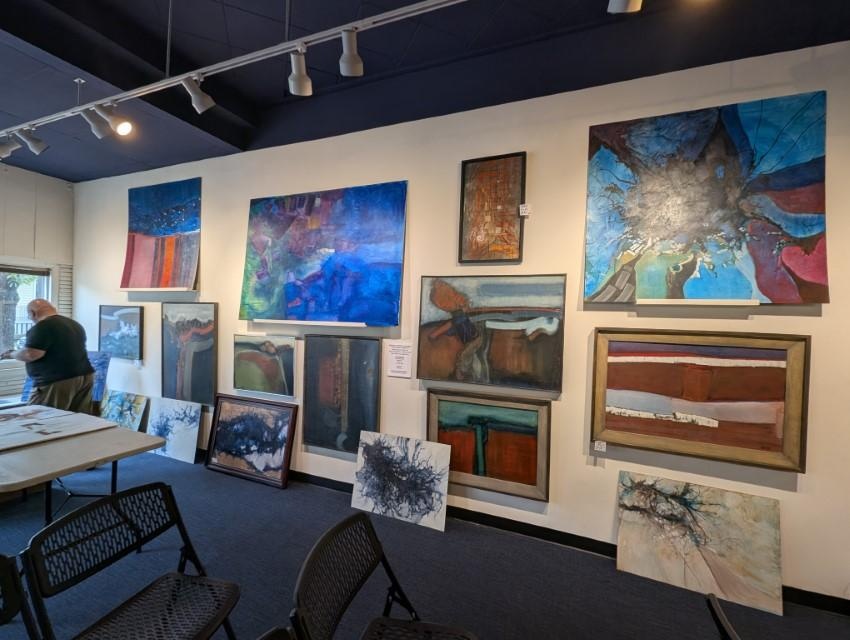
Memorial Art Sale & Exhibit, Jazz Gallery Center for the Arts
*
This experience changed something in me. I was exhilarated, energized, buoyed by the reception my dad's work received in a major urban showcase - not the polite comments of friends and family, but true appreciation and awe, expressed enthusiastically by a sophisticated art crowd, many of whom were gallery owners and artists themselves. This show helped us reduce the collection by about 30%...I am feeling hopeful about future presentations. Ironically, despite the modest prices, the gallery later told me it had been one of their most successful exhibitions.
Before my father's death, I never gave much thought to what happened after an artist was gone. Only after spending years sorting, cataloguing, and advocating for his work did I begin wondering about the people quietly standing behind other artistic legacies.
My Dad chose my middle name, Stewart. When I became the steward of his collection, the synchronicity dawned on me. (I don't believe in coincidences.)
Once I began looking for other stewards, I realized they were everywhere here in San Miguel.
Read part two
**************
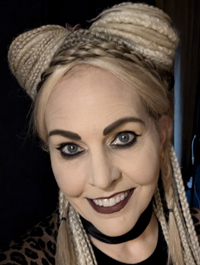
Marni Hills is a QHHT Regression Hypnosis Practitioner, writer, photographer, and lover of all things weird and unusual. She is an ancient astronaut theorist, dog foster, DJ, and is obsessed with travel, fashion, the Gaia Channel, never-before-seen footage, and mountaineering disasters. She made San Miguel her home in early 2022.
Marni's previous articles
**************
*****
Please contribute to Lokkal,
SMA's online collective:
 ***
***
Discover Lokkal: Mission

Visit SMA's Social Network
Contact / Contactar