
Jean-Marie Gustave Le Clézi
Español
February 22, 2026
by Philip Gambone
It would be foolish to deny that certain aspects of Aztec civilization were brutal, indeed horrific. In his memoir, The True History of the Conquest of New Spain, Bernal Díaz del Castillo (c. 1492-1584) relates the horrible fate of some of his fellow conquistadors. Captured by the Aztecs, they were marched up the stairs of a temple, sacrificed, cut up and eaten by the onlookers with a sauce of tomatoes and peppers. The skin on their faces was stripped away and made into masks.
Despite such atrocities, Aztec social structure included political, environmental, moral, and spiritual values that many scholars now find praiseworthy. One of those scholars is Jean-Marie Gustave Le Clézio, winner of the 2008 Nobel Prize in Literature. For him, pre-Conquest Mexico was a "golden age," well ahead of Europe in many areas: medicine, astronomy, irrigation, drainage, and urbanization. The barbarity of the Spanish conquistadors was, in Le Clézio's estimation, far worse than anything the Aztec's ever carried out. In order for the Spaniards to impose their new European program upon the Indigenous peoples of America, "everything was permitted"—massacres, slavery, forced conversions, punishment for attachment to indigenous culture, the creation of castes that scorned the Amerindian race. It was the annihilation of a world; it was—Le Clézio doesn't mince words—a holocaust.
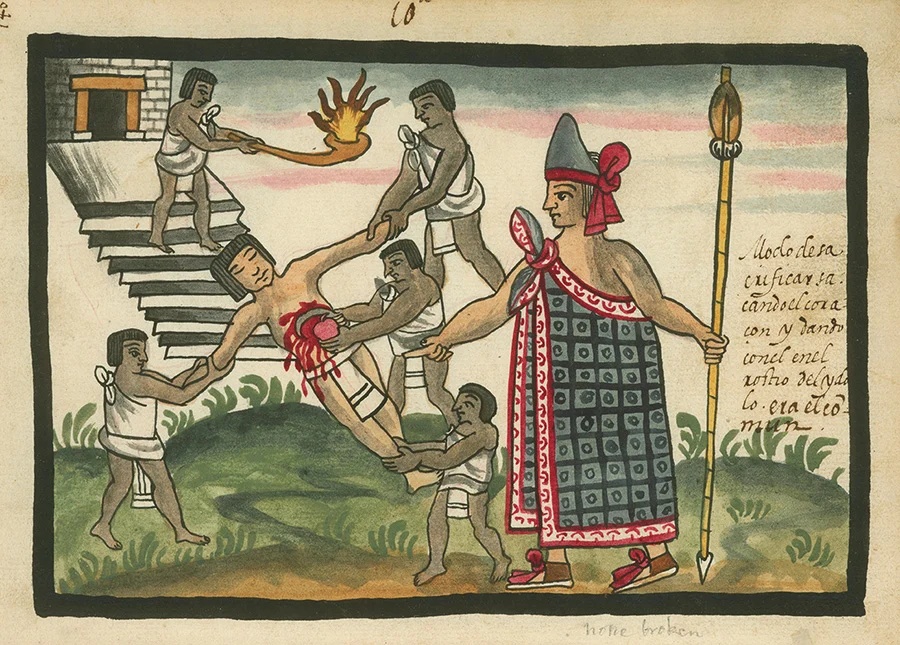
Aztec sacrifice
*
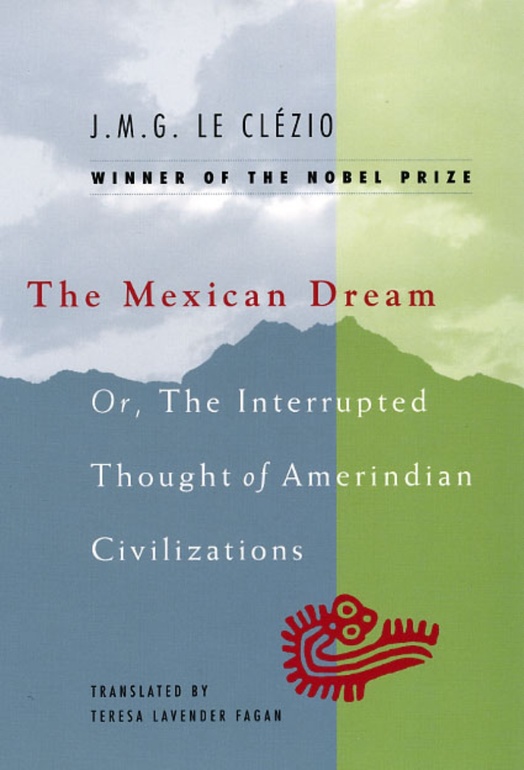
This view runs through many of Le Clézio's novels and other works, culminating in his 1988 book-length essay, The Mexican Dream: The Interrupted Thought of Amerindian Civilizations, which examines the tragic consequences of the destruction of Mesoamerican cultures. It is a book that translator Teresa Lavender Fagan says, "forces the reader to rethink—and to re-feel—the history of the Conquest of Mexico and the fate of the Amerindian peoples."
Le Clézio was born in 1940 in Nice. In 1947, the family went to Africa, where his father served as a doctor. Finishing high school in Nice, Le Clézio studied in England and then returned to France to complete his undergraduate degree. In 1963, he published his first novel, The Interrogation, about a French hippie who rejects conventional society and city life. Many of the novel's themes were ones he would explore more fully in other works.

For a while in his late twenties, Le Clézio taught at the University of Mexico, an experience that had a lasting influence on him. He subsequently spent four years with the Embera people in Panama. In an interview, he explained that it was "the possibility of living with the last free men" that drew him to Panama. "In Europe we are slaves: we live the lives of slaves in a world of slaves. The Indians in the Panamanian jungle still live freely. They know the things free men know." Le Clézio's experiences with Amerindian peoples caused him to look upon himself, writes one of his early biographers, Jennifer R. Waelti-Walters, "as a man of the forest rather than of the city."
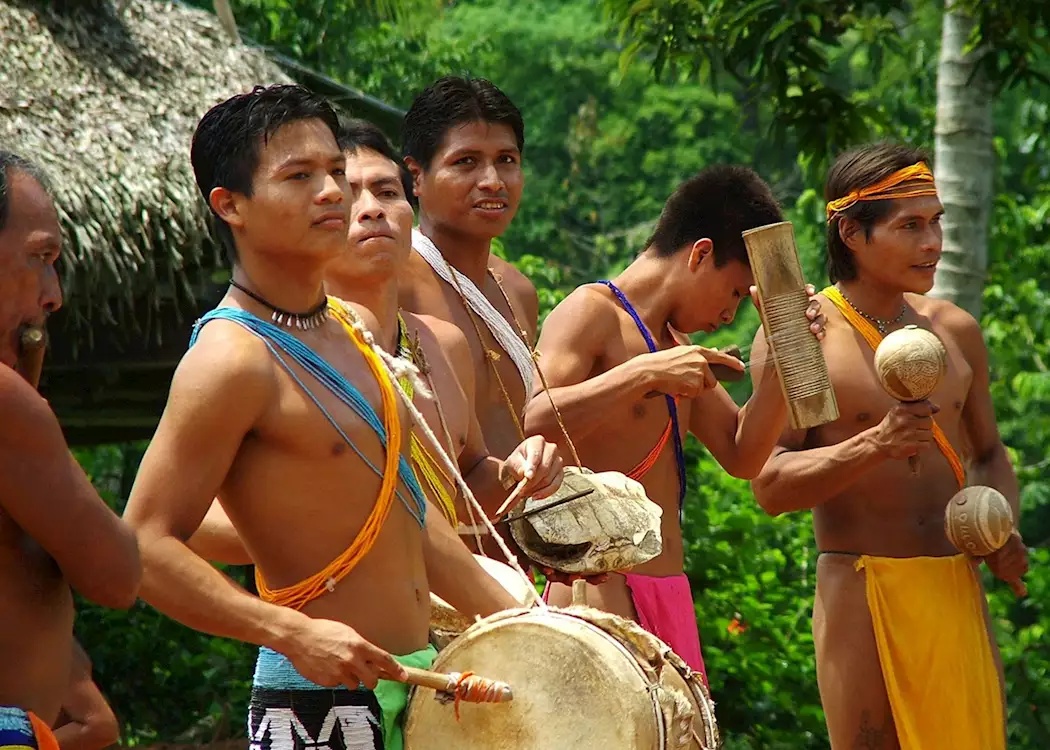
Embera Indigenous people
*
Le Clézio returned to Mexico in 1974, after which he published his seventh novel, Voyages to the Other Side, which was heavily influenced by Mexican mythology. Two years later, he published a translation and commentary of ancient Mayan texts. All these "Indian books" concern a pursuit of liberation from the Western conception of the self.
In The Mexican Dream, Le Clézio examines pre-Hispanic religions, which were, he says, characterized by "a form of completeness," a blending of the real and the divine, a sense of "the continual presence of divinities among men." The goal—for the Maya, for the Aztecs—"was not to master the laws of the universe, but to perceive its destiny…. Above all else, they had conceived a society based on equilibrium, where each person, from the most humble to the highest up, was accountable before the gods."
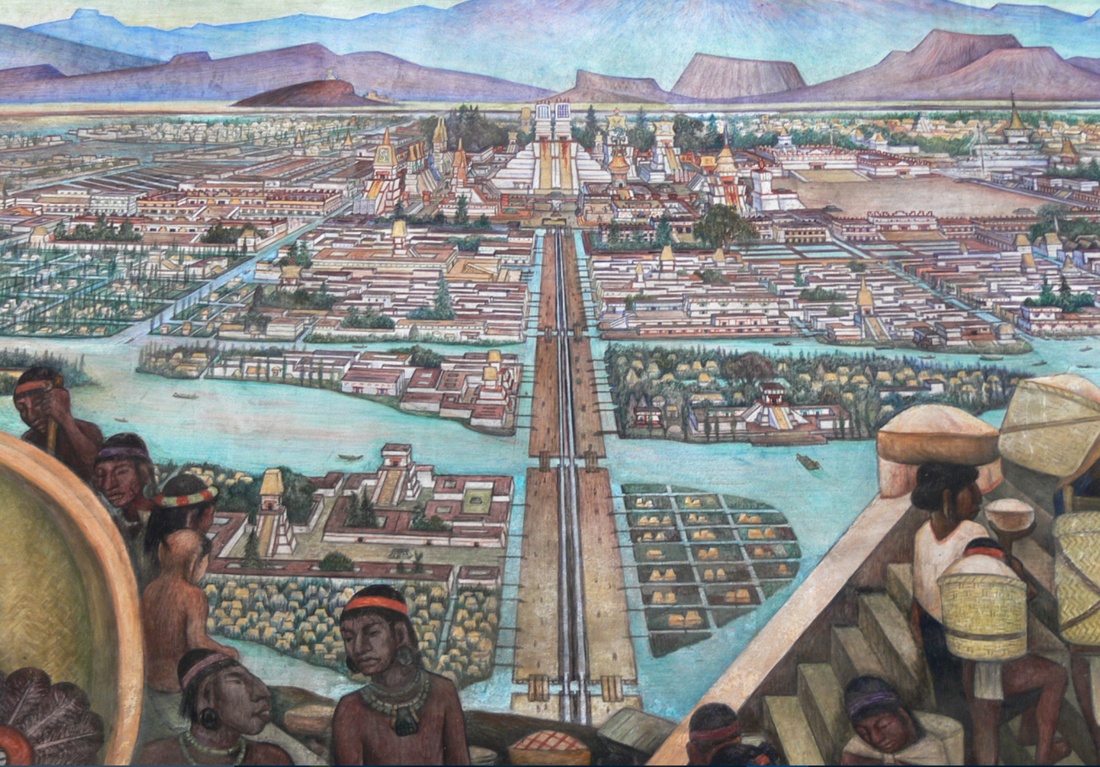
Tenochtitlan
*
Thus, the invasion of Mexico by the Spanish, Le Clézio writes, was a collision of two utterly different worlds: the "individualistic and possessive world of Hernán Cortés … and the collective and magical world of the Indians." At first, mutual wonderment prevailed. The Spaniards were awed by Tenochtitlán. It was "one of the most beautiful and innovative cities in the history of mankind," he says. But the wonderment quickly gave way to greed: the Spaniards wanted gold—lots of it—and resorted to trickery, betrayal, and divide-and-conquer tactics to get it.
At first, the Indians were unable to see the true motives of the Spanish. Cortés was a "big talker," who assured the Aztecs that his intentions were benevolent. But beneath the sweet talk lurked the desire for domination, plunder, and slavery. On the Aztec side, one of the strangest aspects of their belief system was the notion of their inevitable destruction. "Through myths, through religious beliefs, through the laws of astronomy, the Indian world was impregnated with the idea of a cycle. The Indian was not the master of the world. He was born of divine will, then he was destroyed several times by successive cataclysms. The present time was not a limitless time; in some ways it was a reprieve before the coming destruction."
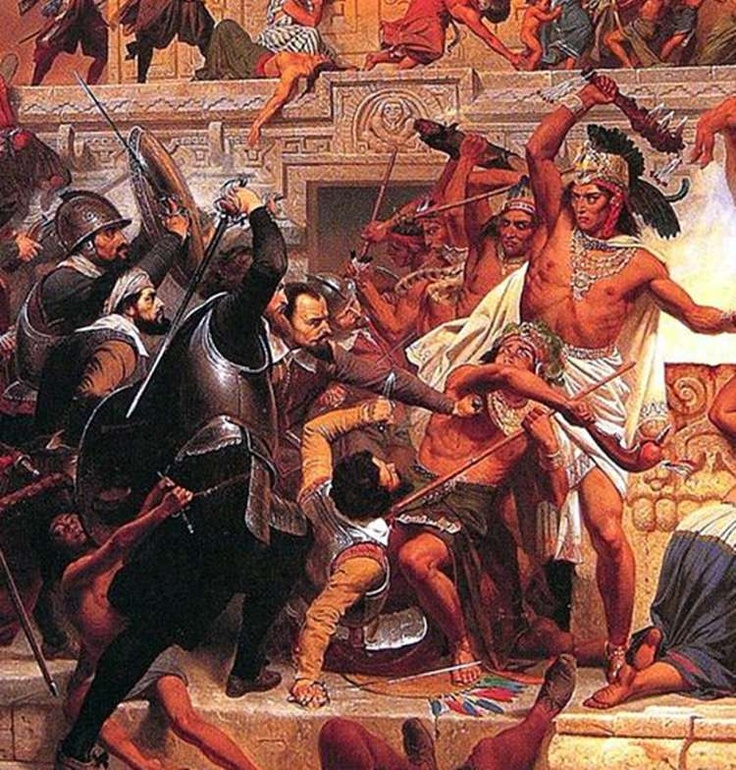
Conquistadors attacking Tenochtitlan
*
Essentially, then, two different "dreams"—different truths, different realities—collided: the conquistadors' dream of gold and the Indians' dream of the bearded men from the east who would come to rule over them once again. "From that imbalance rose the tragic results of the coming together of two worlds. It was the extermination of an ancient dream by the frenzy of a modern one, the destruction of myths by a desire for power."
Other chapters in The Mexican Dream focus on ancient Mexican myths; on Nezahualcóyotl, the Aztec prince-poet; on Bernardino de Sahagún, the Franciscan friar who, while horrified by the Indians' blood violence, nevertheless enormously admired much of Aztec civilization and compiled a huge encyclopedia on Aztec culture; and on The Chronicles of Michoacán, an account of the arrival of the Spaniards from the point of view of the Chichimeca Indians. Each of these chapters reads like an independent essay, perhaps incorporated into this book from previously published essays.
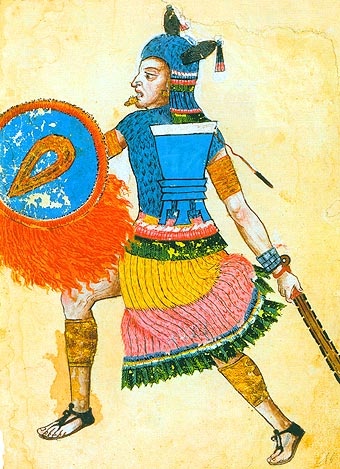
Nezahualcóyotl
*
Le Clézio ends with a question: How might the indigenous cultures of Mexico—indeed, of the entire Amerindian continent—have evolved? "What philosophy might have developed in the New World if the destruction of the Conquest had not taken place?" He bewails how western Europe halted the development of any original indigenous thought. The Conquest occurred at a time when Indigenous thought "might have given shape to a true philosophy, whose influence of the world might have had the same impact as that of Taoism or Buddhism."
Le Clézio is "a post-Christian writer," writes Thomas Trzyna, in his book Le Clézio's Spiritual Quest. "He no longer thinks of Christianity as an important living religion." At the same time, he is, without question, "a spiritual explorer," one who has chosen other spiritual traditions that for him have value. Among those spiritual traditions are the beliefs and myths of the ancient Amerindian peoples of Mexico, people who were "reduced by the Conquerors to the role of pagan figurations, that is, to absurdities or superstitions." For Le Clézio, the native Mexican became "a sort of brainless being whom his new master would fashion as he saw fit, in order to inculcate in him the principles of Christian morality and respect for the new political law."

Buildings, electricity, technology, cars
*
One might ask, as Trzyna does, if The Mexican Dream is an "accurate anthropological study." Has Le Clézio merely read his own preferred values into Aztec life? Has he exaggerated the spiritual quest as the most important activity in human life? What is unquestionable is that for Le Clézio, the world, to quote Waelti-Walters, is "a mysterious, dangerous, powerful, and wonderful place that man must struggle to understand, but from which he is separated by buildings, electricity, technology, cars, words, people—an ever-increasing multitude of man-made objects from which we must escape before we can perceive the aspects of the world which are normally outside the scope of everyday reality."
The Mexican Dream invites us to imagine what the Indigenous peoples of the pre-Hispanic Americas might have accomplished, what direction their evolution might have taken, and how that evolution might have changed our ideas about how to be in the world. "Do they not," Le Clézio asks, "continue, even today, beyond their death, to question our institutions, our laws, our faith, indeed, our entire culture?"
 **************

Philip Gambone, a retired high school English teacher, also taught creative and expository writing at Harvard for twenty-eight years. For over a decade, his book reviews appeared regularly in The New York Times. Phil is the author of seven books. His memoir, As Far As I Can Tell: Finding My Father in World War II, was named one of the Best Books of 2020 by the Boston Globe. His new collection of short stories, Zigzag, was published last year by Rattling Good Yarns Press. His books are available through Amazon and at "Tesoros," the bookshop at the Biblioteca.
**************
*****
Please contribute to Lokkal,
SMA's online collective:
 ***
***
Discover Lokkal: Mission
Visit SMA's Social Network
Contact / Contactar