 Español
February 8, 2026
by Dr. David Fialkoff, Editor / Publisher
Veronica returned a week ago Sunday, from a month in Chile visiting her family and attending her son's thesis presentation, a presentation which earned him a degree in biology. I watched a little of the video of that event; the boy I knew, now a very able young man.
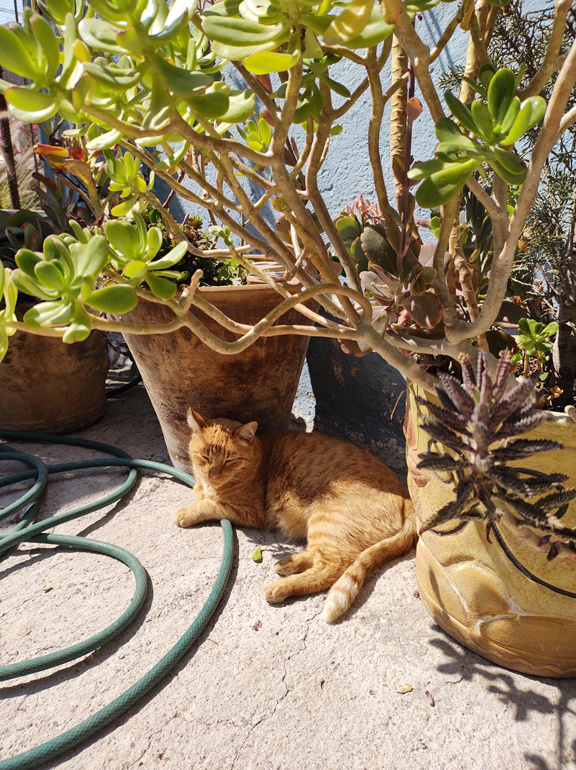
Yasna, Vero's friend since 11-years-old and now her upstairs neighbor, left for the beach in Oaxaca a week before Veronica's return. In their combined absence I was asked to come and take care of the house, cat and plants they share, none of them requiring much attention.
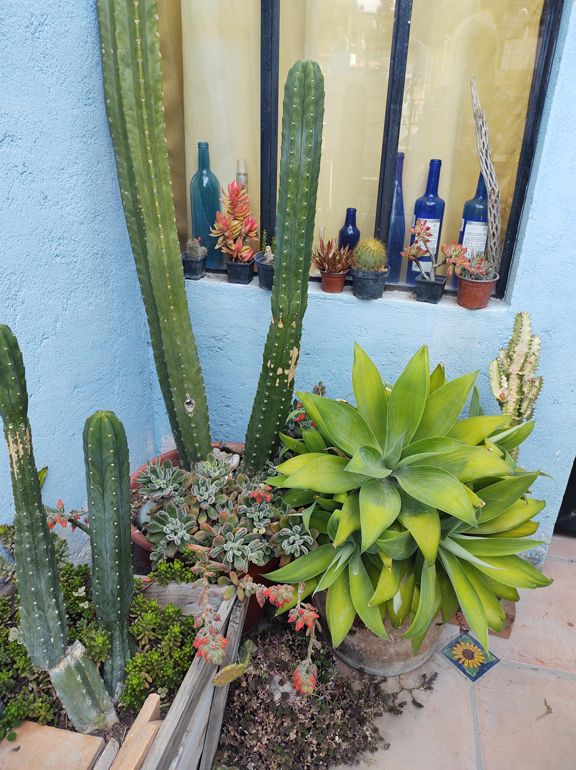
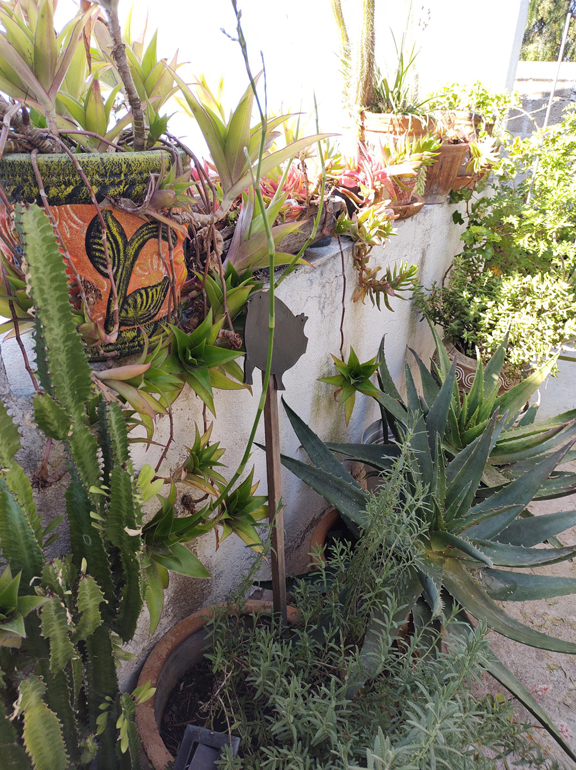
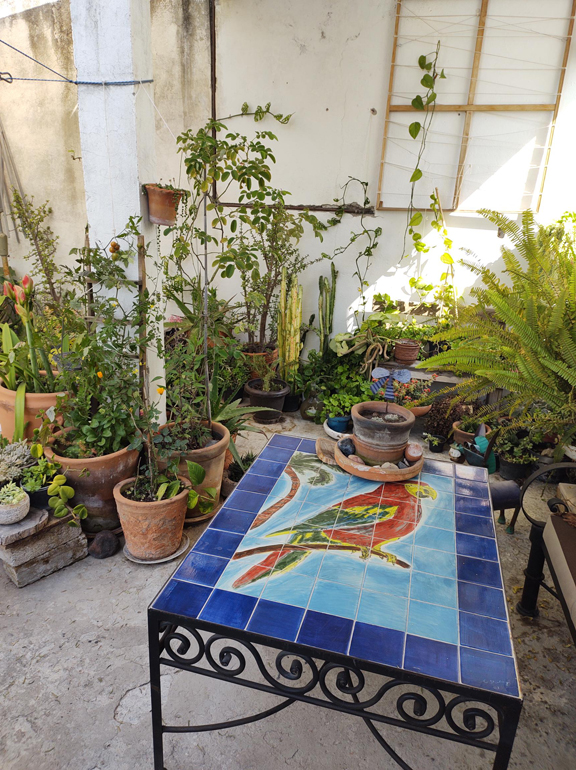
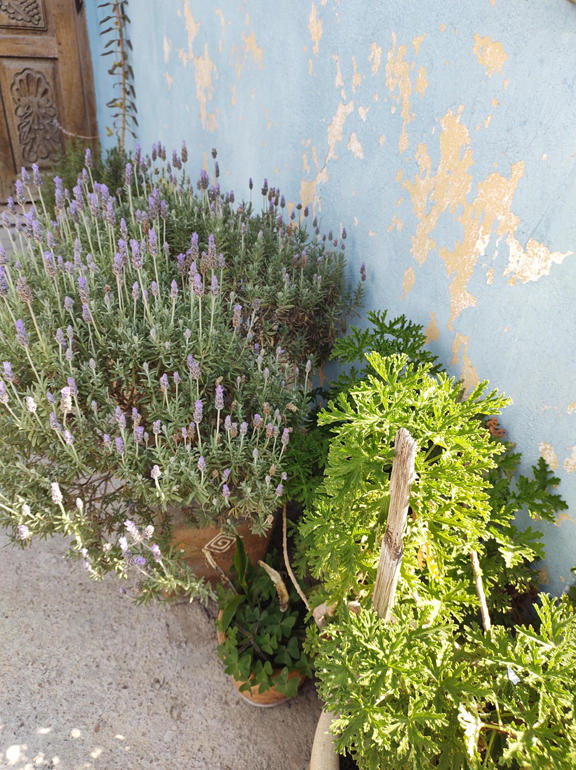
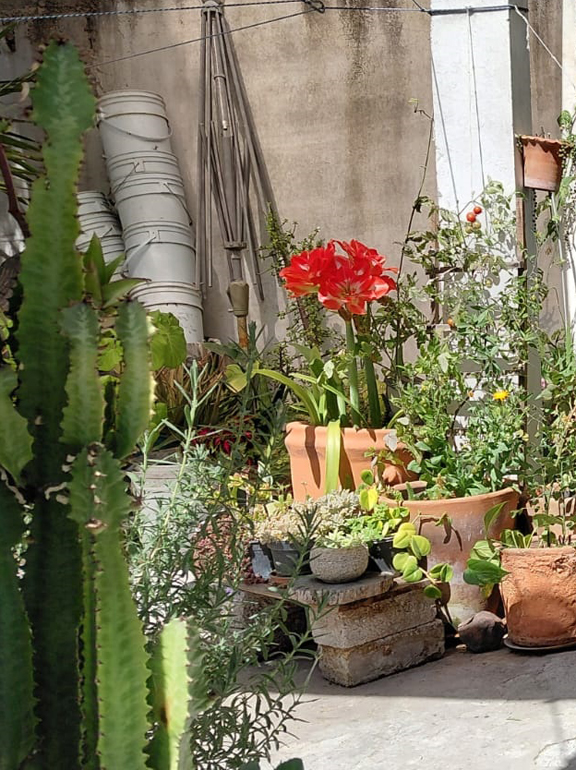
There are many plants, lush and green, across the house's three storeys. Almost all of them are outside on four different patios where three different garden hoses make it easy to water them. Considering the season and cool weather, I only did so once.
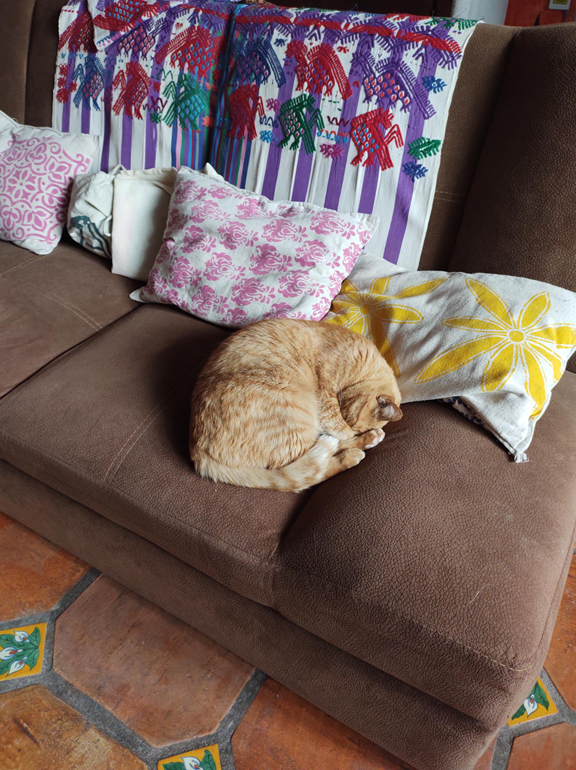
The cat was just a little more demanding. I kept his water bowl filled. I fed him cat food twice a day, and, when we agreed upon it (he's a very independent old cat, and so am I) nurtured him with love, taking him on my lap and caressing him. Maybe I should have been more loving to the plants as well. Well, at least I'm asking the question.
Without question I am very loving with Veronica. Formerly lovers, for seven years, for the last four we have been great friends. Before she arrived I bought her a generous supply of produce, eggs and bread. The day she arrived, I cooked us lunch and dinner. Both of us exhausted, we napped between those meals; she on the living room couch and I on the one in her office.
After dinner, she asked me to spend the night and take her on some errands the next day after she returned from teaching school. I agreed, then carried her suitcase and backpack up two long flights of stairs to her third-floor bedroom, as the cat, with no encouragement at all, followed us up. There I kissed her cheek and we said goodnight.
I was, in any case, in no rush to go home. I had been there the day before, visiting to water my own plants, after which I stopped at the nearby Fábrica Aurora for their 22nd anniversary art walk, a poorly attended event. Aside from exercising and eating, all I do is work publishing Lokkal. And as everything I need for that is on this laptop, it's easy to work from wherever I happen to be. Then, Veronica's house is not just "wherever I happen to be," but a home away from home.
Back downstairs and settled comfortably behind a desk, the night still young after wishing Veronica sweet dreams, I asked ChatGPT to clarify something I'd heard. I typed in "The current generation is less intelligent than their parents?", and got a funny answer:
First, the machine obeserved that IQ scores in the 20th century rose steadily across generations until the 1990s. Then the AI admitted that since the 1990s, there have been plateaus and declines in average IQ test performance, especially in vocabulary, reading comprehension, abstract reasoning and numeracy. Further it confessed that other large-scale assessments confirm those findings, also showing declines in: reading depth, mathematical reasoning and ability to follow extended arguments.
But then, and this is the strange part, it cautioned against making a general claim about the lower intelligence of kids today. It rallied to the defense of today's youth pointing out that while recent generations do not know how to read, count or think as well as their parents, they actually outperform their parents when it comes to visual processing, multitasking and pattern recognition in digital environments. That is, having spent the majority of their lives staring at digital screens, playing video games and surfing online social networks, young people have gotten good at staring at visual screens... and nothing else.
Following up, I asked ChatGPT, "What about the decline in test scores since digital screens were introduced into school?" This time, unable to point to any digital silver lining or extenuating circumstances, the machine stated without reservation that there is a well-documented association between the introduction of digital screens into classrooms and declines in test scores. It pointed out that there have been large-scale declines in reading, math, and reasoning scores beginning in the late 1990s, coinciding with the introduction into schools of classroom computers, digital textbooks and screen-based testing, and with smartphones entering daily student life.
It is human nature to be dissatisfied. A certain ambition, a disquieted wondering what greener pasture might lie on the other side of the mountain, conferred a survival advantage upon our ancestors, and, no doubt, still does upon us. But we had better also count our blessings; health being not the only thing we take for granted when we have it.
When I look at the endless waves of protests sweeping across America, I see poorly educated, historically illiterate young people convinced that whatever follows the wholesale revolution they advocate will necessarily be better than the country they already have. Comparing our actual imperfect situation to some imagined socialist utopia is less than fair. In this regard, the abject failure of New York City's new mayor to clear streets and sidewalks following the last snowstorm is a bad omen.
Monday, the day after her arrival, Veronica left for work before I got up. When she came home around 2:00, I cooked us lunch, and we went, first to TelCel, where she needed to resolve a phone problem, and then to La Comer to buy groceries. Returning to her house, we both had meetings on Zoom, after which, it already being early evening and I being yet unpacked, I asked and was invited to spend another night. Then I cooked us dinner.
Tuesday while Vero was at school, I worked at my publishing, packed my things and took a bicycle ride down the hill there in colonia Allende to a corner market on Cinco de mayo to buy a papaya and some garlic, getting my daily exercise while I was at it. When Vero came home around 2:00, she made us lunch. Then I put my things into my car, and with my bicycle hanging from a rack behind it, drove home.
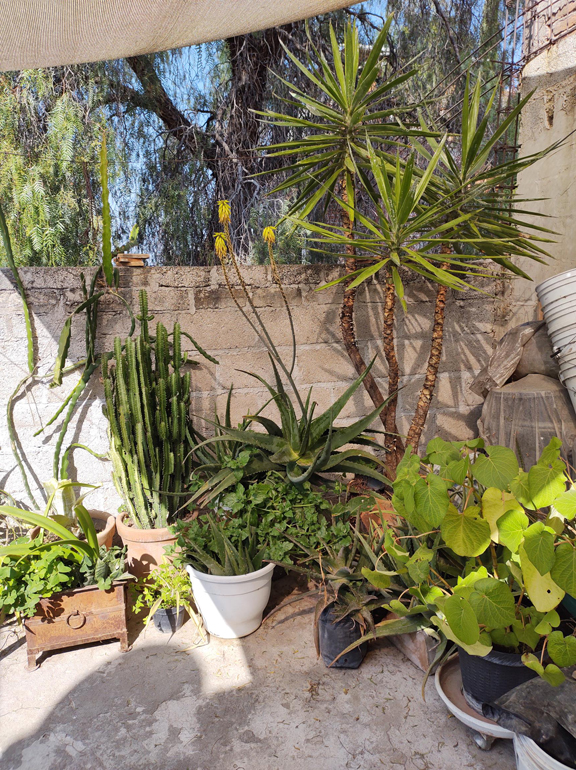
It's very different here where I live in colonia Insurgentes, both better and worse. On the far northern edge of town it is much quieter, but also more lonesome. Commenting on our eternal dissatisfaction, Dostoyevsky's Grand Inquisitor observed that were we all to have our every need met, we would soon grow bored and start breaking things, ruining the situation.
Unlike the youngsters blocking streets up in the U.S., I don't think there is much chance of reaching utopia. I do, however, indulge in my own wishful thinking. I tell myself that our Lokkal, our community internet association, is a type of socialism that just might work. I imagine that local internet as a public service will enrich both the local culture and economy, preventing globalist elites (Google, Facebook, Instagram, et al.) from extracting wealth from our city. It would also give all those starry-eyed youth something healthier to look at online.
The grass, such as there is here in Mexico, for many is not very green no matter on which side of the mountain they stand. But if we all stand together as a community, controlling our information in this information economy; if we seize the means of communication, presenting our own beloved town to the planet (making our own local social network and search engine), then the world's Best Little City can lead the way to a better tomorrow.
 **************

Dr. David Fialkoff presents Lokkal, public internet, building community, strengthening the local economy. If you can, please do contribute content, or your hard-earned cash, to support Lokkal, SMA's Voice. Use the orange, Paypal donate button below. Thank you.
**************
*****
Please contribute to Lokkal,
SMA's online collective:
 ***
***
Discover Lokkal: Mission
Visit SMA's Social Network
Contact / Contactar