 Español
February 15, 2026
by Philip Gambone
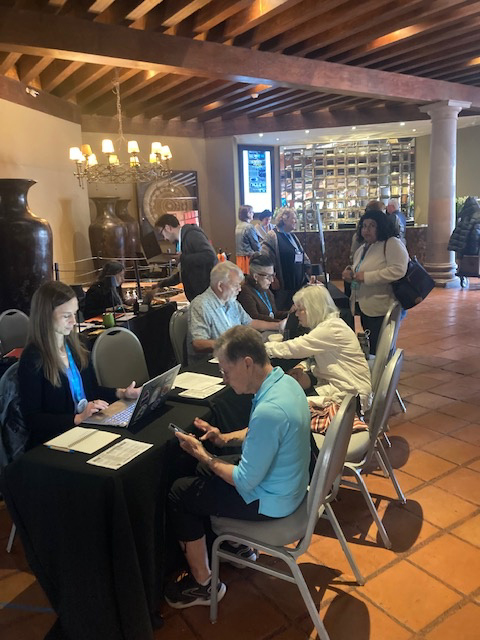
Tonight, February 15, the 21st San Miguel Writers' Conference and Festival will conclude with a keynote address given by literary superstar Margaret Atwood in the Ballroom of the Hotel Real de Minas. It's expected that a majority of this year's 1750 attendees—a record number—will hear her speak.
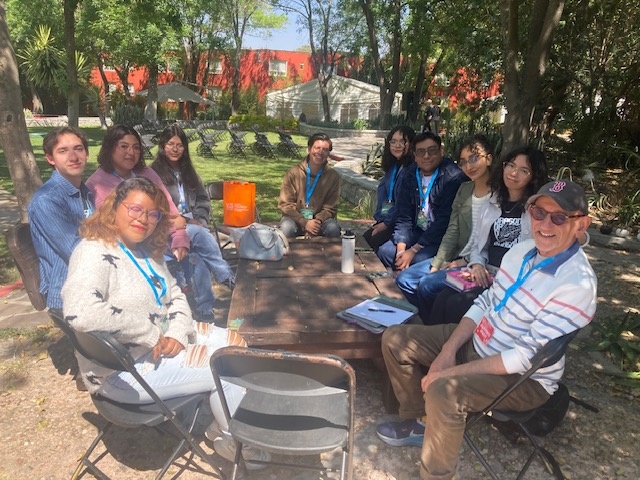
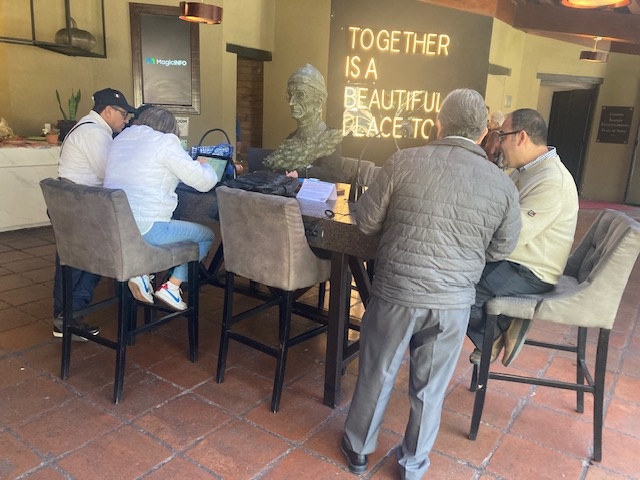
Founded in 2006 by Susan Page, the San Miguel Writers' Conference has grown from a strictly local gathering of a few dozen people into this large and significant international literary event. In recent years, the organizers of the festival have worked hard to include a more diverse array of writers, including children, adolescents, and writers and readers in Spanish. That commitment to diversity and inclusion was much in evidence this year, when several workshops were given in Spanish and aimed at aspiring young Mexican writers.
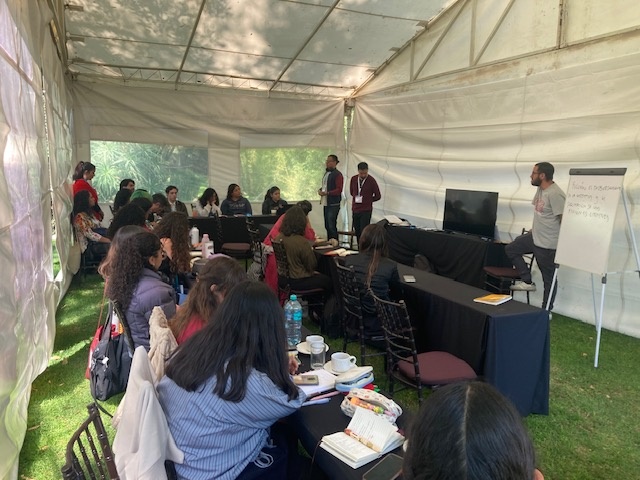
During the Festival, I sat down with nine Mexicans, all students at the Instituto Tecnológico Sanmiguelense de Estudios Superiores, who were participating in this year's Writers' Conference. Their school has formed a partnership with the Festival, which allows students to attend on a scholarship basis. For most of the young people I talked to, it was their first time at the Writers' Conference, though at least one had attended twice before.
Their reasons for attending varied, though all said they came because they like to write. Some were looking for new perspectives on writing. Others hoped to pick up tips on different writing methods or how to organize their thoughts. For one young woman, writing was more personal. She said she had less interest in the formal aspects of writing and more in just getting her thoughts and feelings down on paper.
Though we spoke on the second day of the Conference, the students had already participated in several workshops. One, entitled "Dramaturgia: Tradición y Modernidad," helped, as one of these young writers told me, "to show me how to create a fully realized character." Another student, Eli Hernández, 19, liked the exercise in which she had to build a story based on eight words of her own choosing. Another, Emiliano Alvarez, 19, noted how helpful it was to learn how to take his ideas and structure them more clearly. María Fernanda Rodríguez, 19, said she had gained valuable ideas on how to capture a reader's attention. "Or simply how to get started," Leonardo Morales, 23, said. I picked up that all of the workshops had emphasized gaining more freedom to unlock creativity. Doni Jimenez, 21, summed it up when she said how happy she was to have been presented with "new possibilities."
When I asked these young writers what kinds of things they like to write, I was surprised by the variety of their responses: short stories, poetry, science fiction, scripts, suspense, vignettes, reviews. Or just "personal reflections," Jimena Pérez, 19, told me. I was equally surprised by the variety of authors they identified as their favorites: Hermann Hesse, Sylvia Plath, J.K. Rawling, Oscar Wilde, Jane Austen, and three Young Adult fiction authors, Dot Hutchinson, Alice Oseman, and Ashley Poston.
What about Spanish-language authors? Among their favorites were the Argentinian poet Flora Alejandra Pizarnik; the Spanish novelist Carlos Ruiz Zafón; and Colombian author of "magic realism" Gabriel García Márquez. Surprisingly, only two of the students mentioned Mexican writers: Juan Rulfo, the author of Pedro Páramo, one of the most acclaimed novels in Mexican literature; and the playwright and essayist Alberto Villarreal. "Mexican writers just aren't as famous as foreign ones," Leonardo noted.
"What kind of future do you imagine for yourself as a writer?" I asked. Lú Ladrillero, 24, spoke up immediately. She hopes to be published and, in fact, has already had one story published. Others envisioned becoming book reviewers, magazine editors, literature promoters. Roberto Chávez, 21, who is majoring in graphic design, looks forward to a career in book design. Vanessa Hernández, 19, spoke sincerely and passionately about her desire to write about cosas cotidianas, daily life.
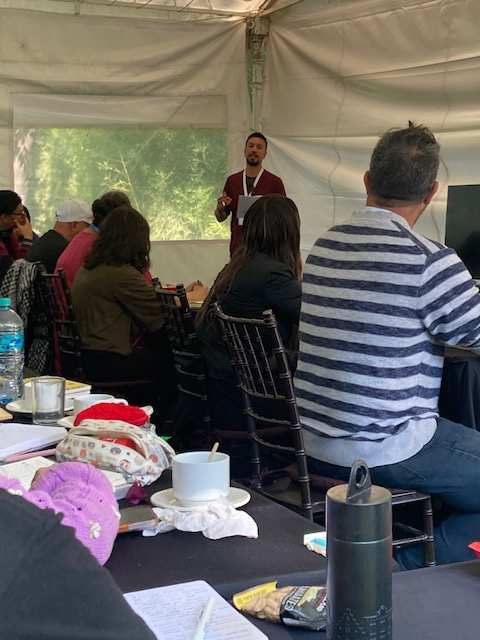
The next day, I ran into a few of them at another workshop, "El Ser Narrativo." This was a heady hour-and-a-half presentation by philosopher Josemaría Moreno and short story writer Rodrigo Díaz Guerrro. Their back-and-forth lecture ranged from the philosophy of the American poet, philosopher and mystic Rocco Jarman, to the narrative origins of the Sumerian epic poem Gilgamesh. "La narrative es inevitable"—Narrative is inevitable—Moreno proclaimed.
When I heard that, I thought that the young students I met the day before, all of whom grew up in San Miguel, represent the next generation of "inevitable" story tellers. Each of them seemed eager to develop their artistic voice, their subject matter, their craft; eager to discover where writing might take them. Polite, personable, articulate, intelligent and willing to share their thoughts, they were the highlight of my attendance at the Conference.
**************
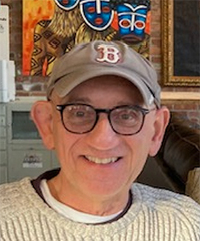
Philip Gambone, a retired high school English teacher, also taught creative and expository writing at Harvard for twenty-eight years. For over a decade, his book reviews appeared regularly in The New York Times. Phil is the author of seven books. His memoir, As Far As I Can Tell: Finding My Father in World War II, was named one of the Best Books of 2020 by the Boston Globe. His new collection of short stories, Zigzag, was published last year by Rattling Good Yarns Press. His books are available through Amazon and at "Tesoros," the bookshop at the Biblioteca.
**************
*****
Please contribute to Lokkal,
SMA's online collective:
 ***
***
Discover Lokkal: Mission
Visit SMA's Social Network
Contact / Contactar