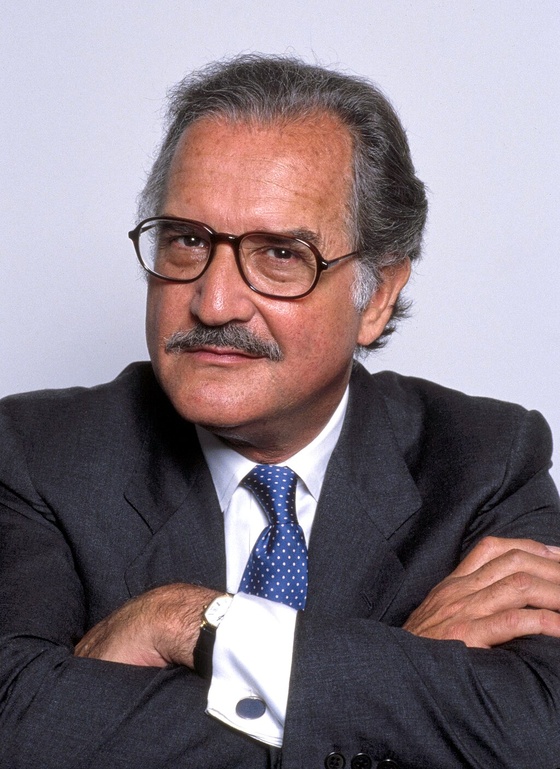
Carlos Fuentes (1987)
Español
January 11, 2026
by Philip Gambone
Among the astonishing twenty-five novels that Carlos Fuentes wrote over his long and distinguished literary career, The Death of Artemio Cruz (1962) is reckoned one of the author's masterpieces. It's not an easy read, but anyone seriously interested in modern Mexican literature should not shy away from this prodigious achievement. As Lanin A. Gyurko, Professor of Spanish at the University of Arizona, notes, the title character is "a titanic individual who is given the awesomeness and the complexity necessary to stand as a symbol of an entire nation."
Awesomeness and complexity not only characterize the title character but the novel as a whole. The book hopscotches through time in a nonlinear way, and the story unfolds through shifting points of view, often in a stream-of-consciousness fashion. Readers looking for a straightforward story, be warned. Navigating the plot of Artemio Cruz takes work. But it is a novel well worth the effort.
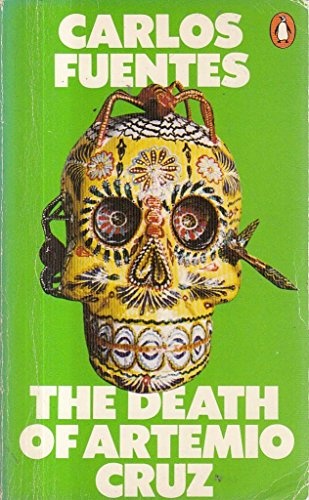
As the outset, Cruz is lying on his deathbed. He opens one eye and sees himself reflected in the squares of glass sewn onto a woman's handbag. "That's what I am," he thinks. "That old man whose features are fragmented by the uneven squares of glass." Fragmentation—of images, memories, time, narrators, points of view—is at the heart of Artemio Cruz. Fuentes attempts through his splintered, labyrinthine structure to make sense of the disparate elements not only of the title character's life but also of the tangled, tragic history of twentieth-century Mexico.
Fuentes frequently mentioned what an enormous impact Orson Welles' movie Citizen Kane had on him as a writer. The Death of Artemio Cruz is perhaps his most obvious homage to that film. Like Kane, Cruz starts out as a poor young man—idealistic and innocent at first—who joins the Revolution only to watch it degenerate into warring factions, a chaos that he shamelessly and audaciously exploits for his own profit. Now, as he lies dying, occasionally rousing himself to give orders, Cruz prefers to keep his eyes closed to the exterior world and linger in his memories, his imagination, his delusions, the enormous, complex network that has been his life.
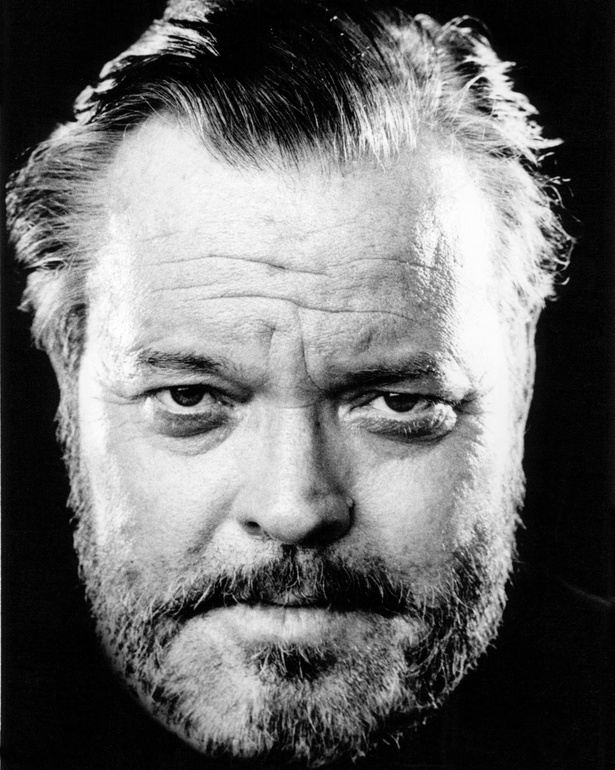
Orson Welles
*
Back and forth through time, the novel gives us vignettes of Cruz's life. We see him as a man of iron will, enormous pride, and rapacious ambition, accustomed to command and to attack, a man who has controlled a vast network of businesses. Among the many "messages" Fuentes attempts in his saga, is a clear political one: Mexico has been betrayed by the greed of men like Artemio Cruz.
Mexico—a country of "absurd vicissitudes," a country shattered by the Revolution, a country "incapable of tranquility, enamored of convulsion"—is a central character in this novel. Cruz, once an ardent revolutionary, has become the name of "the new world rising out of the civil war." For him Mexico is the "unfortunate land that has to destroy its old possessors with each new generation and put in their place new owners just as rapacious and ambitious as the old ones." Cruz is one of those new owners, and his rapaciousness is merciless. Every person in his path is nothing but another obstacle keeping him from reaching the objects of his desire. Everything or nothing is how he plays the game. "Lose power and they'll screw you," is his motto. "You are who you are because you knew how to fuck up other people and not let yourself get fucked over."
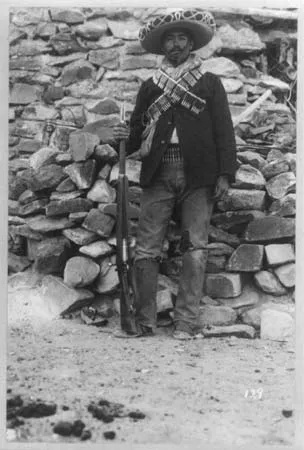
Combatant in Mexican Revolution
*
Cruz's love life has been as scurrilous as his business and political life. His wife abhors him. "I can avenge him in secret and for the rest of my life," she thinks. "She compared the happy days of her childhood with this incomprehensible gallop of hard faces, ambition, fortunes that collapsed or were created from nothing, overdue mortgages, decayed features, pride forced into submission."
As vile as Cruz is, Fuentes shows us how much he suffers, too: over lost love, over the way the Revolution degenerated, over the unavoidable fact of his own mortality. "Someday there will be no light, no heat, no life.… There will be only total, forgotten oneness, nameless, without a man to give it a name: space and time, matter and energy all fused into one. And all things will have the same name … None." He masks his disappointments and fear in cynicism, coldness, vulgarity, and callous realism.
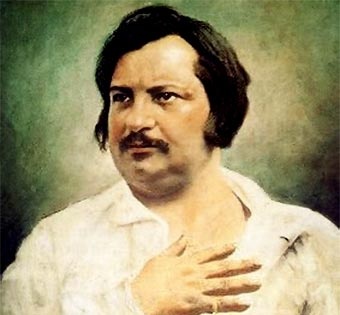
Balzac
*
Fuentes saw himself as the Mexican Balzac, and those Balzacian literary gifts are on full display in Artemio Cruz—the acute and rich attention to detail; the sumptuous prose; the beautifully dramatized scenes; the exuberant embrace of complexity. "An aristocrat in style," one reporter for the New York Times called Fuentes. Consider this wonderful passage where Cruz reflects on his country:
"You will remember it, but it isn't only one country. It's a thousand countries with a single name. You will bring with you the red deserts, the steppes of prickly pears and maguey, the world of the nopal, the belt of lava and frozen craters, the walls with golden church cupolas and stone battlements, the cities of stone and mortar, the cities of red tezontle, the towns of adobe, the villages of reed huts, the paths of black mud the fine bones of Michoacán, the diminutive flesh of Tlaxcala, the light eyes of Sinaloa, the white teeth of Chiapas, the short-sleeved huipil blouses, the bow-shaped combs, the Mixtec tresses, wide tzotzil belts, Santa María shawls, Puebla marquetry, Jalisco glass, Oaxaca jade... you carry them with you and they weigh you down and they've gotten into your guts."

Cortes
*
Lanin Gyurko notes that Fuentes ingeniously constructed his main character to be a symbol of both Hernán Cortés, the conqueror of Mexico, and Moctezuma, the Aztec emperor who demands blood sacrifice in order to renew himself. "Cruz's desperate struggle for rebirth and self-transcendence," Gyurko writes, "symbolizes the nation that time and again throughout its sanguinary history has struggled to recreate itself." Cruz's life "constitutes Fuentes' warning to his countrymen about the extreme dangers … that could result from Mexico's failure to unify the fragments of the national self—its diverse classes, the poverty and disease-stricken masses on the one side and its economic and social elite on the other, its Indian and its cirollo identities, its pre-Columbian heritage and its commercial and technological present."
Many readers today will be struck by the similarities between Artemio Cruz and the present occupant of the White House. As he is dying, Cruz thinks: "You will bequeath the useless deaths, the dead names, the names of all those who fell, dead, so that your name might live; the names of the men stripped so that your name would have possessions; the names of the men forgotten so that your name would never be forgotten. You will bequeath … a power without greatness, a consecrated stupidity, a dwarfed ambition, a clownish commitment, a rotten rhetoric, an institutional cowardice, a clumsy egoism." These words strike me as eerily prescient.
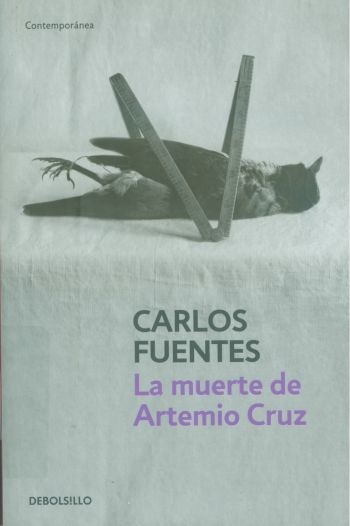
To some readers, like American novelist and travel writer Paul Theroux, The Death of Artemio Cruz is "a dense and overwritten Mexican version of Citizen Kane." For many others, including me, it is a magnificent work of art. In the superb English translation by Alfred MacAdam, it is an accessible, if challenging, undertaking. Readers unfamiliar with Fuentes may want to start with a shorter and "easier" novel, The Old Gringo, which I wrote about in my column entitled "Open Your Eyes, Miss Harriet" (Lokkal, January 12, 2025).
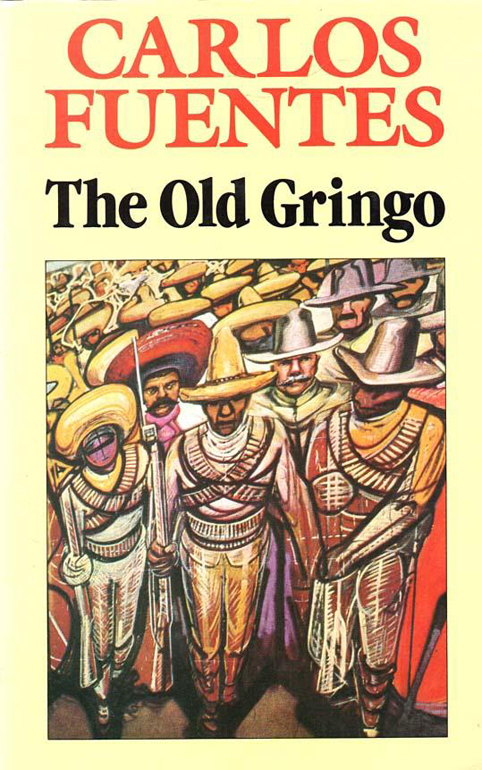
The Old Gringo
*
**************

Philip Gambone, a retired high school English teacher, also taught creative and expository writing at Harvard for twenty-eight years. For over a decade, his book reviews appeared regularly in The New York Times. Phil is the author of seven books. His memoir, As Far As I Can Tell: Finding My Father in World War II, was named one of the Best Books of 2020 by the Boston Globe. His new collection of short stories, Zigzag, was published last year by Rattling Good Yarns Press. His books are available through Amazon and at "Tesoros," the bookshop at the Biblioteca.
**************
*****
Please contribute to Lokkal,
SMA's online collective:
 ***
***
Discover Lokkal: Mission
**************
*****
Visit SMA's Social Network
Contact / Contactar