Querétaro
Español
January 11, 2026
Read chapter one
Read chapter two
Read chapter three
by Allen Zeesman
And it was in that space — open, disoriented, surprisingly clear — that the unexpected happened: I met Beatriz. There was no revelation or drama. Just an honest conversation like I hadn't had in years. A presence that steadied me without effort. A warmth without demand. She wasn't trying to explain me to myself or fix me. She was simply there, clean, clear. What surprised me was not the attraction, but the recognition: the quiet sense that this person was speaking from a true place, a rare blend of intelligence and tenderness. Our conversations gave me something I hadn't felt in a long time: direction. Not a plan or an escape, but something deeper — the feeling that something real was beginning to take shape.
I didn't know how or for what. I only knew that my life was gently turning toward the real. Within that turn, a new horizon began to take shape. Querétaro, which at first had been just a word, began to feel like a direction. San Miguel had been the threshold. Beatriz was the door. The movement toward Querétaro was not born from strategy or rational decision. It was born from something more human, more simple, and more true. It was born from Beatriz.
When we grew closer in San Miguel, something changed in my day-to-day life. I was no longer living on the edge of the expat world or floating in a comfortable community that never demanded real presence from me. I was alongside someone who lived with honesty, steadiness, and an uncommon clarity. One day, almost unintentionally, she said a phrase that revealed an entire world beneath her calm: "I miss my children… and my grandchildren." She didn't say it as a request or a demand. She was simply naming the truth of her heart. And I, without planning it, without overthinking it, without consulting any project, answered: "Okay. Let's go there." It was a simple sentence, but it changed everything.
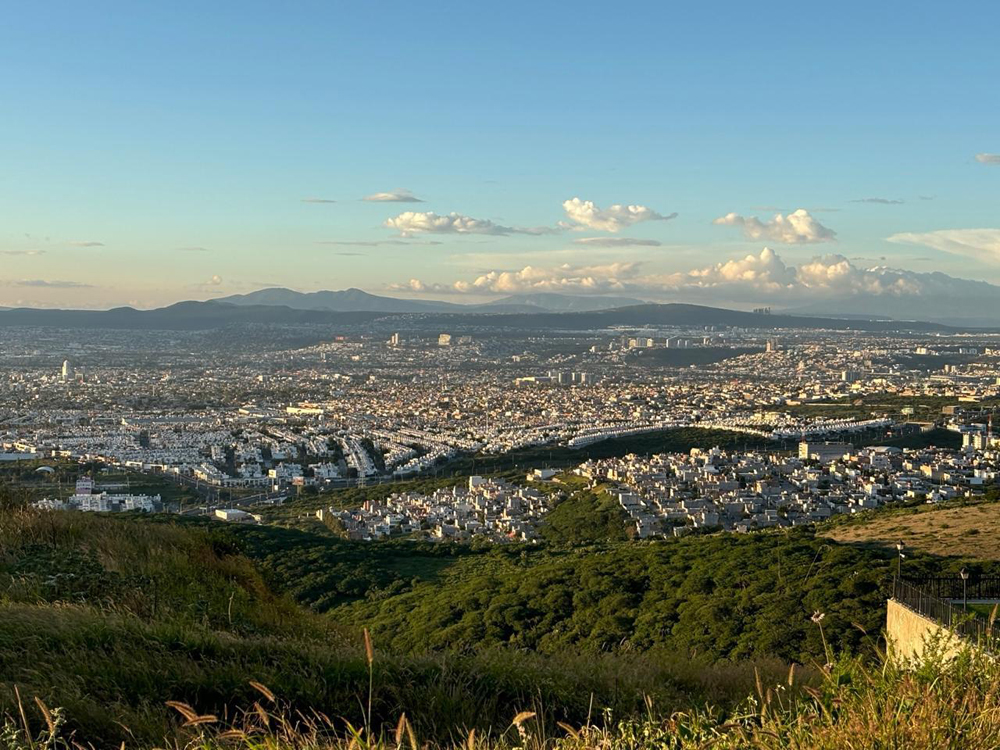
We packed and planned only the bare minimum. We followed the feeling. Querétaro did not feel like a risk, but like direction. When we arrived, something inside me settled. Not with noise or excessive emotion, but with depth. We live two blocks from her children and grandchildren. Two blocks: a short distance that nonetheless contains an entire life. Moving to Querétaro did not feel like starting from zero, but like stepping into a life that had already been waiting for me. Unlike San Miguel, Querétaro was not performing. It was not a refuge for foreigners or a stage designed for others. It was a real Mexican city — alive, working, unmasked — a city that exists for itself.
The rhythm was different. People came and went. Spanish was heard in all its naturalness, without softening it or translating it, without packaging for tourists. It was real, and I realized I had needed it for years. We settled in effortlessly, as if the body had been waiting for that fit. From the first days I felt something I had never felt before: immersion. Not the friendly warmth of a foreign community, nor the sensation of living on top of a culture. True immersion. The sounds of the neighborhood, the cadence of the language, the closeness of family, the smell of home cooking drifting through the windows. Life without ornament.
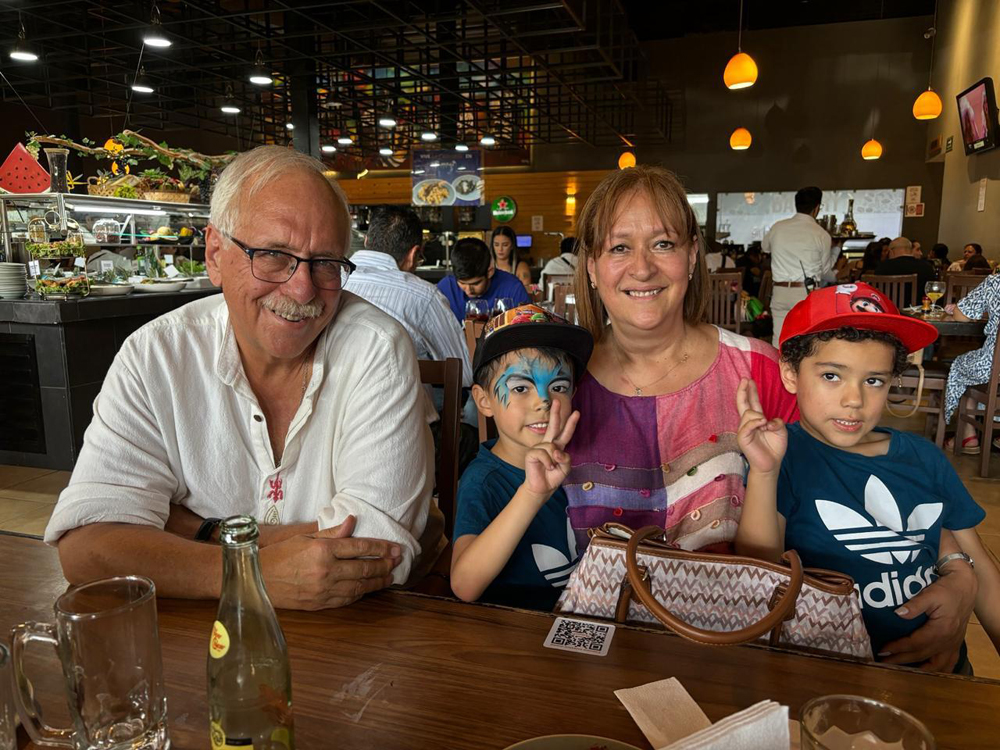
The author, Beatriz and grandchildren
*
Everything was ordinary, and precisely for that reason it was extraordinary. For decades I had lived in places that worked well. Canada gave me stability. San Miguel gave me beauty. But Querétaro gave me something different: a sense of place that matched the inner rhythm I had carried my whole life without knowing it. Beatriz and her family — my family — became part of my daily landscape. And I discovered something I hadn't known: a shared belonging. Not inherited, not borrowed, not conditional. Simply received.
Querétaro taught me something simple and profound: home is not the place that asks the least of you, but the place where who you are fits without effort. For the first time I didn't have to correct myself, justify myself, or wear armor. In Querétaro, at last, I entered myself. Politics had given me language to think about society, but Querétaro gave me belonging. And belonging returned me to everyday life: conversations, meals, laughter, walks, human warmth. The man who had lived in documents, analyses, and debates began to live in direct experience.
Our love was not fire or drama or a collision of needs. It was something rarer and more valuable: a love that grounded me. From the beginning there were no masks or performances. She received me as I was, and something inside me, long tense, finally rested. She never asked me to become Mexican or adopt another identity. She simply received me. And I understood that belonging is not a place where you settle, but a person in whose presence you settle into yourself.
Soon after, our neighbors — Jews like me — invited us to dinner at their home for Hanukkah. It was a simple, natural invitation, without explanations or solemnity. Beatriz decided to make latkes, her first Jewish recipe. She didn't experience it as an identity gesture or a conscious adaptation, but the way things are done when a table begins to feel like one's own: with curiosity, care, and joy. The dinner unfolded with the ease of the everyday. The candles lit, the overlapping conversations, the laughter. The latkes were well liked, but that was almost beside the point. What mattered was the naturalness of the moment: a familiar holiday lived in a new place, without friction or any sense of performing something. I thought: this is what belonging looks like when it no longer needs to proclaim itself.
Over time I became someone capable of being still. Querétaro did not quiet my mind by imposing silence, but by offering presence. I learned to live conversation by conversation, meal by meal, walk by walk. I became someone capable of feeling without apologizing. Mexican culture does not hide emotions; it lets them breathe. I laughed more easily, cried with fewer defenses, and spoke more from the heart. I became someone shaped by a language. Spanish softened me and taught me to feel while I speak.
And finally, I became someone capable of belonging. That was the greatest change. My whole life I had been a visitor, even in the places where I should have been local. But in Querétaro, with Beatriz, close to her family and within the pulse of Mexican life, I felt something completely new: being in the right place, at the right time, with the right person. The life I live now is not spectacular or grand. It does not impress from the outside. It is something much better: it is mine.
I was not meant to belong early. I was meant to sustain myself long enough to recognize belonging when it arrived. And after so many paths, so many attempts, and so many searches, I am finally home.
**************
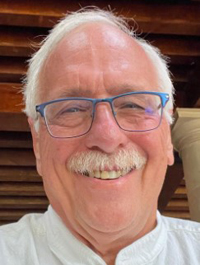
Allen Zeesman has been a regular visitor to Mexico since 1995. He worked for 30 years for the Canadian Federal Government before retiring in San Miguel in 2011. He played piano and bass in an Elvis impersonator band, which some say was the reason he left town. He now lives in Querétaro.
**************
*****
Please contribute to Lokkal,
SMA's online collective:
 ***
***
Discover Lokkal: Mission
Visit SMA's Social Network
Contact / Contactar