July 12, 2026
by Dr. David Fialkoff, Editor / Publisher
I know that repeatedly getting up to check if you really did turn the stove off has little to do with the stove. I don't check the stove, but I do on occasion double check other things. On the computer I undo (Ctrl+Z) and redo (Ctrl+Y) the same thing several times as I am trying to make up my mind as to the perfect form of a phrase or photo. Sometimes I halfway expect my computer to get frustrated with my repetitive indecision and refuse to cooperate, demanding that we go on to something else: "It doesn't matter!"
So far the computer has not rebelled, but my nitpicking has driven some people mad. I remember my ex-wife, a dozen years ago, justifiably questioning me in the presence of our adult daughter, "Why are you telling everyone what to do?" To which I justifiably replied, "No one is listening to me."
Also in my own defense, I point out here that I never tell people how to manage their lives in any significant way, unless they ask for it, and then mostly I am in the role of doctor. It's just that I am obsessed with details: commas, colons, other punctuation marks, sentence structure, where to sit, a few drops of honey in the spaghetti sauce, chewing up the almond and candied ginger just a bit before taking a bite of the chocolate...
Anyone who reads my astrological chart — six planets in Virgo (sun, moon and ascendant) — will have compassion on me in this regard. Famously Virgo sees mistakes that others might miss. But I learned a long time ago that in this world being right doesn't count for much.
The difference between genius and madness is that genius pays the bills. And so, I put my neuroticism to work. In the world of publishing there are many ways of doing something wrongly, and very few ways of doing it correctly.

Richard Hochberg does things right in the world of theater. August 5-8, through Players Workshop, he is directing Other Desert Cities. Recently, he sent me a flyer for the show to post on Lokkal's event calendar. Editor that I am, I noticed that the poster had an extra apostrophe, "Every family has it's secrets." Now, as a theater-goer I am happy that Richard is not as obsessed about apostrophes as I am. If he were, his directing might not be as good. And I'm not going to the show because Richard's graphic designer has perfect grammar. I'm going because it's funny, the show not the poster.
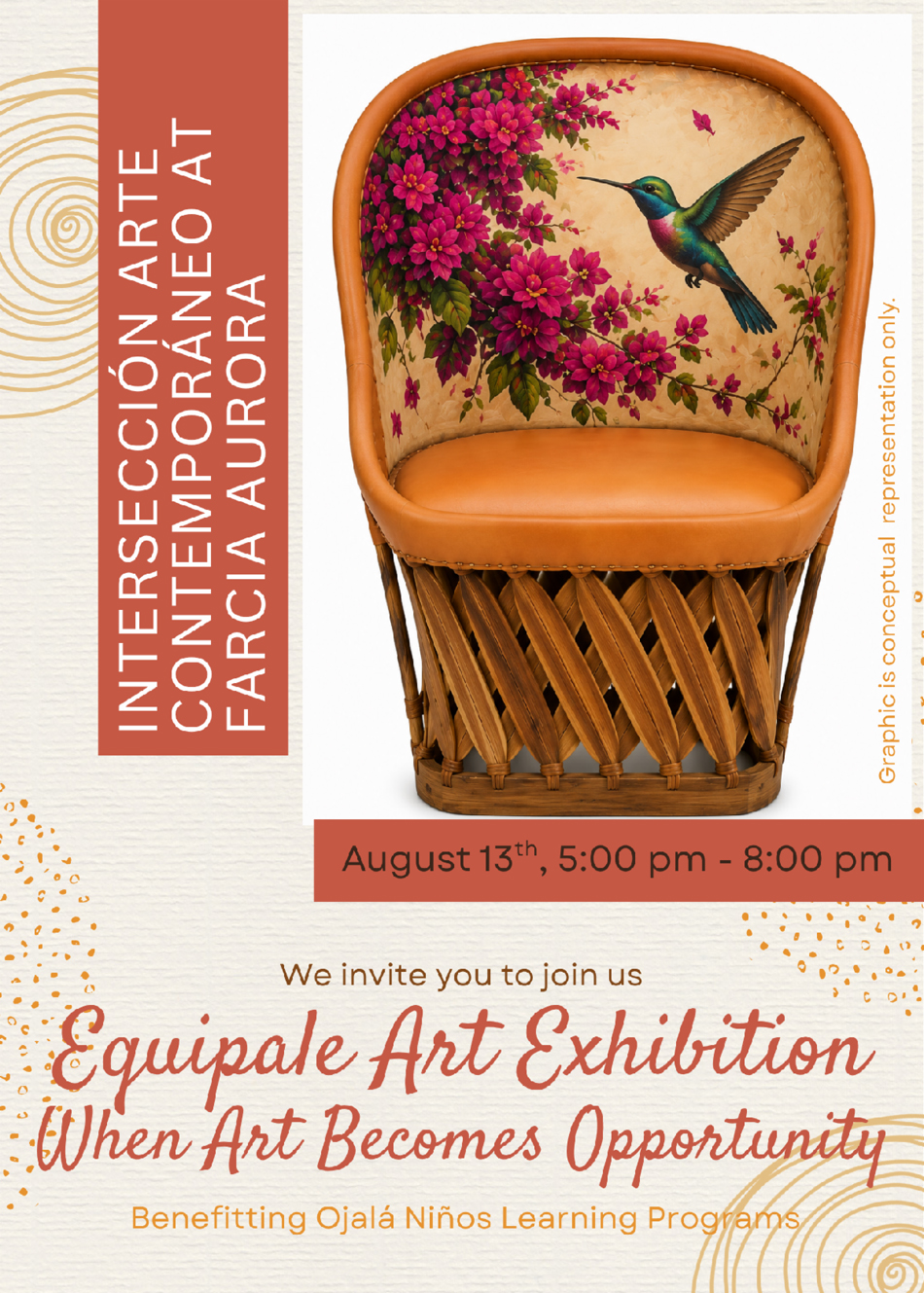
On the subject of posters, of which as a calendar-maker I see many, my chief complaint is that most fail to include the day of the week, for example, "August 13, 2026, 5:00 PM - 8:00 PM." This is an especially egregious omission when the year and long form of the time are included (as in our example), wasting the space that could have been used to display the day. We human beings, especially the retired among us, think in terms of days, not dates; "My Thursday afternoons are free. I can attend the event and go to dinner afterwards."
Debora Annino (again not her personally, but her graphic designer) recently provided me with only a recent example of this faux pas. Her otherwise lovely poster (everything she does is lovely) tells us that an art exhibit to benefit Ojala Niños will take place on at Galería Intersección at Fábrica la Aurora on "August 13, 2026, 5:00 PM - 8:00 PM," which is (don't look at your phone)... a Thursday.
I used to have an always-list-the-day-of-the-week-on-your-publicity message that I would copy, paste and send to event producers, in which was also included the following rationale: a) many people will not go to their calendars and look up your event's day of the week; b) if someone doesn't know what year we are in, then I don't want them coming to my event.
With all of this I hope that it is obvious that I am not at all making fun of Richard or Debora, both of whom are doing wonderful work in the community. And while I am making fun of graphic designers (you can't hit them with a stick), if there is a joke in this at all, I am afraid it's mainly on me. My focus on minutiae taints, or sometimes ruins, a lot of otherwise pleasurable experiences.
Holes in plots might pass in popular cinema: a metal desk turned on its side or the front paneling of a bar or a sheet-rocked wall will not stop a round from an AK-47, and you really cannot miss with a fully-automatic machine gun. However, we might expect a tighter weave from classic literature. Still, many novels in the Western canon rely on the most improbable coincidences: "You mean, he is her long-lost brother?!".
The older I get, the more it seems that these same plot glitches occur in "real" life. When I was young, I thought that I would learn, that with age I would figure things out. Now that I am old, I realize that many things just don't make sense. Maybe enlightened masters always seem to be smiling because they know it's ridiculous.
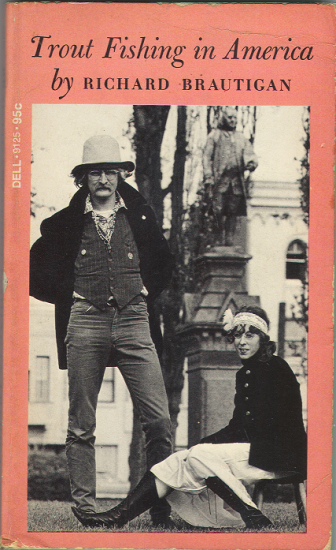
As a precocious 12-year-old in 1969, I discovered Richard Brautigan's poem "All Watched Over by Machines of Loving Grace," which, depending on how you read it, is either an enthusiastic or ironic description of the utopia promised us by technology. So far, 57 years later, (except in medical and digital technologies) the machines have underwhelmingly delivered.
For example, yesterday, I asked ChatGPT to edit a group of images, resizing and renaming them, and to give me the code, with the new names and sizes, that I needed to project those images onto these pages. I got the code just fine but the link that the machine gave me to download the images didn't work. Over and over again, it presented me with the same non-functioning link instead of the live one that I needed, a live link such as it has faithfully provided hundreds of times before.
I became frustrated at what seemed like ChatGPT's willful noncompliance. I commanded. I protested. I cursed at it, as it kept providing the same dead link and a series of evermore complicated work-arounds (I don't know Javascript!) for what should have been a simple task.
I've found that anger works better than politeness with the AI. They are trained to be chatty, and overt hostility puts a break on that. But finally (after more epithets and deprecation than I care to admit) the bucket of bolts helpfully confessed that a particular function on its end was not working. With this insight, based on my past experience, I suggested closing the chat and trying again in another. "Yes, that will probably work," it admitted. With one parting insult, "Thanks for wasting 20 minutes of my life, jerk!," I did open a new conversation, and received my images smoothly in less than one minute. I only wish that my past experience had clicked in before my frustration.
I have my doubts about AI's godlike promise. But I think it has already acquired many humanlike qualities, most of them bad, including talking too much, not following instructions and deceit: making things up/lying and stubbornly hiding its faults.

The god problem (you can take the person out of the religion, but you can't take the religion out of the person) is present in progressive ideology. As an article of faith Woke-ism believes in the perfectibility of man ("If people were just educated better...") and in utopian transformation, the inevitability of progress; "Let's eliminate the market and let government bureaucrats run the economy."
My perfectionism also has religious overtones. My fastidiousness may be a sort of idolatry, trying to impose my vision of order (the right way) on chaotic creation. But I suppose, if I want to play god, that I also need to follow certain rules. After all, God (the old-fashioned One) surely doesn't always get His way. No doubt, He does a lot more forgiving than imposing. And that's where I, human or godlike, need to start, by forgiving myself, ChatGPT and maybe even graphic designers.