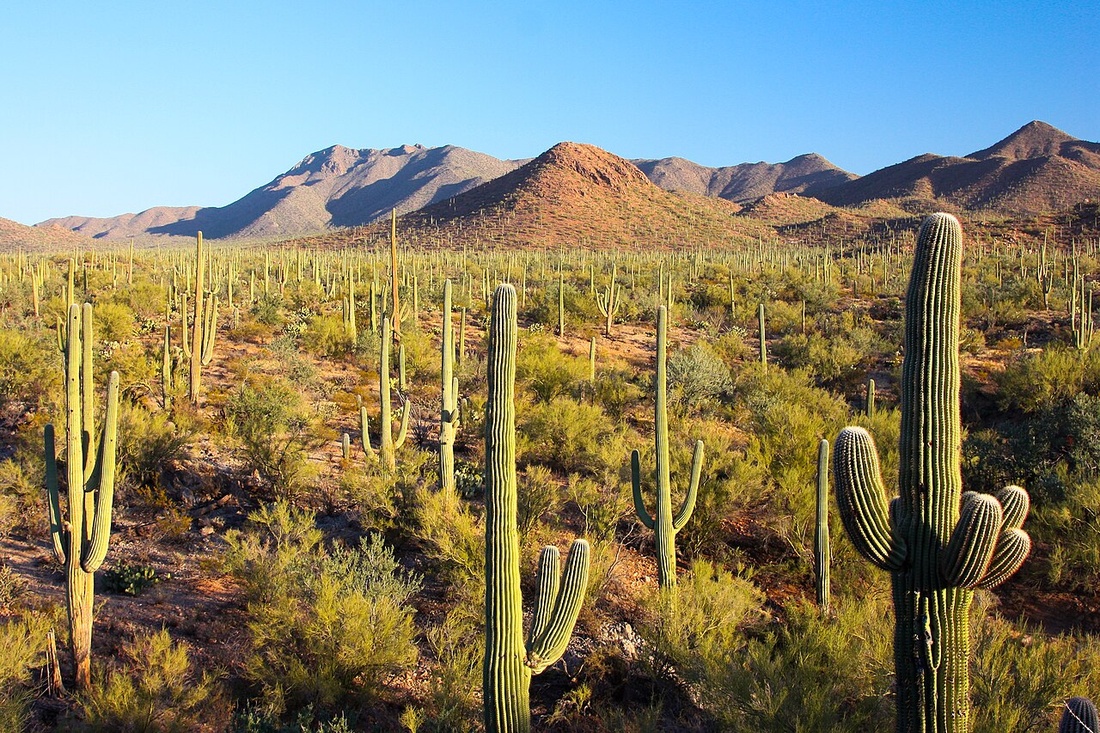
New Mexico desert
Español
March 29, 2026
by Philip Gambone
In the spring of 1940, the American composer Paul Bowles got a job with the U.S. Department of Agriculture. They asked him to write music for a film they were producing about soil conservation in the Rio Grande valley of New Mexico. Bowles was only too eager to get away from his life in New York. His wife, Jane, with whom he was having difficulties, said she would accompany him to New Mexico on the condition that she could bring along her drinking buddy, Bob Faulkner. Bowles was so eager to get away from New York that he didn't much care who came along. The three of them took the train, Jane spending most of her time drinking with Faulkner in the club car.
"Bowles took an immediate liking to Albuquerque," writes Christopher Sawyer-Lauçanno in An Invisible Spectator: A Biography of Paul Bowles. "The strong presence of Indigenous Mexican and Indian cultures pervaded the town, giving it a foreign feeling, an atmosphere quite different from other places Bowles had visited in the United States."
The young composer took walks into the New Mexican countryside, spending a great deal of time in the desert, where there was "nothing but the complex sinewy pattern of rocks, sand, driftwood and pebbles." On these rambles, he would compose in his head, then return to his house to write out the music and play it on the piano. The finished score—for piano, percussion, double bass, and wind instruments—incorporated popular Mexican musical idioms.
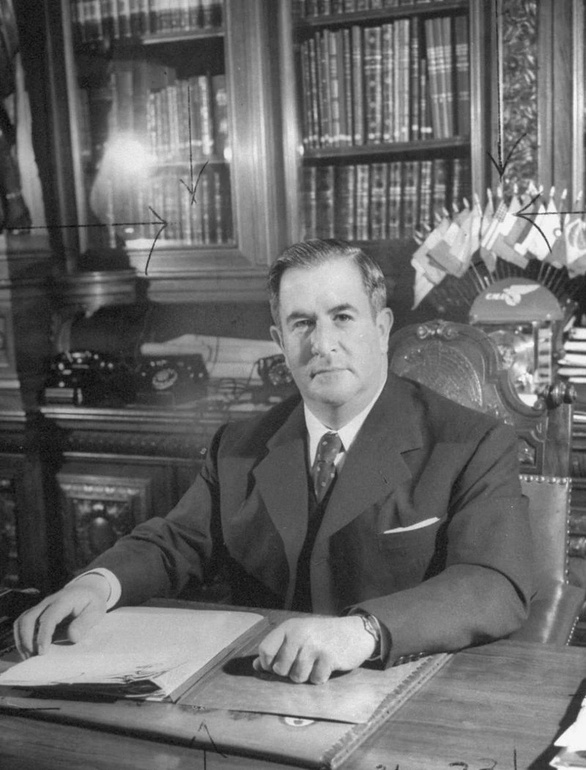
Manuel Ávila Camacho
*
After returning to New York, Bowles became eager to travel to Mexico, which he had previously visited in 1937. He wanted to arrive in Mexico City before the 1940 presidential election in July, which pitted a left-leaning candidate against an arch-conservative, anti-communist candidate. With the election of Manuel Ávila Camacho, the leftist, Bowles and his wife moved on to Jalapa and later Acapulco.
Jane quickly wearied of Acapulco and moved on to Taxco. Paul remained behind, finding Taxco had lost all of its former charm and was now completely overrun with pretentious gringos. He eventually returned to New York to write music for an upcoming production of Shakespeare's Twelfth Night and a ballet on the theme of Mexican Christmas posadas.

Taxco
*
The composer and nascent fiction writer made two more trips to Mexico. After the last one, in 1944, when he was in his mid-thirties, he never returned, but his Mexican experiences stayed with him. When he turned to writing fiction, Latin American locales became the settings for some of his short stories.
Only one of Bowles' stories is recognizably set in Mexico, but it's one of his strongest and most frequently anthologized. "Pastor Dowe at Tacaté" was first published in 1947 in the prestigious literary journal The Partisan Review. (It was later published in his first collection of stories, The Delicate Prey.) Like so many of Bowles' stories, it centers on the confrontation of Americans with foreign cultures that unnerve them.
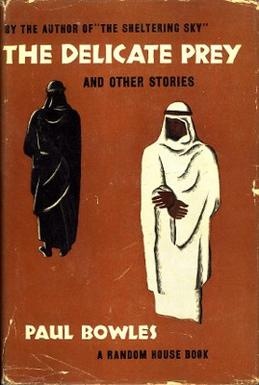
In the story, Pastor Dowe serves as minister to a community of Indians, a village filled with the shrill sounds of dogs, parrots, cockatoos, babies, and turkeys. Despite his mastery of the local dialect, Dowe senses that his sermons fall on deaf ears. When he consults Nicolás, one of the most intelligent and influential men in the village, Nicolás tells him that the congregation will not return another Sunday unless the pastor plays music. Dowe is disturbed—by the idea of music at a sermon, by the small personal temples the Indians maintain in their houses, by the nakedness of the children, and by the "vaguely distasteful" touch of Nicolás' brown hand. He begins to sense that he is "wholly alone in this distant place, alone in his struggle to bring truth to its people." He reluctantly agrees to set up his phonograph at the next service and play recordings of the popular songs of the day. "Crazy Rhythm" becomes the villagers' favorite.

Alligator doll
*
The pastor's ill-humor is exacerbated when he discovers that the "doll" that Marta, one of the village girls, is carrying is actually a bundled up young alligator. "There was a hidden obscenity in the sight of the mildly agitated reptile with its head wrapped in a rag." More and more he feels lost in the antiquity of the native culture. He gives up on "expecting any Indian to behave as he considered an adult should."

As the story unfolds, the gloomy land itself—the vegetation, the odors of the plants, "a world where slow growth and slow death are simultaneous and inseparable"—fills Pastor Dowe with more disquiet. He meets two natives, who invite him onto their raft. "Where are you going?" he asks. Tacaté, they answer. Almost as soon as they begin their journey down the dark, silent waterway, Pastor Dowe regrets his decision. He feels he is entering a region that is "outside God's jurisdiction." The journey brings on a spiritual collapse, though the pastor simultaneously experiences "a process of relaxing." An old spirit is dying; a new one is being born.
When they come ashore, the men show the pastor two caves. "Your god lives here," one of the natives tells Dowe, pointing to one of the caves. When he starts praying, they demand that he speak in their tongue. "Metzabok hears you now," they tell him. "Say more to him." In the "monstrous letting go" that this experience has become, Dowe feels himself becoming strong and happy, "suffused with the strange triumphant sensation of having returned to himself."
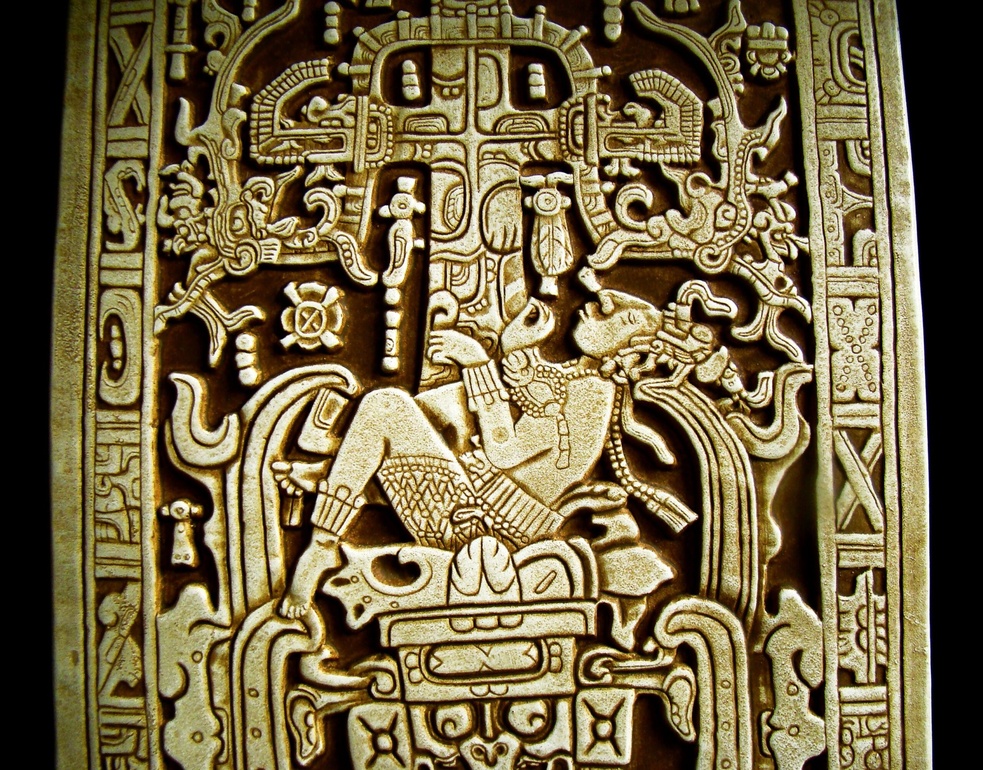
"Is Metzabok bad?"
*
Returning to the village, Dowe asks Nicolás about this god Metzabok, to whom the two natives had commanded him to pray. "Is Metzabok bad?" he asks. "Sometimes very bad," Nicolás tells him. "When he does not get what he wants right away, he makes fires, fever, wars. He can be very good, too, when he is happy. You should speak with him every day. Then you will know him." Dowe feels "fortified" by his experience, as if he had revisited "the days of his youth."
The next Sunday, during his service, with "Crazy Rhythm" playing on the phonograph, Nicolás gives Marta to the pastor as a gift. "She is your wife," he says. Horrified, Dowe refuses to take the child, but Nicolás insists that the pastor cannot send her away. "You must keep her." Nothing the pastor says can dissuade the villagers. "You don't understand anything!" Pastor Dowe shouts, so vehemently that he entangles himself in the mosquito netting over his bed. That night, he packs his bags and slips out of the village and into the forest.

Gore Vidal considered Bowles "a master of suggesting anxiety … and dread. Story after story turns on flight." In "Pastor Dowe at Tacaté," we see the terror of confronting the limits of one's comfort zone and of deciding whether or not to push beyond that mental and cultural frontier. It's the quintessential Bowles theme. Does the strait-laced Dowe do the right thing in fleeing the proposed "marriage" to Marta, or is Bowles suggesting that Dowe's religion, his morality, his understanding of how "adults" should behave lock him out of the crazy rhythms of the Indigenous worldview? When he leaves the village, is he headed back toward the mysterious cave, or will he return to a safe, unthreatening "civilized" world?
During his visits to Mexico, Bowles saw in the Indigenous people he encountered a very different way of being. Within a few years of his Mexican sojourns, he adopted Morocco as his permanent home. Morocco proved to be a place where the Saharan landscape, the plentiful supply of hashish, and the sensuality of the people offered him a way of life where he didn't have to put up with all the nonsense of Western culture and mores. But before that, it was Mexico that inspired his quest for a home where he could live out his anti-bourgeois dream.
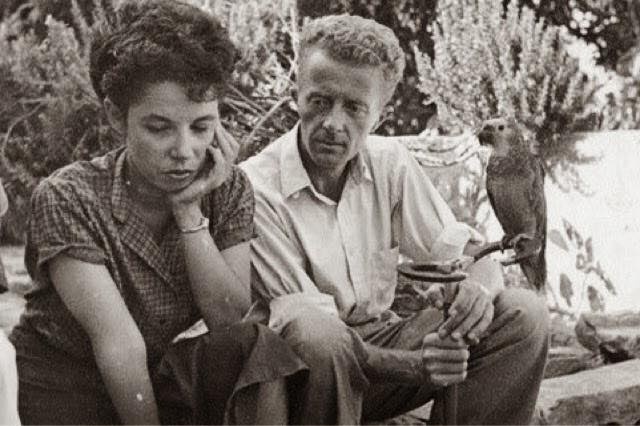
Paul and Jane
**************

Philip Gambone, a retired high school English teacher, also taught creative and expository writing at Harvard for twenty-eight years. For over a decade, his book reviews appeared regularly in The New York Times. Phil is the author of seven books. His memoir, As Far As I Can Tell: Finding My Father in World War II, was named one of the Best Books of 2020 by the Boston Globe. His new collection of short stories, Zigzag, was published last year by Rattling Good Yarns Press. His books are available through Amazon, Aurora Bookstore, and at "Tesoros," the bookshop at the Biblioteca.
**************
*****
Please contribute to Lokkal,
SMA's online collective:
 ***
***
Discover Lokkal: Mission
Visit SMA's Social Network
Contact / Contactar