 Español
March 1, 2026
by Charles Miller
It is gratifying to receive feedback from readers, a little less so from the ones complaining about the subject being too complicated. I did lead off the first column in this series four weeks ago saying you do not have to know any of the technical workings of the internet to be able to use the internet. But, if you have ever been without a working connection to the internet and asked "Why?" then you should continue reading.
In the four columns preceding this one I wrote of how the engineers who designed the internet half a century ago were incredibly far-sighted. They created a communications system that allowed for future expansion to four billion Internet Protocol (IP) addresses, and 281 trillion Media Access Control (MAC) addresses. But for all of their foresight, those engineers simply did not anticipate that their creation we today call "The Internet" would become as popular as it has. Four billion IP addresses seemed like it should have been enough, but it was not.
One very astute reader wrote to ask me if the internet has run out of available IP addresses, of which there are only 4 billion, why not just use MAC addresses instead because there are 281 trillion of those available. To put it another way, there are not 10 times more or 100 times more MAC addresses than IP addresses, but over 60,000 times more! Plus, every computer, phone, and device connected to the internet already has a MAC address assigned to it.
That suggestion to use MAC addresses rather than IP addresses seems logical, but it would not work. The engineers who created the internet created the two numbering systems for two distinctly different purposes. A MAC address identifies a computer or some other hardware device just like a serial number, and an IP address identifies the physical location on a network where that MAC happens to be located now. The two systems are not interchangeable. Both are required and one can never take the place of the other.

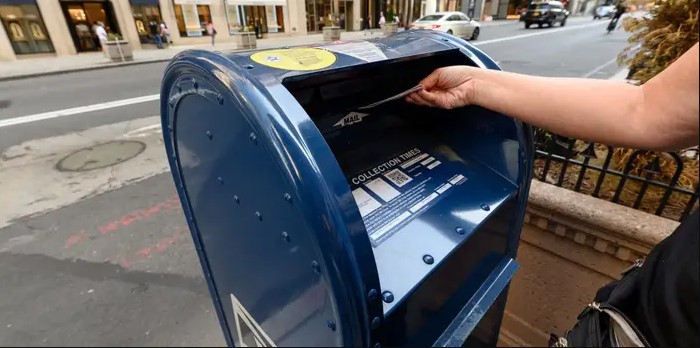
The best way I know to explain this is that IP and MAC are used on the internet in the same way the post office uses names and physical locations. A complete postal address includes who and where. In this example, the MAC address is who (your computer) and the IP address is where (your location). Both name and location are required to make up the whole address.
MAC addresses are used to uniquely identify computers, smart phones, and other devices. A MAC address also can identify who manufactured a device. The first half of a MAC address is called the Organizationally Unique Identifier assigned to the manufacturer. Every product made by Apple carries a MAC beginning with "00:1A:2B" and every Dell computer’s MAC begins with "00:14:22." The second half of the MAC is unique to the individual device, just like a serial number.
IP addresses are used to identify locations. They are hierarchical and were largely geographically based. Blocks of IP addresses were assigned to North America, Europe, Asia, Africa, and so on. Early allocations also assigned blocks of IP addresses to universities, governments, and private companies without regard to location. That system works, largely because it lets any IP address be easily identified as being located in a particular region or for a certain organization. For example, originally all IP addresses beginning with "193." and "194." were located in Europe, and all 16 million IP addresses beginning with "9." belonged to IBM.
MAC and IP addresses team up like mailing a letter at the post office. Trying to send a letter using just the name of the recipient and no address would never work. And sending a letter to a street address but not specifying the name of the person for whom the letter is intended is only somewhat less problematic. Both the name and the address are needed for efficient delivery of the mail, and for connecting your devices to the internet.
And this problem still remains. There are not enough IP addresses to satisfy the needs of the modern internet. What is being done about this is the topic for next week.
**************

Charles Miller is a freelance computer consultant with decades of IT experience and a Texan with a lifetime love for Mexico. The opinions expressed are his own. He may be contacted at 415-101-8528 or email FAQ8 (at) SMAguru.com.
**************
*****
Please contribute to Lokkal,
SMA's online collective:
 ***
***
Discover Lokkal: Mission
Visit SMA's Social Network
Contact / Contactar