 Español
May 10, 2026
Previous chapters
by Jan Baross
CHAPTER TWELVE
Inside the chilly rectory, one black shawl is not warmth enough. Any moment Mamá will bring the wedding dress. Once inside it, I am abducted for life.
Miguel Svendik scrapes a sulfur match on the rough wood of the doorway and holds it over his pipe. His white teeth turn orange in the light of the flames. Dry tobacco crackles. He inhales, quick and hollow. In the kerosene lamplight, smoke pours out of his nostrils and surrounds his head, turning the air blue. He takes the pipe out of his mouth and waves it.
"Magdalene," he says.
He's already forgotten my name.
"No," I say. "Tortugina."
His coughing laughter topples into the room. "I meant my pipe."
"You are a man who names everything," I say.
"Everything has a name. My camel is Lucinda. My pipe is Magdalene. And there is a part of me that you will learn very well by name."
He turns his bull of a head back into the church nave and yells, "And the name of my bride is Tortugina! Tortugina is the name of my bride to be!"
His voice bounces off the walls. It doubles and triples into a choir of baritones. Villagers stop what they are doing and crane over the worn pews at Miguel's declaration. Then they go back to what is required for the fastest wedding in the history of El Pulpo. Older women flutter from wick to wick, lighting a cathedral of candles on every flat space. They place potted flowers and vases of wilted bouquets. No time to prepare for a real feast. No time to make gifts. No time to air out the cedar moth-proofing from stored dresses and suits.
Remembering Gabito's wounded face, I try once more for the truth.
"I should tell you something before we wed," I say.
He looks at me through the blue haze he has created in the doorway.
"I have no interest in women's secrets. You should keep it to yourself unless, of course," he laughs, "you are pregnant with another man's baby."
Miguel is still laughing when Mamá coughs her way through his curtain of smoke. Sweat pours down her face from the race across the plaza to our house and back again. The folds of her neck flatten as she throws back her head and gulps the icy air in the rectory.
"I had no idea I could still run that fast," says Mamá.
She holds up the long white bag and dismisses Miguel with a wave.
"Go smoke somewhere else, Señor Svendik. I will prepare our little bride."
Miguel salutes us both with a swirl of his pipe.
"It is my honor to wait for your beautiful daughter, Señora Gomez."
The door's hinges scream as Miguel closes it. Mamá lays the bag carefully on the table and collapses beside me. She wipes her face, takes a small knife from her pocket, and hands it to me.
"Tortugina, this may be the only tradition honored tonight. Each woman in our family cuts the family wedding dress free of the sheets."
I take the sharp knife and cut the tiny fishing-line stitches that burst and curl like transparent snakes around the edges of the sheet. When I pull the sheet back, a forest smell emerges, cedar chips tied in small bundles of cheesecloth.
The wedding dress is long-sleeved and completely out of style. A high collar with small buttons, unfashionable for a hundred years. The white brocade on the bodice is torn in one place. The skirt, made from yards of white silk, is yellowing at the folds. A white lace mantilla lies in a crumpled mess.
"I won't wear it, Mamá."
I have seen the dress all my life in the black-and-white photographs in our hallway. Family women who briefly sealed their bodies inside the dress and committed their lives to its meaning.
"Your wedding and the dress are a part of this family's history for five generations," says Mamá. "Undress."
Mamá turns me around and unbuttons the back of my white promenade dress.
Five generations. That is about 150 years, five Mamás, with three daughters apiece. And now, I add my time to theirs. My Mamá and her Mamá and her Mamá and her Mamá, we all leave our virgin sweat in the silk.
Before I can let the starchy promenade dress fall to the ground, Mamá catches it.
"Always pull your clothes over your head." She hangs it on a wooden hook. "You'll want to keep your things clean now that you have to wash them."
"I will do exactly as I please in my own house," I say.
Mamá lowers the silk wedding dress over my head.
"I will not miss these conversations," she says.
A layered cloud of white silk covers my head with a suffocating cedar smell. If this dress fit Mamá, it will surround me like a circus tent. With a small jerk from Mamá, the dress rests on my hips. It fits me perfectly. A cedar chip is caught under the silk and cuts into my waist.
"Mamá, a chip is poking me."
"It is the first of many inconveniences you will feel as a married woman," she says.
But she reaches into the bodice and pulls it out. I expect her to start buttoning. When she does not, I turn and see she is holding the chip in her palm and drowning it in tears.
"Mamá? Is this what cedar does to you?"
She turns me gently and buttons the tiny pearls up my spine. "Twenty-five years ago, I was you."
Tears fill my eyes too when I think that in twenty-five years, I may be Mamá.
"Mamá, when you married Papá, did you know him?"
Mamá straightens my seams. "All husbands are strangers, and remain strangers until the day you die."
I want to crawl inside her dress and go home.
The wood hinges scream as Verónica opens the rectory door. She holds the bridal bouquet in a towel. She brought week-old purple dahlias dripping from the front-room vase. Verónica holds them away from her dress. She lays the dripping bouquet on the bench and sits beside them. Her frown is worse than usual. Since she has tortured me for so many years, I like to think I am the cause of her unhappiness.
"Padre Abstensia is waiting," she says in her sulkiest voice. "Everyone is waiting."
Mamá places the white lace mantilla on my head. Her bare arm brushes in front of my lips, and I absent-mindedly kiss her warm skin.
A terrible blast of organ chords shakes us through the cold rectory walls. The lip rouge drops off the table and rolls across the floorboards.
"Señora Tranquilina!" says Mamá. "She plays no better today than she did for my wedding."
The old metal organ pipes groan and echo. Señora Tranquilina bangs a horrible march that she plays faster and faster. Mamá sticks her head through the rectory door and shouts.
"You do not need to get rid of Tortugina that quickly, Señora Tranquilina!"
The music slows to the promenade tempo then slows to a dirge.
"Not that slow!" yells Mamá.
But Señora Tranquilina continues. Mamá looks at Verónica for the first time.
"The last tradition," says Mamá. "Tortugina must wear something from a married woman for luck. What should I give her, Verónica?"
Verónica's cheeks suck in and out like sails. Pearl tears pour out of her eyes.
"She's wearing your wedding dress and mantilla, Mamá. That ought to bring her everything she deserves."
She squints tightly until there are only dark lashes like tiny octopus legs sticking out of her clenched eyes. Human emotions are not becoming to Verónica's face.
"Verónica," says Mamá, "tell Padre Abstensia that we are ready."
Verónica makes an animal sound like a small dog being struck and runs out of the door.
"She certainly chooses her moments," says Mamá. "You do not need to carry that rotting bouquet she brought you."
Mamá lowers the white mantilla over my face. Lamplight halos through the veil. The world turns pale and unreal.
"Remember, Tortugina," whispers Mamá. "Whatever happens on your wedding night, you are young and will recover quickly."
Mamá's arm twines in the crook of mine. It is a picnic-slow walk through the rectory door into the drafty church. Candles glow, kerosene lamps are hung on every hook. My sweat dampens the yellowed underarms, releasing the scent of former virgins. Even more, I smell the cilantro of Mamá's sweat.
Doves and swallows beat their wings against the rafters overhead. Señora Tranquilina's slow march continues its irritating drone.
At the back of the church, Papá waits. He smooths his hair, rubs his backside under the wool dress pants, and signals for us to hurry. We continue our slow pace toward Papá. He smiles at Mamá, and she smiles back at him.
"Do not expect too much of a man, Tortugina," whispers Mamá. "They can only love their dream of you. If you help him to maintain that dream, he is yours forever."
"Mamá?" I whisper. "What about my dream?"
"Two dreamers in one marriage?" She shakes her head as though I had made a joke. "We should have started this conversation years ago."
"You love Papá, don't you?" I whisper.
She drags me toward him. "More than my life."
Mamá leaves me by Papá's side and lowers herself into the pew next to Verónica and Amanda. Sweet Amanda blows me a kiss.
For the first time in my life, I slip my hand into Papá's hand, hard and stiff like his cold, vegetable toes.
Padre Abstensia nods to Señora Tranquilina, and her old fingers switch to a wedding march slow enough for a pair of cripples. At this rate, we may not reach the altar by sunrise.
Papá seems more than pleased. His graying hair shines, and his sad eyes have a freshly unburdened glow. With the arrival of a man and a camel, his world has lightened.
Papá's valued customers smile at him. They might even be smiling at me. Familiarity alone binds me to the lives that have been lived behind each of my neighbors' faces. They have watched me grow. I have watched them grow old. Age is most noticeable in their hair, which seems to have regrouped in unfortunate places. Balding Señor Aves has dark fur in his ears. Thin-haired Señora Septima has black hairs like cat whiskers on her chin. Señora Grosera's gray eyebrows are long and curly.
When Papá and I reach the altar, advancing faster than Señora Tranquilina's slow tempo, Miguel Svendik takes my hand. He wears a black jacket, short in front with long tails in back that complement his square figure. His white shirt is tucked into his white pants. A red sash circles his waist. His sandals have been replaced with a pair of shiny black shoes scuffed at the toes. He does not appear to be wearing socks. His wild, thick brown hair is brushed back and oiled down around his skull, his green eyes are as soft as cooked peas. When he smiles with the squarest teeth I have ever seen, I smile back, and for a moment, I begin to enjoy my own wedding.
Padre Abstensia rocks back and forth breathing clouds of church wine. The lilies in their white vases on the altar have wilted since last Sunday. No one has replaced the smoky candles with new white ones. But it makes no difference to me.
When the organ music ends, Miguel Svendik takes my hand as if it no longer belonged to me. We kneel in front of Padre Abstensia, his Bible in hand, as he looks over our heads at the villagers.
"My friends, we are gathered in the eyes of God to join this man and this woman in holy matrimony. Are there any who object to such a union?"
"NO!" yell the villagers.
Doves and swallows flutter in the rafters. Padre Abstensia shakes from too much wine as he looks down at us.
"It has been requested that I forego the ceremony and marry you quickly. Do you, Tortugina María Gomez, take Miguel Svendik as your husband?"
"Yes." My voice is a whisper.
With genuine concern, Padre Abstensia turns to Miguel Svendik.
"Do you, Miguel Svendik, really want this woman for your wife?"
Miguel looks through the patterned mantilla for my eyes. "I have chosen the best woman your village has to offer."
Padre Abstensia makes the sign of the cross over us. "May life not disillusion you too quickly, my son. You may exchange the rings now."
Behind us there is a shifting of bodies and whispers. Rings? In the haste of preparation, no one took the duty of the rings.
Miguel removes a small, polished wood box from his jacket. "These belonged to my parents."
There is a village of murmurs behind me.
"He is prepared!"
"Nothing left to chance!"
"A man in charge!"
Miguel opens the small box. Two gold rings. One is a thick gold band, scarred from use. The other, a smaller gold band, is worn at the edges.
Gabito's blue wedding band shimmers on my finger. It is so much a part of my skin I would not know how to remove it. Miguel's gold band is too small to slip over my knuckle. He pushes harder. The thin gold edges shave flesh.
"You're hurting me," I say through clenched teeth.
He twists the ring to loosen it, perhaps, but the sharp pain goes straight to the top of my head. Where Gabito's blue band fit so easily, my flesh plumps out on either side of this ring. Miguel's father's fat gold band slips easily over his knuckle.
"A perfect fit," says Miguel Svendik. "Like us."
If only Gabito were here to jump up and down on Miguel's head.
Padre holds his palms over our heads. "By the authority of God, I pronounce you husband and wife! You may kiss the bride."
When we rise from our knees, my body is as numb as my wedding finger. Miguel lifts the veil that shielded me. His kiss tastes pipe bitter.
At the end of the kiss, the village releases a big, collective sigh. A shout erupts from Papá, followed by cries and whoops from Verónica, Amanda, César, Padre Abstensia, Señor Aves, Señora Cantata, Señor Duro. The whole village rises with a loud sense of relief. They stomp the dusty floorboards, bang their shoes on the weathered pews, and shout. Excited pigeon feathers fall from the rafters.
Women who ignored Mamá since Gabito's death kiss her cheek, grab my shoulders and kiss me on both cheeks. Their husbands who have called me names now shake my husband's hand. Even Gabito's father, Señor Emilio, offers his hand in friendship to Papá, who takes it as one would a precious gift.
Miguel gives Padre Abstensia a small handful of silver coins.
"May God have mercy on your souls," says Padre Abstensia.
"That sounds like a death sentence," I say.
There is tenderness in my new husband's eyes.
"It is a life sentence, Tortugina. From this moment on, you belong to me."
My new name. Tortugina Svendik. That will take practice. Papá climbs onto a pew and holds his hands in the air. His whistle pierces as if he were at a soccer match. The village cheers turn to silence.
"My friends," says Papá. "We had no time for preparations, yet I promise you tonight you will drink my best aguardiente in honor of my daughter Tortugina's wedding!"
I cannot believe my ears. Papá's precious aguardiente that he sells at a good price? My eyes fill with tears.
The divers lift Papá onto their shoulders. The mariachi band plays the wedding march and leads the village out of the church.
The aisle is empty except for the stranger by my side and dark little Señor Deguerra with his big black photography camera that he props up in the aisle. His assistant holds up the flash powder.
"Say 'queso,' " he says.
"Queso," Miguel and I repeat with a show of teeth. "Cheese." And the flash blinds us.
While Mamá carts off the stained silk relic to store for her next daughter's wedding, I change quickly back into the real world of everyday cotton.
***
CHAPTER THIRTEEN
Across the Plaza de Allende, the mariachi notes of Sweaty Oskar's trumpet blast a path to Señor Ignacio's taverna. Music leaves an easy trail to follow. Our bodies move as one shadow down the stone steps of the church into the midnight celebration. My new husband's hand completely covers mine, but it does not shut out thoughts of Gabito. When wedding night consummation comes, I wonder if Gabito will jump up and down on my new husband's back with his fiery sandals.
Miguel Svendik slips his hand under the wool shawl and caresses the back of my new white blouse. It surprises me, his gentle touch as he slips his fingers down to the creases of the blue skirt and feels my bottom. My thoughts of Gabito are stronger than ever.
Miguel Svendik and I pass through the plaza, the fountains with children's stick boats, the flaking bandstand, the stones where the feet of Gabito and Tortugina wore their mark, my dark bedroom window above Papá's store. Even the air smells different, as though I am walking through a dusty memory.
My fingers are caged in Miguel Svendik's hold. I pull away and lick my ring, turn the tight band to allow the flow of blood.
"Will we be happy?" I say.
Miguel's face is shadowed under his soft sombrero. "That is up to you," he says.
He takes my hand again and does not let go.
In front of Señor Ignacio's taverna, familiar silhouettes glide to Sweaty Oscar's mariachi music. Some of the women lay out platters of refried beans and yesterday's chicken rescued from their kitchens. People will eat it only when they are too drunk to care what they put in their mouths.
Miguel pours me wine as we sit. I do not feel as married as Mamá and Papá, as the people who sit in front of fireplaces dozing.
The old madame, Señora Estonia, with a freshly painted face, totters to our table and leans over Miguel.
"Miguel Svendik and his accidental bride," Señora Estonia says. "I have lived too long when whores like you find husbands."
"You have indeed lived too long, Señora Estonia," I say. "You will never feel a man's caress again."
Señora Estonia trumpets a laugh through her elephant-ivory teeth.
"I have felt the caress of many married men," she says. "Your husband's hands will soon be on some whore's ass, Tortugina. I only wish it were mine."
Her knobbed fingers tweak Miguel's cheek. He gently pats her sagging bottom.
"I love crazy old women," says Miguel. "I hope you are like her when you're old."
"Diseased and despised?" I say.
Miguel laughs and jumps up to help Papá settle a box of aguardiente bottles on our table.
"My friends!" yells Papá. "On this night I lose my youngest. This special aguardiente is a tribute to my beautiful daughter."
I cannot hide my tears at Papá's declaration. Miguel puts his arms around me.
"Why are you crying?" he says.
"Papá called me beautiful," I whisper.
Papá stands back and allows the villagers to circle the boxes and pull out the beautifully labeled bottles. His precious aguardiente has made this night an event in the history of village weddings.
The bottles are unsealed and the aguardiente poured into shot glasses. The villagers raise their glasses to toast Papá and wish happiness to our family. They throw the drinks back in one gulp and fill their glasses again. They toast me with far too much joy.
Papá sits down across the table and presents a dark, dust-streaked bottle to my husband.
"Señor Svendik, I bottled this one the day before Tortugina's birth," says Papá. "The taste is wild and strong. I thought she was going to be a boy."
Papá fills a shot glass of my aguardiente for himself and one for Miguel.
They clink and throw the liquid down their throats.
"May I have a taste of my birth aguardiente, Papá?" I say.
Miguel Svendik winks at Papá. "We know what burning water does to a woman."
They both laugh the way men do at jokes about women, usually behind their backs. Papá pours another drink and toasts me.
"To a decent night's sleep," he says. "Thank you, Tortugina!"
Miguel allows me a sip from his glass. The aguardiente's strong anise flavor is so sweet it curls my teeth. But I cannot resist more. When Miguel is distracted with Papá, I drink the whole shot glass in one gulp. Fermented molasses, 60-proof, my throat is on fire. My eyes water, lungs hurt, head turning somersaults, but then I have never had liquor. I don't know if it is strong and wild like a boy. I have never tasted a boy either except for Gabito, and he is all blood and salt. There was the fat boy who tasted like chocolate. I think I must be drunk. It is not a bad feeling, though Miguel keeps sliding in and out of focus.
"It is time for us to go," says Miguel Svendik.
His eyes have taken on a dark glow as he looks at my breasts. I am glad to have numbed myself with Papá's fire water.
"Men and woman of El Pulpo!" Miguel Svendik shouts.
The villagers turn toward him as a silent herd of grazing cows might shift toward a dinner bell.
"I thank you for my bride," he says, "and for your hospitality. My wife and I are leaving."
A sudden breeze from the sea sends a chilly farewell. He climbs aboard the patient Lucinda, who stands like a statue among the dancers.
"Are you ready, Tortugina?" says Miguel.
How could I ever be ready? To leave Mamá? Mamá picks up a bundle from the bench and puts it into my arms. Inside is new underwear, a change of clothes, a beautiful cotton nightgown, and most precious of all, the pink-striped swimsuit for the dive I have yet to make. These clothes are dowry enough for the crowded back of a camel.
Mamá's arms pull me tight. "Tortugina," she whispers, "my little dreamer."
"Señora Tortugina María Gomez Svendik." She sings my new name like an old song. "Go with God and be good to your husband."
My husband had better be good to me, I think to myself, but I decide to let Mamá have the last parting word. As soon as I turn away from her, Amanda embraces me and wets my face with her tears.
"I will miss you," says Amanda.
"You will be the only one," I say.
"I know," says Amanda. "Verónica, say good-bye to our Tortugina."
Verónica barely nods her head in my direction.
Miguel Svendik leans down, grabs my wrist, and pulls me onto the camel's burdened back. The animal groans under the added weight.
"Easy, Lucinda," says Miguel.
I wedge into the soft mattress of supplies strapped to the camel's back. It is cooler above the ground, above the music, the dancers, and the family tears.
The villagers are anxious to return to Papá's aguardiente. It is good to know the celebration will continue long after I am gone. The moon lights Mamá's damp face. She is smiling, but I know her sad smiles too well. I blow a kiss and she blows one back.
Miguel flicks his stick against Lucinda's neck.
"Hut, hut!" he says.
Lucinda shakes and snorts. The villagers step away, fanning their faces from Lucinda's loud fart.
"Hut, hut, hut," says Miguel.
Lucinda launches us up the cobblestone street. I look back from my new height. The shadows of the dancers and the drinkers grow smaller. The camel carries us up Calle de Serpiente toward the main road that runs north and south along the sea.
Soon the sound of camel hooves is the only music. Lucinda's long-legged stride rocks me front to side to back to side to front. The lights of the wedding-cake village with a hundred black doors are behind us. Miguel Svendik and I ride away from El Pulpo as close to the stars as the hump of a camel allows.
Read more chapters
**************
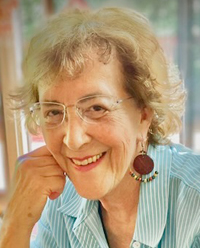
Jan Baross is an award-winning novelist, documentary filmmaker, photographer, screenwriter, librettist, film critic and taught filmmaking at Oregon State University. "Jose Builds a Woman," her debut novel published by Ooligan Press twenty years ago, in 2006, received first place for fiction. Ursula Le Guin gave it a thumbs up.
Baross lives six months a year in Portland, Oregon and SMA where loves designing posters for the Annual San Miguel Playwrights Winter Showcase. Books and Audible on Amazon. Films on YouTube.
www.janbaross.com
**************
*****
Please contribute to Lokkal,
SMA's online collective:
 ***
***
Discover Lokkal: Mission
Visit SMA's Social Network
Contact / Contactar