November 22, 2026
by Dr. David Fialkoff, Editor / Publisher
I was 12 (just barely) in the Sixties, but I was there. Following the protests, doing LSD a full year before my bar mitzvah, I was already a confirmed member of the counterculture. And, as the anti-establishment tide of that decade rolled well into the 70s, it swept me along with it.
The nation's bicentennial (1976) found me, not quite 19-years-old, alone, deep in the redwoods of Northern California, expressing my patriotism by tripping on peyote. Two months later, having hitchhiked back east, I began my second semester at the University of Connecticut.
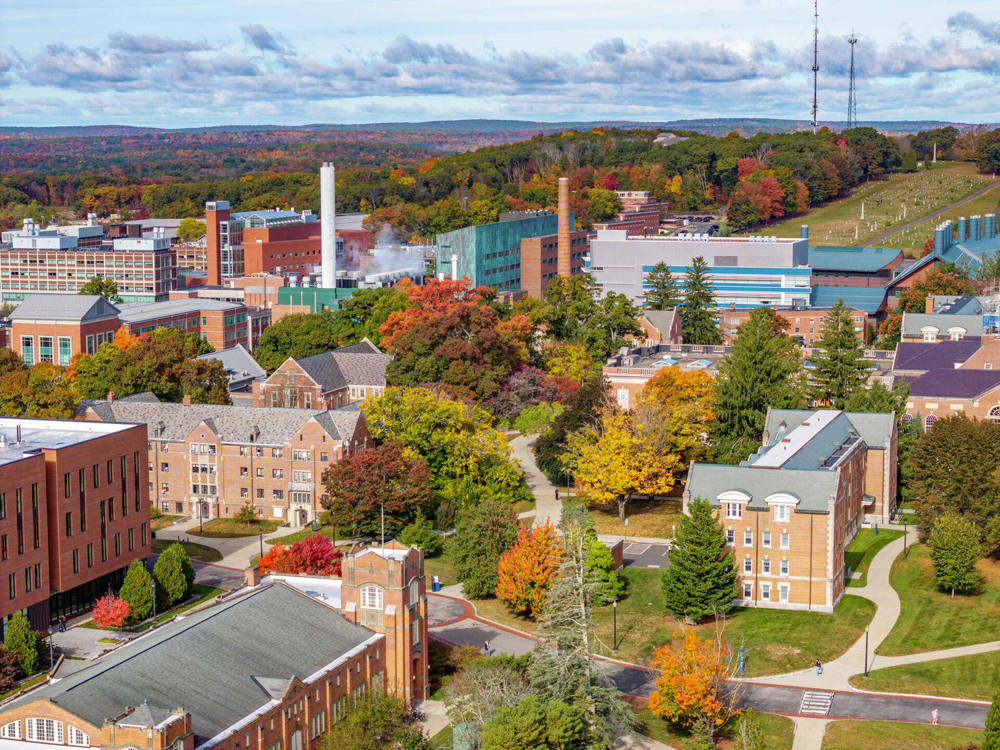
During that second semester I would reside at the IDC, the Intentional Democratic Community. Rogers Hall, containing 90 dorm rooms, had, in the spirit of those times, been granted its own charter, enabling it to escape some of the rules that applied to other dormitories and to govern itself. We were the "hippie dorm."
Actually, too young and studious to really be hippies, we were hippie-aligned, artistic free-thinkers. One of the innovations that our self-governance afforded us was painting on the walls. Instead of the usual institutional green, our hallways and dorm rooms —and there were a lot of each— were adorned with colorful murals. Another perk of our independence was that, performing our own janitorial and kitchen service, we spent the money allotted for those salaries on whatever we wanted, mostly parties.
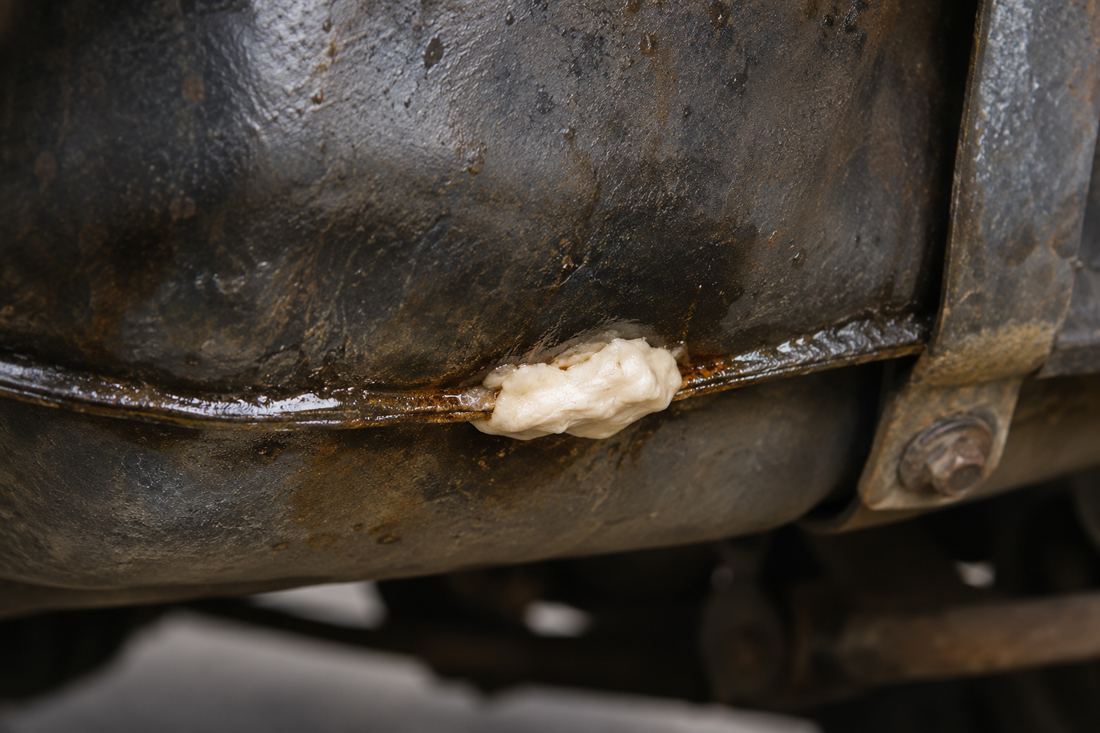
Moving into the IDC that September, I drove our family station-wagon the 45 minutes from suburban West Hartford to rural western Connecticut. As there were no available parking spaces, I pulled up over a high curb to unload my things. In doing so —and because of the weight in the vehicle— I managed to ding the gas tank of the car, resulting in a slow drip.
The transfer of my things accomplished, I called my father to report the leak. He told me, "Put some bubblegum on it." Assuming that this was more of Dad's vernacular, I went to a nearby service station and purchased a tube of something designed to stop just such leaks.
But, as I found out after 15 minutes under the car, since the product required a dry surface, the goo from the tube would not adhere to the wet metal where was the leak. I then got a stick of gum, chewed it up, pressed it in place and voila, no more drip.
I still tend to overthink. And (as I wrote about last week) I'm still coming to terms with my father's wisdom, deciphering my old man's "vernacular."
I would share my dorm room in the IDC with Jason, a friend I had made the semester before, who also made the move there from the honors dorm. Among the baggage that I brought up to our room from the station wagon that day (as it sat parked on the lawn quietly weeping gasoline) was a bag containing a quarter-pound of marijuana.
I had been out in California all summer, but in Connecticut, when at all available, pot had in, and was still, in very short supply. Right before school began, like a solitary fat rain cloud, into that terrible drought, blew Jason's brother. A soldier stationed in Texas, he brought back with him three pounds of the precious weed.
I bought all of it from him, took out four ounces, and sold the rest to someone else, to a man who was very happy to get it, for more than I had paid for the full three pounds. I suppose, if I had been more enterprising, I would have sold it for more, ounce by ounce on campus, but money has never attracted me.
I, therefore, arrived that early September at UConn as a big man on campus, or at least at the IDC, a dormitory of starved pot-heads. There, immediately, my room became party central. Someone brought a gigantic bong, a plexiglass monster, two-feet long. And I had all the pot we needed.
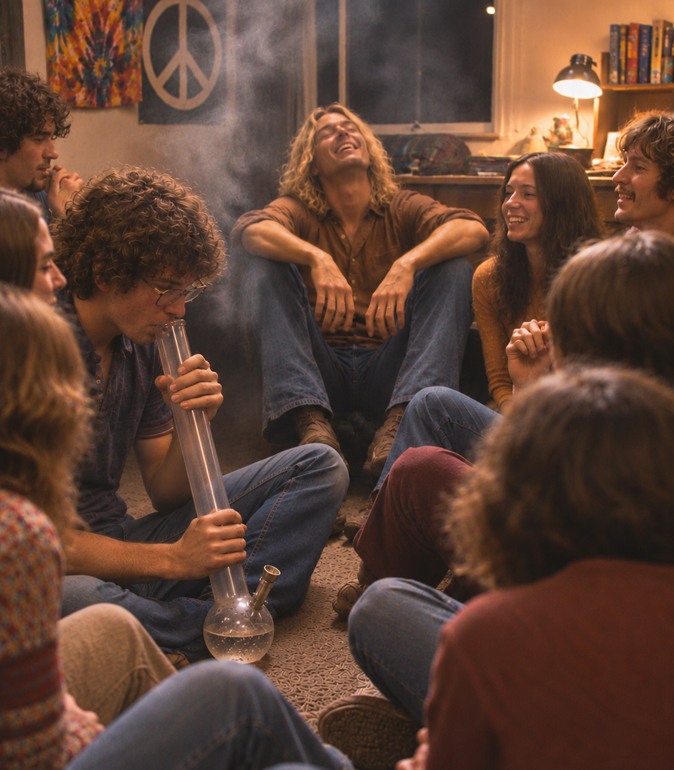
With lips opened wide inside and mouth sealing shut the bong's top orifice, one's first inhalation filled its long chamber. Then, mouth removed, that cylinder now swirling with smoke and covered with a palm, an exhalation was made. Then, mouth repositioned and the bong's lower orifice (air-intake port at its base) opened, the entire chamber was rapidly inhaled, in one whalloping hit.
I didn't know anyone sitting in the circle on the floor of that smokey room, except my roommate Jason. But for three nights people came and went, entering without knocking, joined us as the bong went around, and, when they reached their limit, stumbled back out of the room.
I stayed put, consuming more pot than I ever have, before or since. On the third evening, commenting on my level of intoxication, I said to one of those who also remained in place, a man with whom I am still friends, "I feel like I am going to die." He replied, "Maybe you should." It was an auspicious beginning.
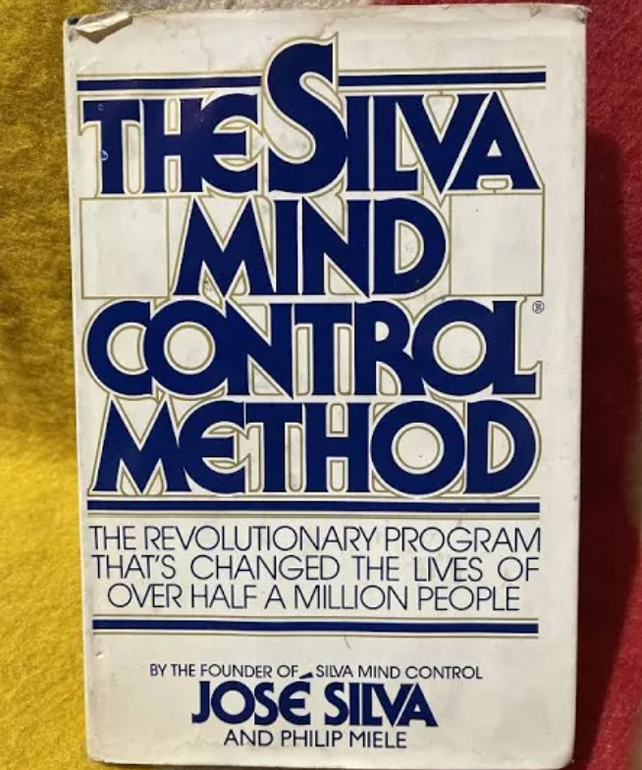
One of the other things on which we at the IDC spent our money was a two week-end course based on Silva Mind Control. Jose Silva had a program —he may yet still— that develops the mind's power of intuition. Actually, it doesn't so much develop intuition as show people how to get in touch with it. This we did, with great effect, by a process of visualization, emptying our thoughts and imagining.
For our "graduation" exercise, the Sunday of our second weekend, after studying images of the body's various systems: skeletal, organ, muscular..., we sat down with a partner (a series of partners) and, scanning with our imagination, tried to diagnose an acquaintance of theirs, someone who was not present.
I correctly intuited the medical problems of two individuals. One had a significant bruise —I could see that the bone was not broken— on their shin where, I learned later, a pickup truck had backed into them. The other had what I visualized as a blocked fallopian tube. And my acquaintance, the person I had in mind, was accurately diagnosed by at least one of my course companions. Each diagnosis session complete, we were directed to bless the person already visualized in our mind's eye, picturing them within an egg of golden, healing light.
A week after this program, I learned that the woman I had diagnosed with a menstrual problem, and had then enveloped in healing light, had gotten her period for the first time in months. A few months later, another program participant (another one of my dorm mates who had never exited the bong circle) used the Silva technique to visualize a major problem in the engine of a car he was considering buying, much to the seller's guilty surprise.
Buddha's observation that everything changes is most obvious in the temporal sense, as in, I was young and now I'm old. But its deeper, more subtle truth applies, outside the realm of time, not to past and future, but to now. Here in this instant the thing itself changes, the circumstance transforms depending on how we look or who is doing the looking, including which part of us.
Lately, my point of view changes so rapidly —inspired one hour and discouraged the next— that I've come to doubt my perspective overall. This puts me in mind of another Buddhist aphorism, "If you do not understand, ask yourself, 'Who does not understand?'" Perhaps this is the verge of enlightenment, no-self. Perhaps my brain is getting mushy.
Here in 2026, looking back over my last half-century, I identify two general and opposing streams of thought. My thinking mind is more than capable of regretting my involvement with the counterculture. In that light I can imagine a straighter path, where I focused and challenged myself more, where I smoked less pot (I never smoked very much) and, living with my feet better on the ground, achieved more.
But in those moments when I escape my over-thinking mind and inhabit a more intuitive realm, I visualize myself as a garden. Then, I intuit my existence as an organic process, with my soil enriching naturally over the years. Certainly, if I am not happy now as a writer in Mexico, (and, as I say, sometimes I am not), I would be even less content as a lawyer or financier up north.

I have at times been very intuitive: At a party here in San Miguel I asked a stranger where she was from. Then, I stopped her from answering: "No wait. Let me guess... Well, New York, that is obvious. But by way of where? Not California; you're not crunchy enough... New Mexico!" She was astounded, but only for a quick moment. Then, her New York cynicism kicked in and she demanded, "Who told you?"
My vision cast forward, I have the persistent sense that in my life a greater synthesis will be revealed, that things will come together in the end. My thinking self, the poor dear, would like the resolution now. But intuition is both less and more than knowing.
My life has been an adventure. And adventures involve doubt and risk, and sometimes the possibility of danger. After all these years, despite my regrets, I suppose that I wouldn't want it any other way.
The tank keeps dripping. The gasoline is flammable. But, my intuition tells me that the leak, and everything else in this smokey, intoxicated dream, will soon enough be made whole with just one well-placed piece of bubblegum.