Cormac McCarthy
Español
November 15, 2026
by Philip Gambone
Every tale is "a tale of dark and light," a blind veteran of the Mexican Revolution says in Cormac McCarthy's The Crossing, the second novel in his The Border Trilogy. The blind man is talking to a girl whose father and brothers have all been killed. Instead of offering words of comfort, he tells her that it is not possible to speak for the ways of God and that it is "a mistake to expect too much justice in this world."
This is one of many examples of the darkness at the heart of McCarthy's Border Trilogy. As I wrote two weeks ago in my first piece about these astonishing but disturbing novels, McCarthy is out to give his readers the fullest picture of humanity—its utterly dark side as well as its fleeting moments of light. His "vision" has been variously called existential, religious, or nihilistic. I'd say there's a good dose of all these perspectives in the Border Trilogy—a serious and gorgeously literary attempt at describing who we are as human beings.
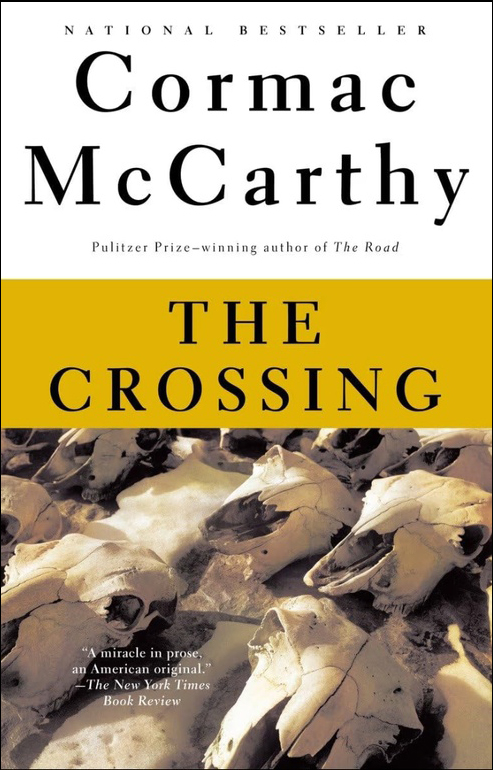
McCarthy's very first novel, The Orchard Keeper, published in 1965 when he was thirty-two, garnered him an American Academy of Arts and Letters fellowship and a PEN/Faulkner award. With the publication of further novels, other awards followed: a Guggenheim Fellowship in 1969 and a MacArthur fellowship (the "genius award") in 1981. McCarthy's early novels were seen as dark Southern gothic fictions in the vein of Faulkner and Flannery O'Connor. By 1985, when he published Blood Meridian (which Harold Bloom called the greatest single book since Faulkner's As I Lay Dying), McCarthy had turned to the American Southwest and its relationship to Mexico.
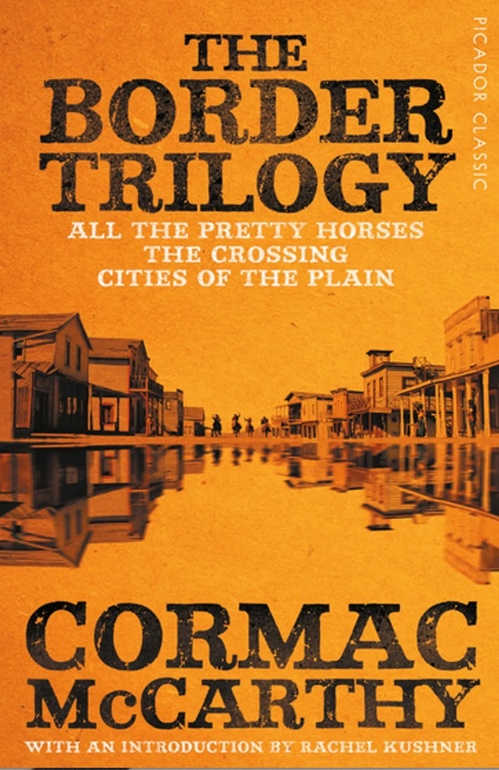
The Border Trilogy goes well beyond the usual themes and concerns of popular cowboy novels. In fact, the novels draw on a broad range of literature, philosophy, and theology. In terms of McCarthy's prose style, scholars have found echoes of Homer, the Greek tragedians, the King James Bible, Dante, Shakespeare, Cervantes, Milton, Melville, Twain and other greats of the Western canon. If that list daunts you, do not fear: the novels are also just damn good reads.
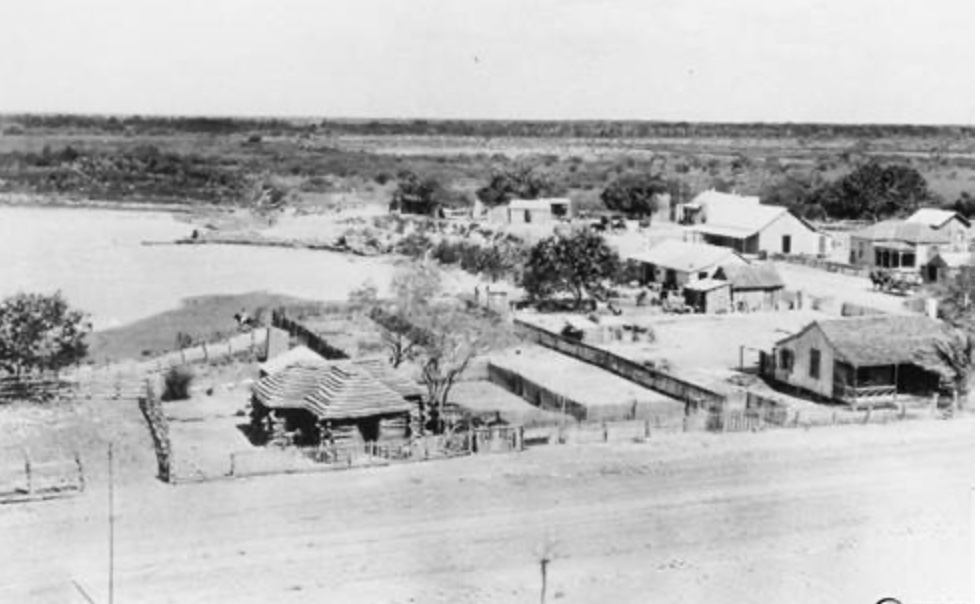
Hidalgo County, Texas
*
The Crossing opens in Hidalgo County, Texas, in the early 1940s. Billy Parham, age 16, and his younger brother Boyd are two teenage boys who live with a nostalgia for the days when "you could ride clear to Mexico and not strike a crossfence." When wolves start attacking their cattle, Billy decides to do something. He and Boyd end up trapping a she-wolf and set out to collect the bounty on her. But later, in an act of compassion, Billy decides to take the animal down to Mexico and turn her loose.
Crossing into Mexico becomes a decision that gets the brothers into a lot of trouble. Mexicans seize the animal as contraband and display her at a fair, where she is tormented and subjected to horrific wolf baiting. "You think that this country is some country you can come here and do what you like," a young hacendado protests. Billy decides to end the wolf's suffering.
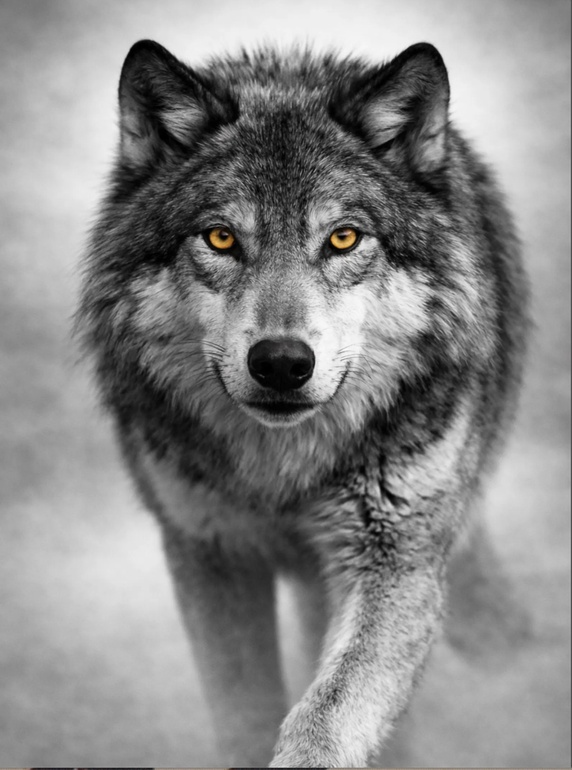
In the novel's second part, having buried the she-wolf, Billy wanders in the mountains with no home and no idea where he is going. He meets a fallen priest who tells him that he has been "seeking evidence for the hand of God in the world." Billy asks the priest what he found. "Nothing," the man says and continues with a long, philosophical tale about suffering, the oneness of mankind, and the nature of storytelling. McCarthy is fond of putting these chance meetings with strangers into his Border Trilogy novels. The effect is to suggest that we are all pilgrims and wanderers along a road—drifters, fugitives, outcasts in an alien land. From here on, the plot takes a series of bleak and tortuous turns that together lead to a vast tragedy, but also prompt Billy to perform an act of heart-wrenching brotherly love.
McCarthy's Mexico, the Mexico of the borderlands, is a barren place of spare, reedy grass; of the "faintly antiseptic odor of piñon wood"; of "the deep cyanic sky." It is the Mexico "where the future of man stood at dress rehearsal daily and the figure of death in his paper skull and suit of painted bones strode up and back before the footlights in high declamation." It is a place of millennia-old petroglyphs, where "a good deal of what could be seen in the world had passed this way." A sense that things are at the brink lies at the heart of The Crossing.
The Crossing is, for me, the darkest of McCarthy's three Border novels. It is also the most philosophic, a novel that raises profound issues—how to be wise in a world where wisdom is not often rewarded, how to live in radical uncertainty, how find a place "where acts of God and those of men are of a piece." In all the Border novels, but maybe especially in The Crossing, the emphasis is on the puny feebleness of man in the face of cruelty, injustice, and the cold indifference of the universe.
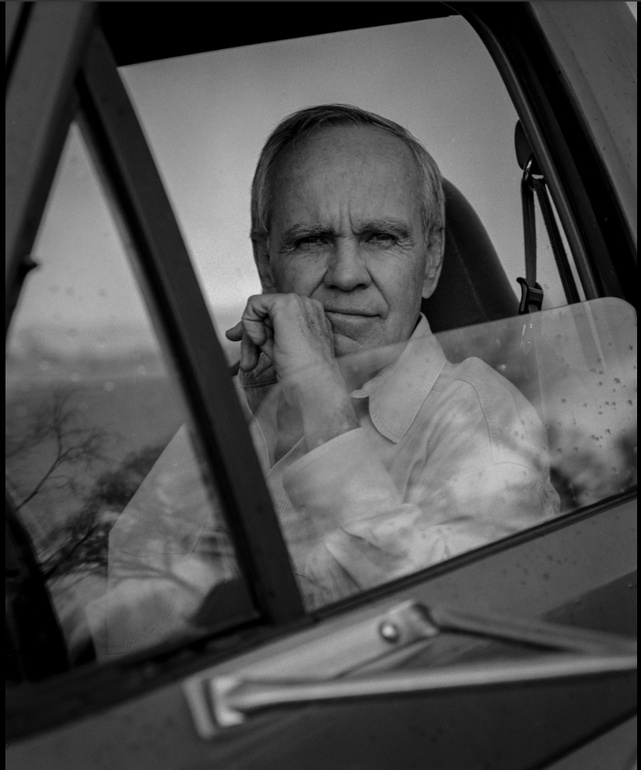
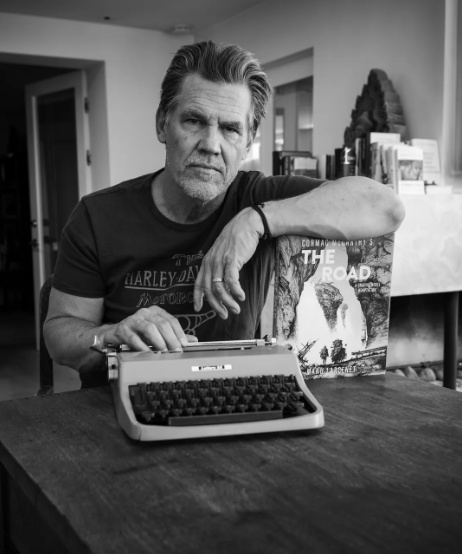
Cormac McCarthy
*
At the end of the novel, Billy meets a gypsy—one more of these philosophically-minded wanderers—who tells him a story about how his father used to collect old photographs and tintypes and hang them on his gypsy cart. Those who had sat for the photographer, the gypsy tells Billy, "had thought to find some small immortality but oblivion cannot be appeased." As he bids Billy farewell, he adds that on the road there are no special cases.
McCarthy's unflinching view that oblivion is our fate, and that there are "no special cases," is a sobering wake-up call, a Zen master's slap in the face. At the same time, the instances of goodness performed by a few of the novel's characters stand out as quiet, but deeply loving and moral acts. The Crossing reminds us that these fragile moments of compassion, though ephemeral and precarious, redeem a human life from the fate of meaninglessness.
**************

Philip Gambone, a retired high school English teacher, also taught creative and expository writing at Harvard for twenty-eight years. For over a decade, his book reviews appeared regularly in The New York Times. Phil is the author of seven books. His memoir, As Far As I Can Tell: Finding My Father in World War II, was named one of the Best Books of 2020 by the Boston Globe. His new collection of short stories, Zigzag, was published last year by Rattling Good Yarns Press. His books are available through Amazon, Aurora Bookstore, and at "Tesoros," the bookshop at the Biblioteca.
The more than 100 articles about writers in Mexico which Phil has published in Lokkal are now available on his website:
www.philipgambone.com
**************
*****
Please contribute to Lokkal,
SMA's online collective:
 ***
Discover Lokkal: Mission

Visit SMA's Social Network
Contact / Contactar