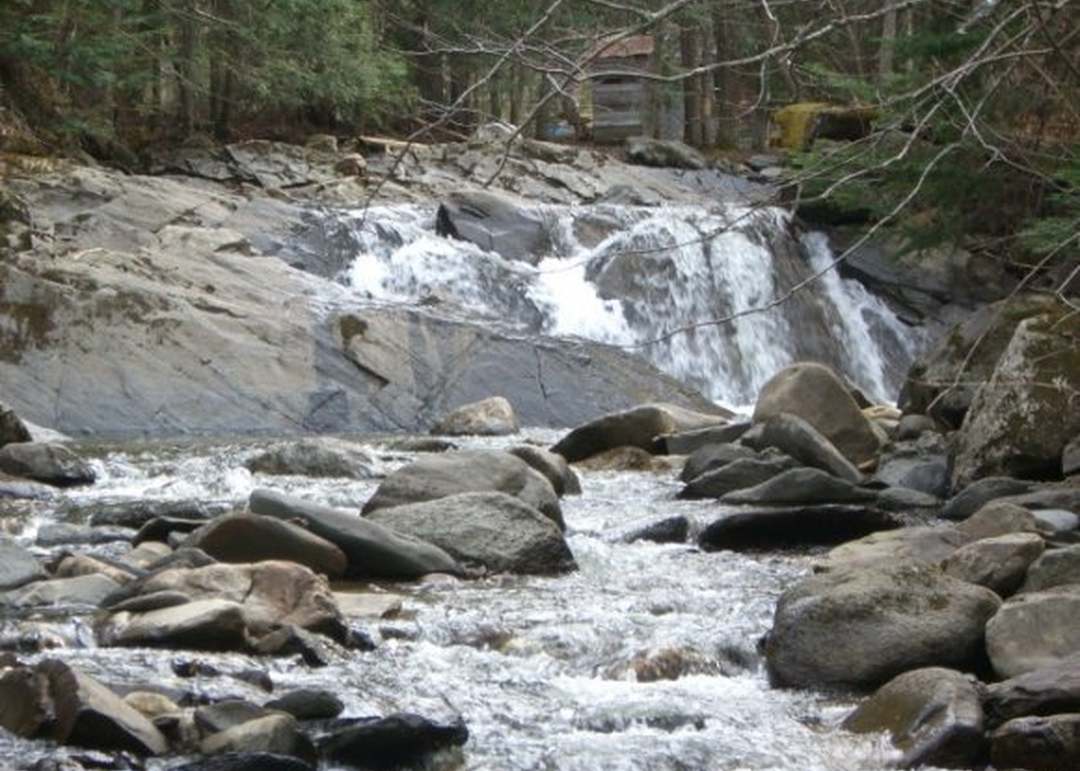
The Mad Brook (It could get much more mad.)
Español
November 8, 2026
"In the mountains, there you feel free." - The Wasteland, TS Eliot
by Dr. David Fialkoff, Editor / Publisher
The very brief video clip is a close up of an already old Mick Jagger. It records his six-word response, apparently after he asked his interviewer her age and received her answer. With a warm nostalgia infusing his ever-boyish eyes and a broad smile spreading across his trademarked lips, the wizened rocker comments, "Forty is a very good age."
I recall with equal fondness and gratitude the Thanksgiving of my fortieth year. It was then I made my first visit to Mad Brook Farm, a former commune high up in Vermont's Northeast Kingdom. The land, 600 acres, an old dairy farm and surrounding forest was purchased in 1969 by a group of students from the Hartford Art School (Connecticut) after the farmer, Herman Cross, got caught with three jacked deer (taken out of season) hanging in his barn.
In his place I would have done the time rather than pay the fine; gone to prison rather than sell the farm. The farm had been in his family, father to son, hundreds of years, since settlement. What could it have been, three-six months? And prison in Vermont is in no way scary.
But that Thanksgiving dinner was not at Mad Brook Farm. It was about a mile away as the crow flies, at Penelope's, that is, down the hill a short ways, then over the one lane bridge that spans the Mad Brook, then a quarter mile up the "lower road," long before it meets the "upper road" and runs down to magnificent Lake Willoughby.
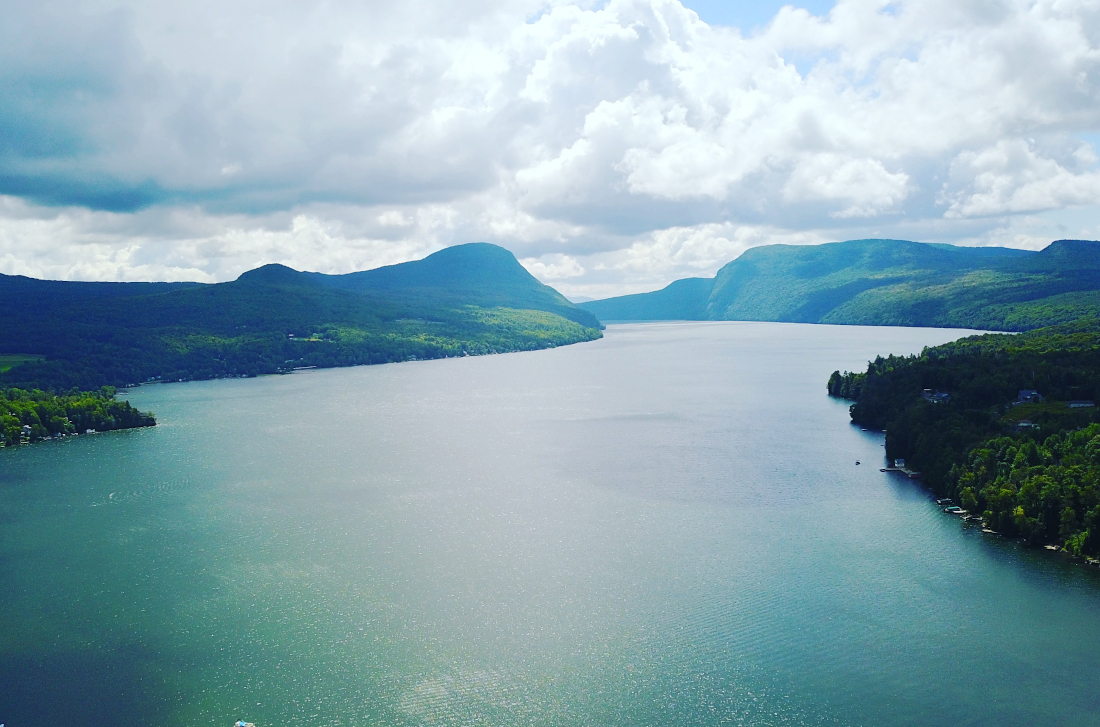
Lake Willoughby
*
Penelope was another hippie, attracted to the commune, who bought Egg Man's egg farm, also decades earlier. Egg Man and his chickens having already had more than enough of his new longhaired neighbors, he could not resist the portion of Penelope's inheritance that she offered him.
The corner of Egg Man's sizable henhouse jutted out close to the road. (They are all dirt roads up there.) And late one night a couple of drunk hippies in a big old Oldsmobile, who were coming back to the Farm took that last curve way too fast, their being drunk and it being fun to fishtail on the dirt. Temporarily losing whatever little control they had of their vehicle, it ran into and right through the corner of that henhouse, and, no doubt somewhat sobered by the impact, they just kept on going. It must have made a hell of a noise. And, equally without doubt, Egg Man's ladies took a while to get back to laying after an episode like that.
The corner of that henhouse, the building then serving as a proper barn, despite its continued proximity to the road, was in good repair when on that Thanksgiving in 1997 I drove up to Penelope's with my friend Mary Sue McCarthy at the wheel. I met Mary Sue in West Hartford, Connecticut, where she and I both lived and worked; I doctoring in a three-storey, neo-Victorian which, back in the day, was overpopulated by students from the Hartford Art School -- "I remember that tall house with its big front porch. It always had a motorcycle out on the front lawn. I had a girlfriend who lived there." -- and she employed a few blocks away very creatively painting furniture.
Mary Sue was a member of Mad Brook Farm. She was a long time Brookie, back in the commune's active days when it was a magnet for 200 hippies on any summer weekend, and still then, when I arrived on the scene. By then, although there were some grown children involved, almost all of the Brookies were much older. Communal living not being as romantic as the uninitiated might imagine most of those hippies, after the first winter together in the Cross farmhouse started building their own private dwellings.
Mary Sue's son Chris, twenty-something years old at the time, one of the few younger members of the former commune and now land trust, was already inside Penelope's one storey rambling farmhouse when we rolled up. After some time in Amsterdam and San Francisco as an adolescent, he lived again up on the Farm, where he was born and raised, in the McCarthy apartment, inside the partially converted Barn. But I am getting ahead of myself.
Penelope's house
*
That Thanksgiving was like coming home: flannel shirts, woodstove and jeans; peasant dresses and flowers in their hair; beer, wine, marijuana and home cooking. It was my initiation into a multi-year association with that immediate region and tribe, including my purchase of the 153 acres up from the Farm, whereon I built my "lodge," some of the best years of my life. Chris, who became my buddy and guide, already there at that first Thanksgiving (there were others), took a liking to me. As the festivities were winding down, he asked me if I wanted to spend the night up at the Farm with him, his sister and his sister's boyfriend, instead of driving back with Mary Sue to her house in St. Johnsbury, some twenty miles away. After getting the nod from Mary Sue, "Why sure. Thanks very much," I replied.
When we arrived at Penelope's at 1pm there was not a speck of snow, not on ground nor in air. But during our four-hour celebration two feet of snow had fallen. No one at the party remarked or seemed to take any notice of that occurrence, snow being a constant winter companion. (Not many years later, the night of one cold June 30th, where I lived up the mountain, the rain, a constant three-season companion, turned to snow. as that meteorological condition persisted past midnight, I actually saw it snow up there in July!)
But on the morning after Thanksgiving, the night comfortably spent and a hearty breakfast consumed, I continued to bask in the rustic comfort of my surroundings, the interior, the McCarthy's wooden, hand-crafted apartment and, outside through the window, the huge, glistening, snow white fields, bordered by forest. Chris, no doubt aware of my rapture, asked me if I would like to go up to the Verge's hunting camp, apparently a day-after-Thanksgiving tradition. Having no idea what that entailed, I never-the-less assented.
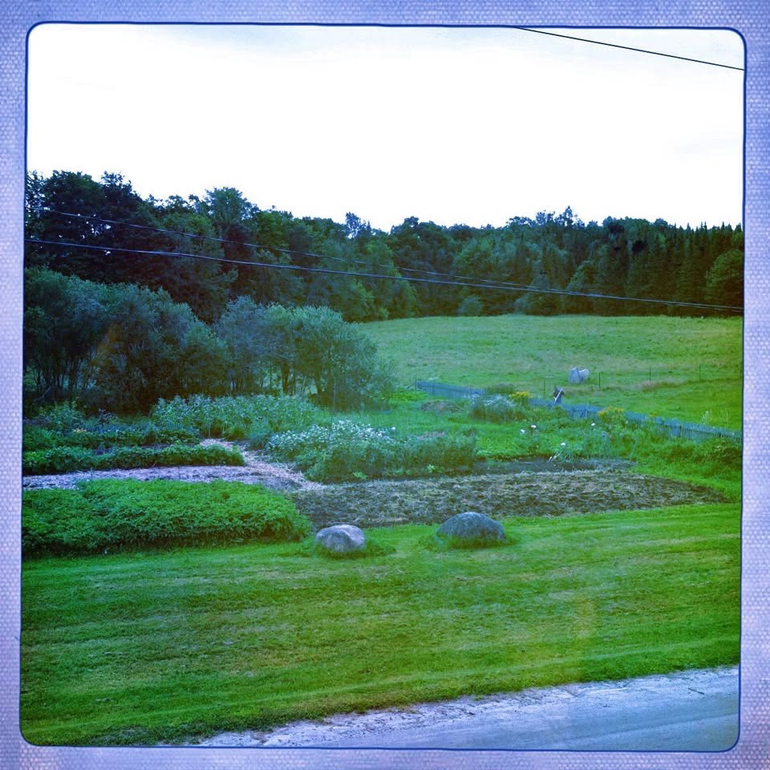
Penelope's garden
*
It turned out that the first thing it entailed was me getting proper footwear. This, a pair of felt-lined boots, I acquired at the nearby town, the only nearby town, of Island Pond. From the store we drove up the hill to the Verge residence where lived the patriarch, Ed Verge, his wife, the mother of their five sons and two daughters who were in attendance.
Some time during the ensuing relaxed, jovial, extended period of camaraderie, the two youngest Verge brothers, no more than boys, asked me, since the rest of the adults were going to be a while, if I could drive them in their brother Aaron's truck "up to the clearing."
I should have had some warning when Aaron asked me (remember I was completely new on the scene) if I was sure that I could manage it. Instead, I replied, "Just show me how to put it in four-wheel drive." At this, he reached deep into his truck (it was a tall pickup) up to his armpit, pulled at something, extracted himself and announced, "It's already in it." Everyone else, including the three older brothers and Chris, who would come up to camp later, were going to go down into town, I don't remember for what, but I and the two youngins rumbled slowly out of the driveway and up the plowed, but still snow covered, road, up the hill in Aaron's big, black SUV.
Just two minutes later I was momentarily confused, when one of the boys suddenly directed me, "Turn here," as looking in the indicated direction I saw nothing to turn onto, only a continuous bank of plowed snow and line of forest. But a moment later, scrying an opening, little more than a path among the trees I complied, and the three of us rumbled off into the forest's fluffy white snow. Navigating this wilderness, I took heart, until several moments later coming around a turn we were confronted by a 50-yard rather steep uphill stretch. Momentum being essential in such circumstances, I knew enough not to stop. Giving it some additional gas we went up, making it only halfway.
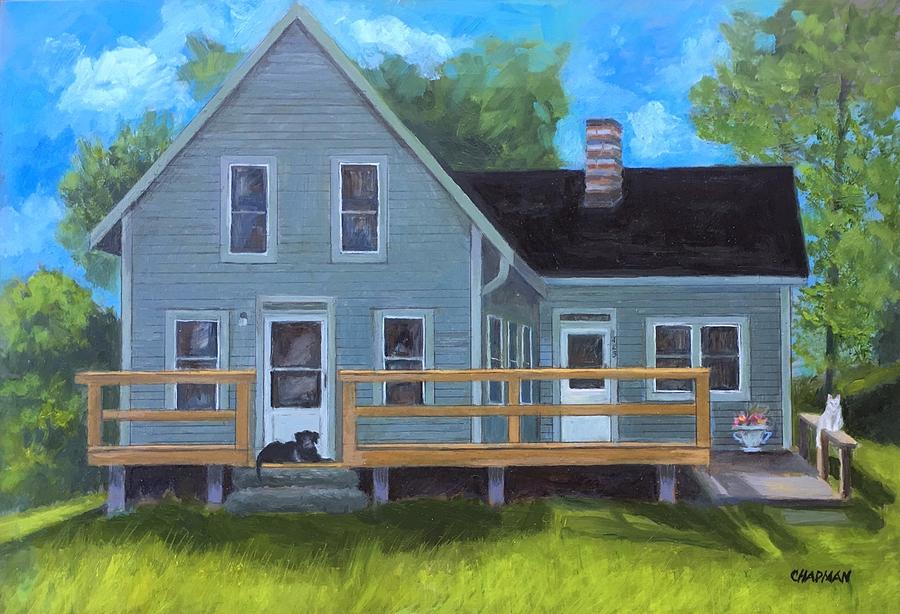
The main house, Mad Brook Farm
*
So there I was, 15 miles from Canada, halfway up a snowy trail, in someone else's SUV, having to back down a hill. This accomplished without slipping sideways into the woods, and getting a better, running start, we made our second, higher velocity attempt. During this ascent the three of us and the rifles in the back seat were bouncing around pretty good until losing momentum and traction, we came to rest eight tenths of the way up that incline. The youngsters aside me, undaunted, cheered me on, "Next time we'll make it. You've already plowed it."
The problem was we had little traction to begin with. On this route, under these conditions, that truck was used to having a lot more weight in it, four adult bodies; I weighed little more than the boys. Weight equals traction. And speeding up a snowy hill, substituting velocity for traction along a narrow forest path is risky. You might just bounce right off the path and into the trees.
But the third time was indeed the bouncy charm and five minutes later, with no more sudden inclines, we parked in the very snowy clearing. Then, after ten minutes of very snowy hiking we arrived at "hunting camp," a 20x25 foot building, with lots of front windows looking out down the hill, and with smoke already billowing out its chimney.
I can and should write a book about this all. I've already made copious notes in that direction. But I'll continue to abbreviate here.
Inside we met Hummingbird, Penelope's half-Japanese son, who, while I stood in my underwear, flopping my corduroy pants directly onto the wood stove to dry the melted snow out of them, complained bitterly that Chris was going to arrive. This he did while handling and polishing his very large colt 45 revolver, complete with sighting scope. His attitude was, at least to me, worrisome.
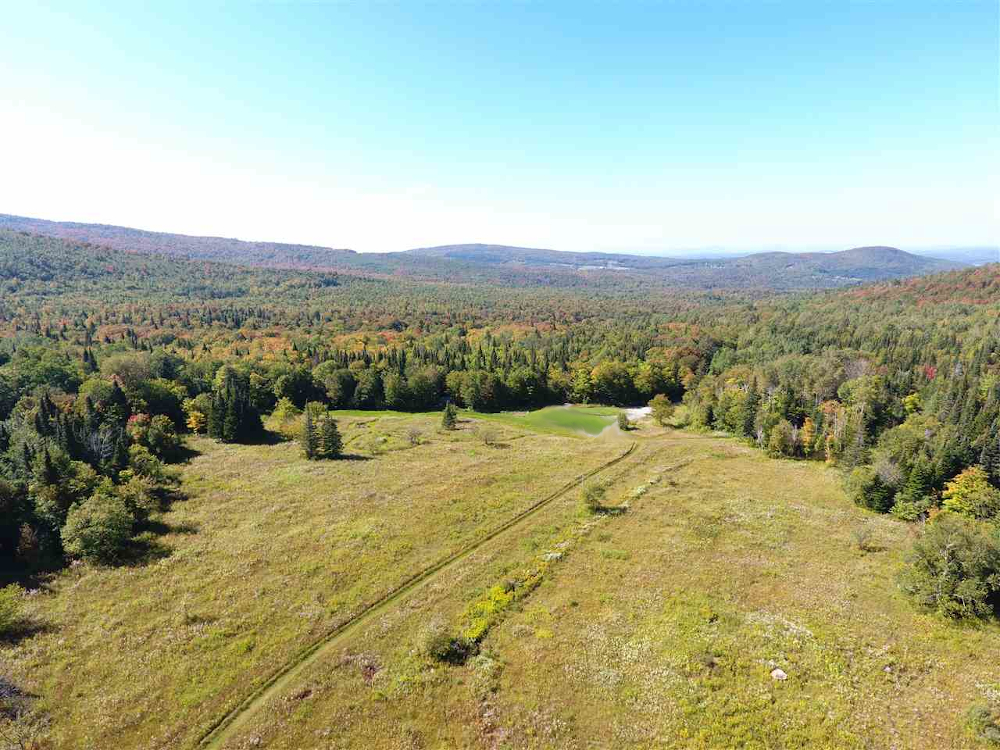
My meadow above Mad Brook Farm
*
An hour or so later, my pants already dry and back in place, Chris and the three older Verge boys did arrive. Everyone except Hummingbird was in very good spirits. (All of them, including Hummingbird, had been friends since they were young boys.) Hummingbird kept grumbling until Chris finally confronted him, offering to fight, "Come on Bird. Right here." The Verge brothers calmed things down right away, and moments later everything, except a sullen Hummingbird, was friendly again.
Years later, when remembering that evening, I asked Chris what Hummingbird, whom I never saw bad-spirited towards Chris again, had been upset about, Chris replied, "Because I punched him in the stomach when we were in first grade."
All of us passing the rest of the night peacefully in eight bunk beds (Chris slept on the floor), we woke and made breakfast. Since their bacon and fried eggs were not on my diet, I broke my fast quite manfully with a can of sardines I bought in Island Pond on my way in. Then we left, minus Hummingbird.
One of the older boys took Aaron's truck. As the second wave had come in the night before along the same route we drove in the truck, that morning we all started down a pristine, untrammelled, snow-covered trail that ran steeply, and, thanks to a break in the clouds, sun-glistening, down the wooded hill between the hunting camp and the Verge homestead.
Chris, as always in the lead, began to run, leaping from mound to mound. Aaron, in second place, followed suit, landing sure-footed in Chris' footprints on the rocks Chris knew were there below the snow. (Did I mention that the Verges were Abanake Indians?) I, third in line, the way already well marked, followed fast, keeping up in my new boots, bounding along spryly behind their brave, somewhat reckless lead.
Then, after receiving my assurance that I was fine on my own, Chris drove me to the edge of what was a very small town, a village. There, after saying our first farewells, I hitchhiked to St Johnsbury where I called her and Mary Sue came and found me.
That was the beginning of a great, long Vermont adventure for which I am ever grateful. And, yes, forty is a very good age, indeed.