Muse
Español
October 25, 2026
by Stephen Goodfellow
Pointillism
Georges Seurat invented and painted in the Pointillism technique because he wanted to make Impressionism's shimmering effects more deliberate, controlled, and "scientific." By placing tiny touches of pure color side by side, he believed the viewer's eye would blend them optically, producing brighter, more luminous color than physically mixing pigments on a palette.
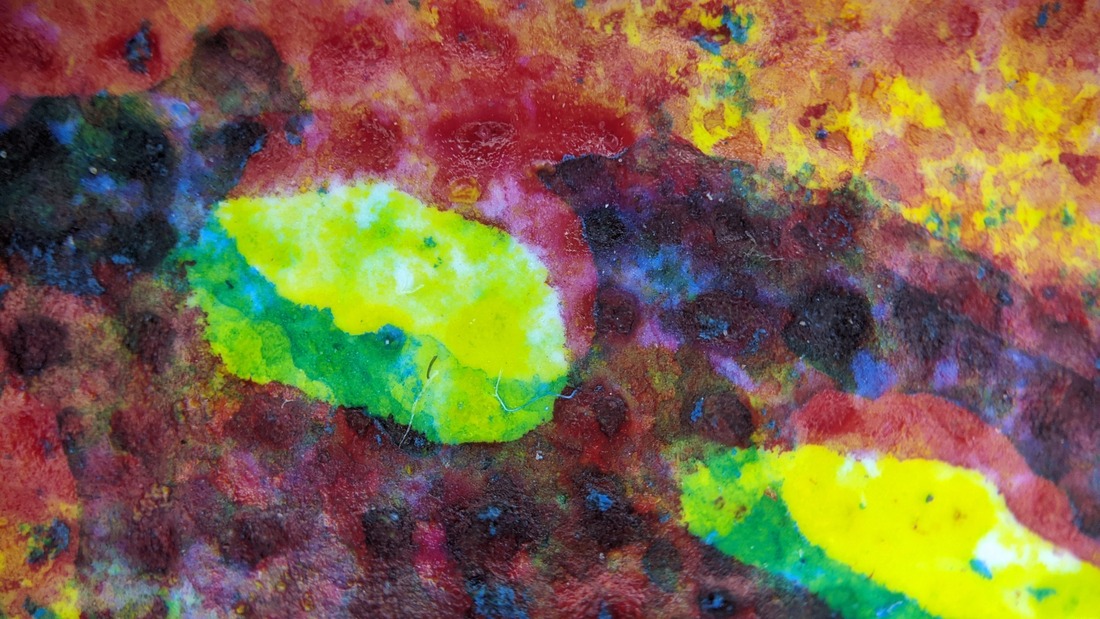
Primary Micropointilism magnified 60x; yellow, red and blue create all the secondary colors
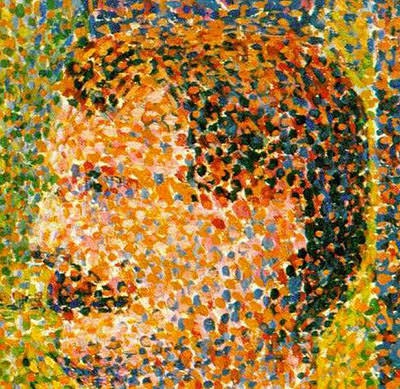
Blow-up of Seurat painting
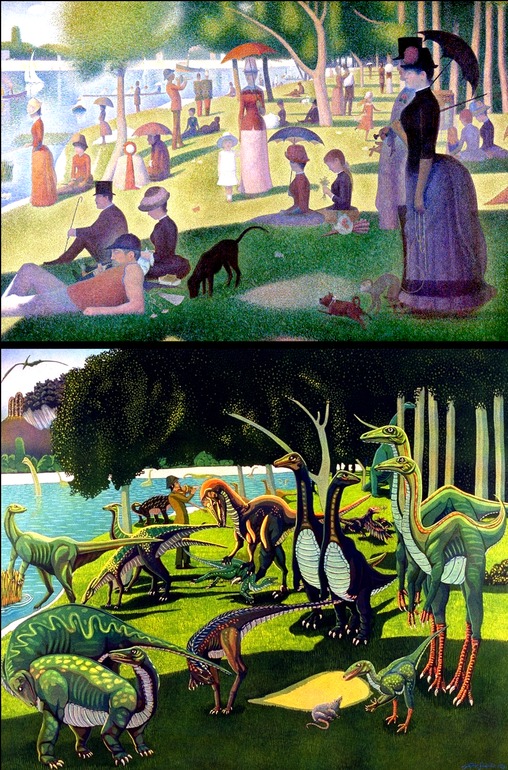
Above, George Seurat's "A Sunday afternoon on La Grand Jatte", below my salute to Seurat.
*
To this end, Seurat generally used a small, limited palette, often cited as about 11 colors. He was influenced by 19th-century color and optical theory, especially ideas about complementary colors and how adjacent colors affect one another. Instead of mixing blue and yellow into green, for example, Seurat would place small blue and yellow marks near each other and let the eye do part of the blending
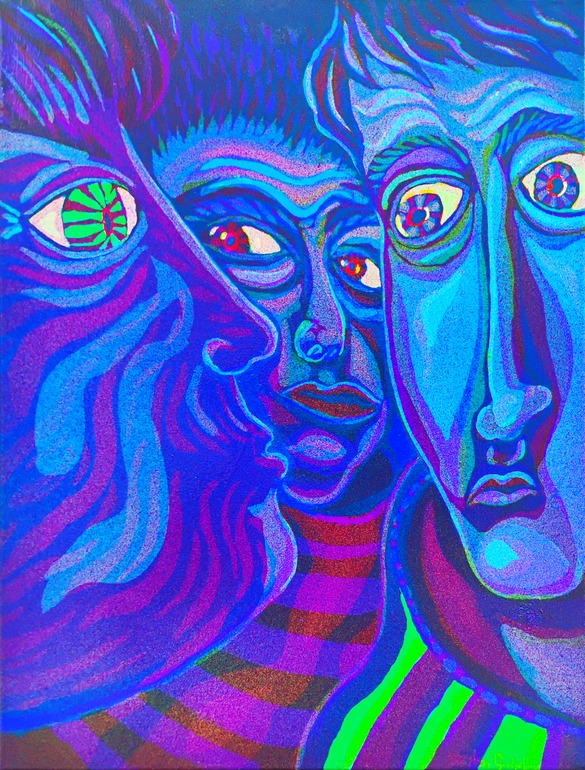
Conspirators
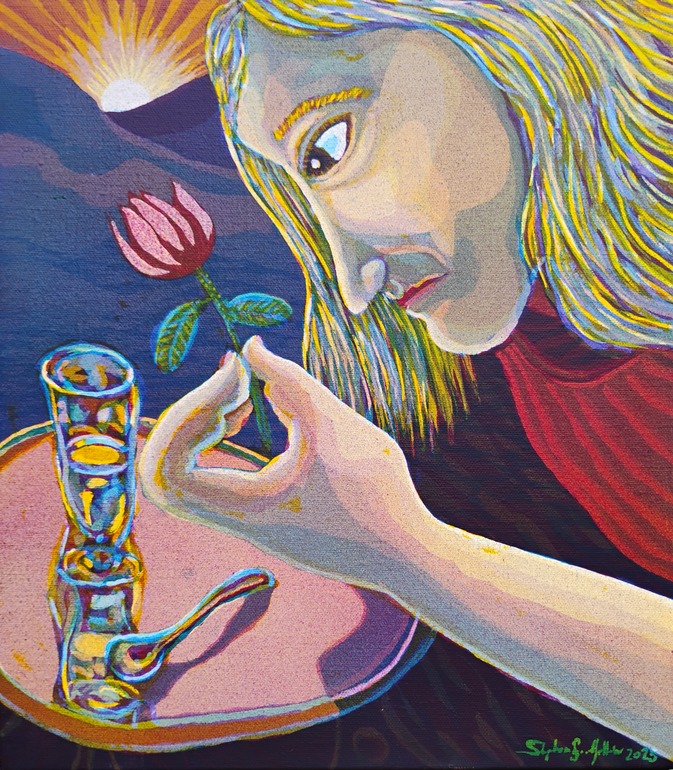
Aphids
Primary Micropointillism
Fast forward 100 years, and I, a devotee of pontillism, am graduating from the comfort of a university having studied painting and printmaking, but now expelled into a cruel world with insufficient funds to afford the expense of a printing press.
As it turned out, this was a blessing in disguise. I discovered that instead of laboriously producing three individual printing plates, one for each primary color: yellow, violet and blue, I could paint, or render, each color in turn on a single surface. This rendering sounds complicated, like learning to ride a bicycle, you get a knack for it and once you have it you don't lose it:
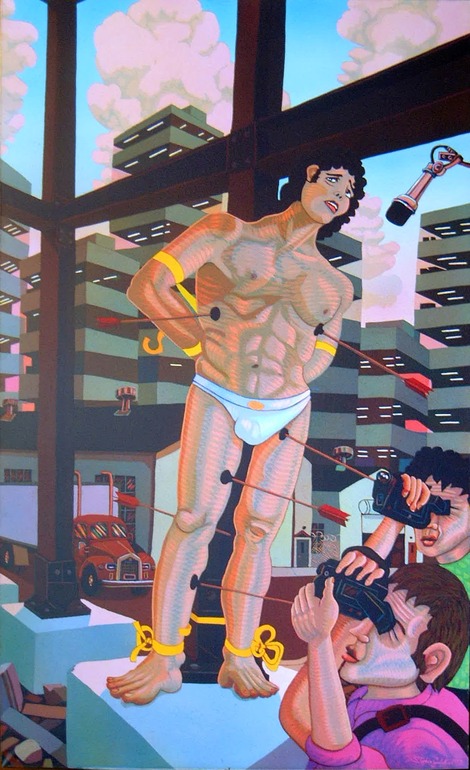
The Martyrdom of St Sebastian
*
1) use a paint brush to block the surface with a water soluble liquid; 2) spray the spatter of color with an atomizer (or an air brush and spray bottle); 3) wash off the resist and the superfluous color leaving successive layers of spattered color of increasing intensity.
At this point I wasn't really thinking about Seurat. I was just trying to create colorful artwork. But it gradually dawned on me that this is exactly what Seurat was aiming for. The difference being that he used 12 colors, whereas my method, primary micropointillism, uses three colors to create the entire spectrum of secondary colors, by controlling the intensity of primary color spatter overlap.
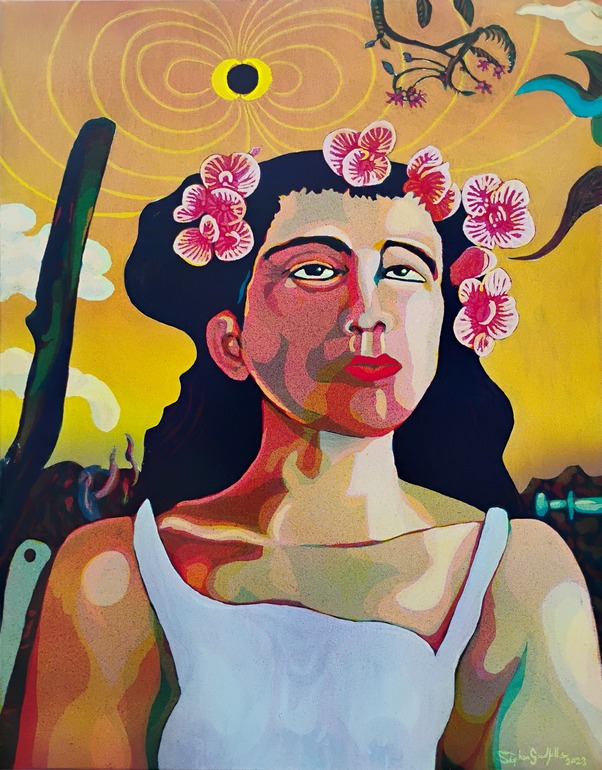
The Lady
*
There are only two people in the world who make a living painting in this medium, myself and my lifelong friend, Lowell Boileau Over the 40 years we've done so, we have spread the word, teaching workshops to other artists. However, we still remain the only two who have made it our main means of creating artwork.
Most of my interactions between my artwork and the public have been via patronage; I create my paintings and inform individuals who like my work. They then decide whether they wish to purchase.
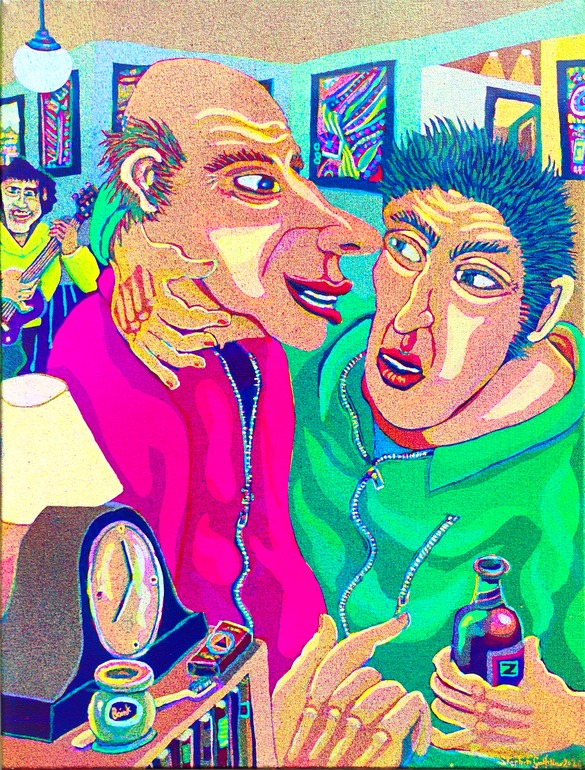
Hidden Agendas
*
Recently, looking back, I suddenly realized that I hadn't exhibited a body of work for over 20 years. So for the past year I've been holding back from selling. I've been hoarding my work in order to have sufficient artwork for a showing. And now is the time. I hope to see you there.
***
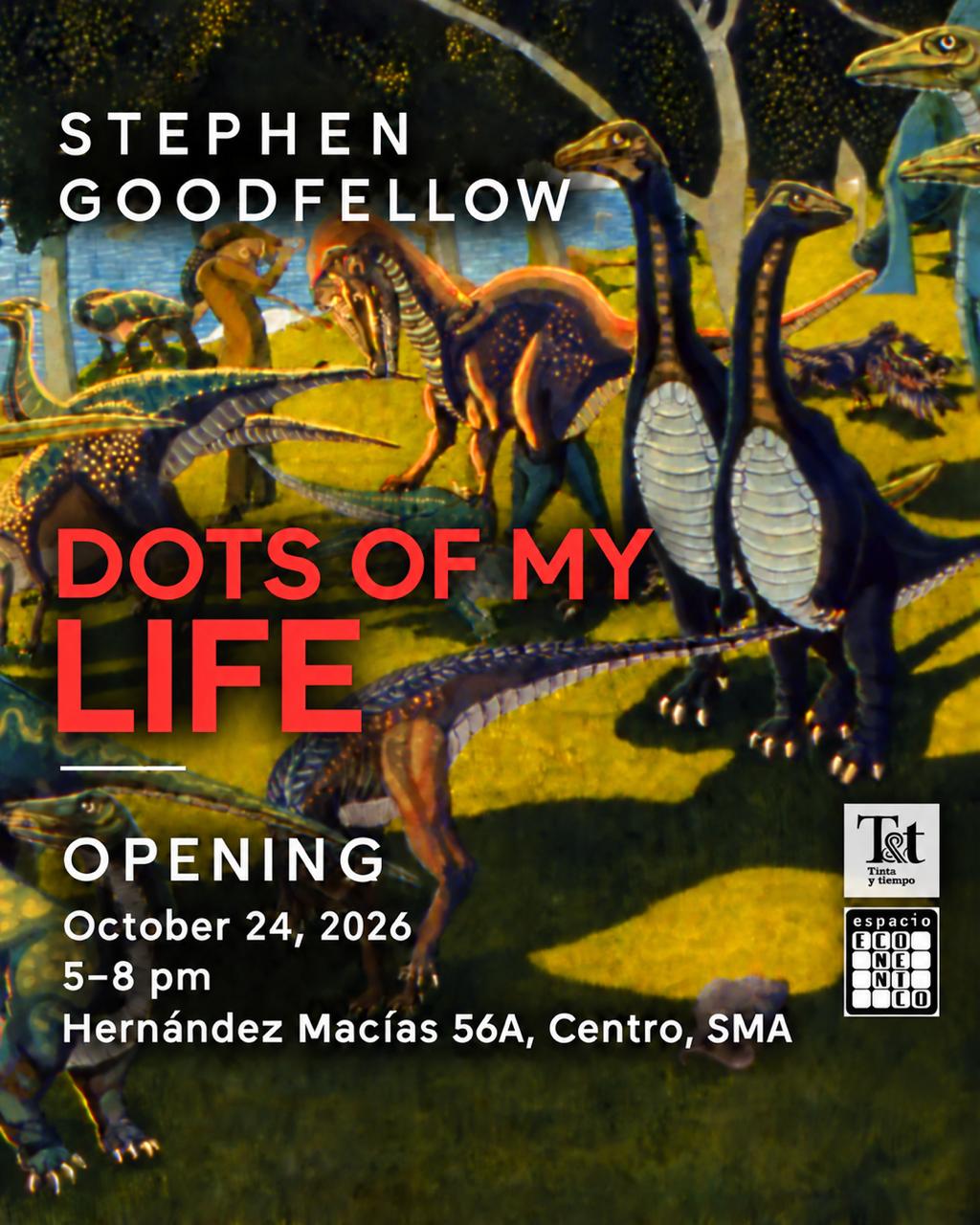 Exhibition
Dots of My Life
Stephen Goodfellow
Galería Tinta & Tiempo, Macías 56A
**************

Stephen Goodfellow was born in Southampton in England 1953. Goodfellow has lived in Nigeria, England, Denmark, Mexico. He enrolled at Wayne State University in Detroit, USA to pursue his Postgraduate degree and graduated M.A in painting, and M.F.A. in printmaking. He developed an art medium called Primary Micropointillism consisting of only three colors which he applies to canvas.
Stephen has lived in San Miguel as a full time fine artist for the past 15 years.
**************
*****
Please contribute to Lokkal,
SMA's online collective:
 ***
Discover Lokkal: Mission
**************
*****
Por favor contribuya a Lokkal,
Colectivo en línea de SMA:
 ***
Descubre Lokkal: Misión

Visit SMA's Social Network
Contact / Contactar