In telling the story, the rabbi was exhorting those of us around the table to be like Rabbi Shimon ben Yochi and his brother-in-law, Reb Lakish, who did not let their regret at their past failings (letting the man die) stop them from going forward with good deeds (giving him a proper burial).
That lesson resonated with me, as I still (regularly and without any proximate cause, just out of the blue) feel ashamed (or at least embarrassed) by certain bad (or at least foolish) things that I have done, some even 50 years ago.
On a side note, in the time-honored Jewish tradition of asking questions, there at the table, I asked the rabbi, "If the man had a purse filled with coins, then why did he die of hunger?" without missing a beat, the rabbi replied, "Some people are like that. I myself know a rich man who travels around like a pauper." And as it happens, I do too.
I have a friend, who, while already wealthy, is still devoted to his successful business. But he has a hard time spending money on himself. For years I have been advocating that he has to take better care of himself nutritionally, if only to maintain his tremendous work-ethic. I've told him repeatedly, "You can work the horse really hard, but then you have to give it some extra oats at the end of the day" and "Consider it an investment; if you stay healthy, then you will make more money."
My advocacy against my friend's lack of self-care has become more urgent recently in that he was recently diagnosed with cirrhosis secondary to a Hepatitis C infection he picked up decades ago. When I told him the rabbi's Talmudic story, intending it as an enlightening parallel to his own life, the only question he had was, "What did the rabbis do with the bag of gold?"
Animism is the belief that everything in the world is alive, everything has soul, spiritual substance: your pet, your favorite hat, a plant, a crystal, a painting, a song... Animism was the dominant philosophy everywhere up until the rise of scientific materialism in the last few centuries. Materialism holds that everything is dumb, dead matter, and that even living cells are just the result of pointless errors, random mutations. (This contrasts with Idealism which says that there are basic universal patterns that life and matter follow.)
Consciousness itself, our window into soulfulness, was said by materialism to be an illusion, only an epi-phenomenon of the electrical activity of the brain. But, in the last decade or so, our most primary, intimate reality... our mind, has become the subject of scientific study. Still, now, with the scientific door to consciousness open only a crack, we may refer to ancient wisdom to visualize what is on the other side of the threshold.
Our consciousnesses, our souls, our selves, the mystics reveal, are water vapors risen from the oceanic Cosmic Mind to form clouds, which then fall back as rain into that universal, collective sea. Despite our need to appear (to ourselves and others) as independent beings, our drop is never really out of touch with its divine, oceanic source.

I had a dream, a few years ago, wherein my father told me, "Take better care of the help." I woke up understanding that by "the help" Dad meant not just my physical body (as opposed to my consciousness/soul), but my incarnation as a whole, my day-to-day, ego-centric self, who I take myself to be. Dad was encouraging me to forgive my shameful, embarrassing past, as did the rabbis in the Talmudic story forgave theirs. He was encouraging me, as I encourage my rich friend, to take better care of the horse that is pulling the wagon.
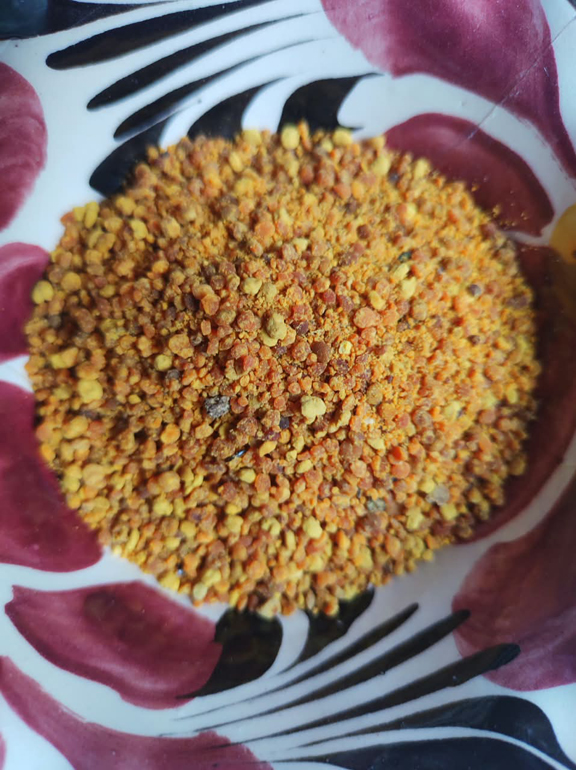
Dutiful son that I am, I have been easing into ease. And there, when I was inside my house pouring a glass of water for the beekeeper, I decided to double down and give some more special nutrition to the horse who I so often work so hard. There, filling the beekeeper's glass, I made up my mind to buy, not just the honey, but also the pollen and propolis. (Right now, editing this article, I'm going to get up and have a teaspoon of each.)
Moments later, still inside, I was rummaging through my "bag of gold," debating how much to offer the beekeeper, determining the exact denominations. (It's always better to show the cash.) Then, I concluded that I shouldn't bargain the man's price down, that he needed those pesos more than I.
The Eleventh Commandment for the Jews is, "Thou shall not pay retail." But it is the holiday season and, in the final, most soulful analysis, we're all just raindrops falling back to the sea.