 Español
September 27, 2026
by Jeff Spurrier; photos by Ann Summa
My wife Ann and I joined a mass bicycle ride from Dolores Hidalgo to San Miguel, the Rodada Traditional Autogestiva de Independencia, on Sunday, Sept. 13, as part of the Independence Day celebrations. It was the tenth consecutive Rodada de Independencia although its roots stretch back to 1989 when the first Rodada was held.
There were 510 registered riders and probably 250 more, like us, who just came along. This we were told by Luis Gerardo Rubio Valdez, founder of Dolores en Bici. His group organized the ride along with local bike clubs like Los Hidalgos Bikers MTB Club. Teams went out on mini-four-wheelers to post signs and draw white arrows to show the correct turn or trail. The Rodada traced the route of Father Hidalgo and Ignacio Allende and their rag-tag band of a thousand-plus insurgents, inspired by the priest's call for independence. The path was marked with eagle-head stelas placed in four points along the way—at Dolores Hidalgo, the old hacienda of La Erre, Atotonilco and San Miguel.
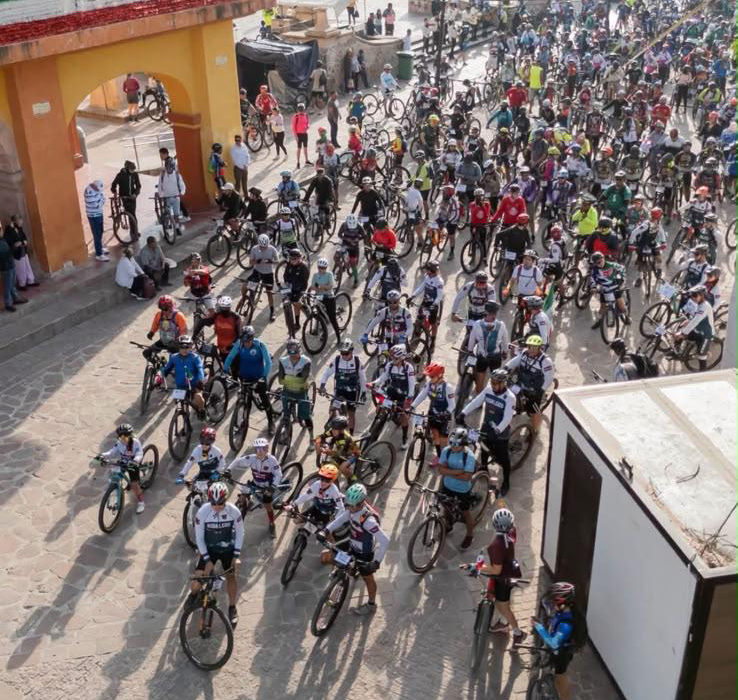
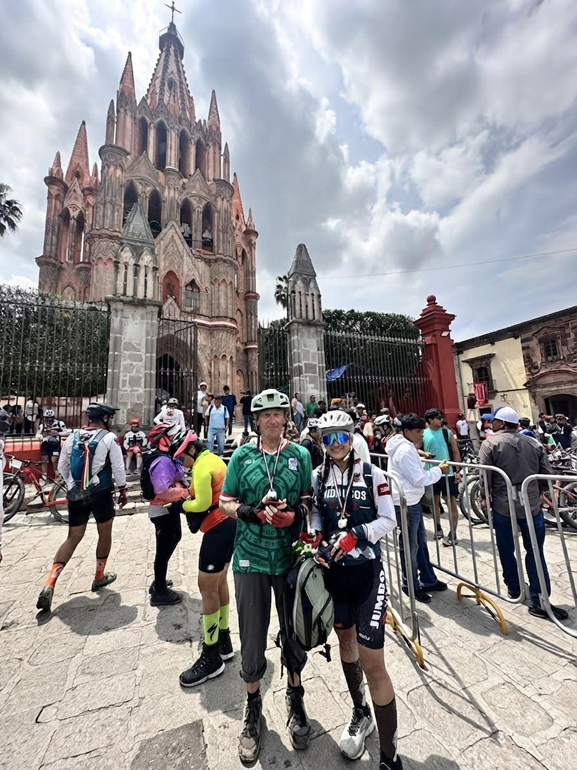
Just after dawn, cyclists began assembling in the plaza in front of the Parroquia de Nuestra Señora de los Dolores, the church from which Father Hidalgo rang the bell and gave El Grito de Independencia, the Independence Cry. There were local bike clubs in matching kits, grandparents in sweats with their grand-kids, nuclear families, geriatrics, pre-teens, school friends, neighbors, cyclists from Queretaro and MIchoacan. There was a family vibe—lots of female riders and mother-daughter combinations. Everyone had a helmet.
Just about all were on mountain bikes, ranging from double-shock carbon-frame beauties to sturdy heavy clunkers. The only e-bikes I saw were ours. There was one guy on a fixie (no coasting, no gears), a pair of guys on an ancient steel frame tandem.
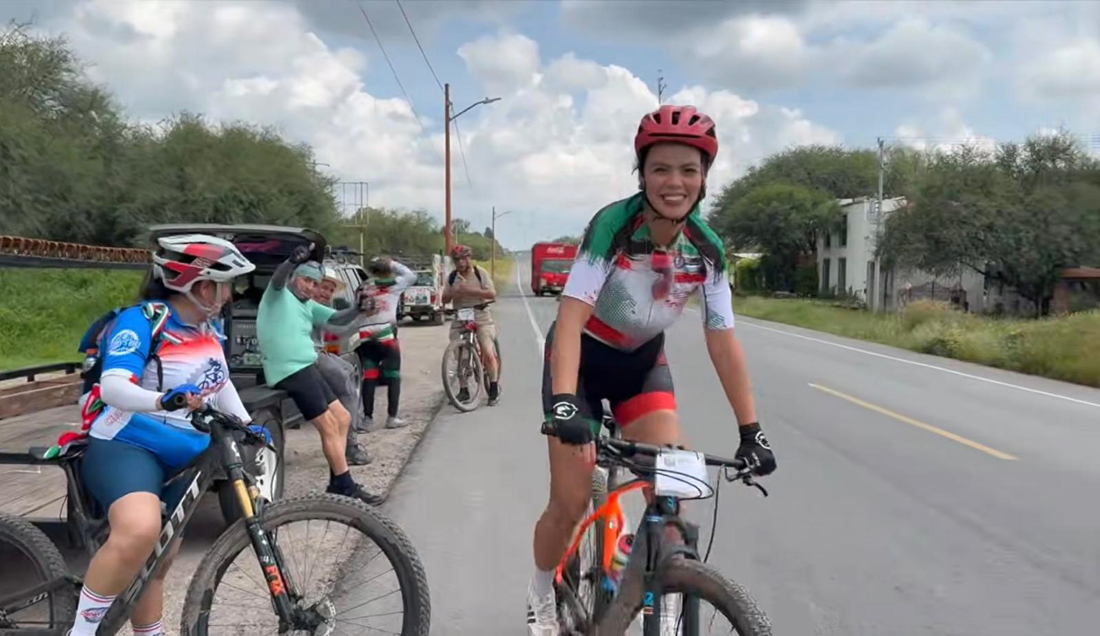
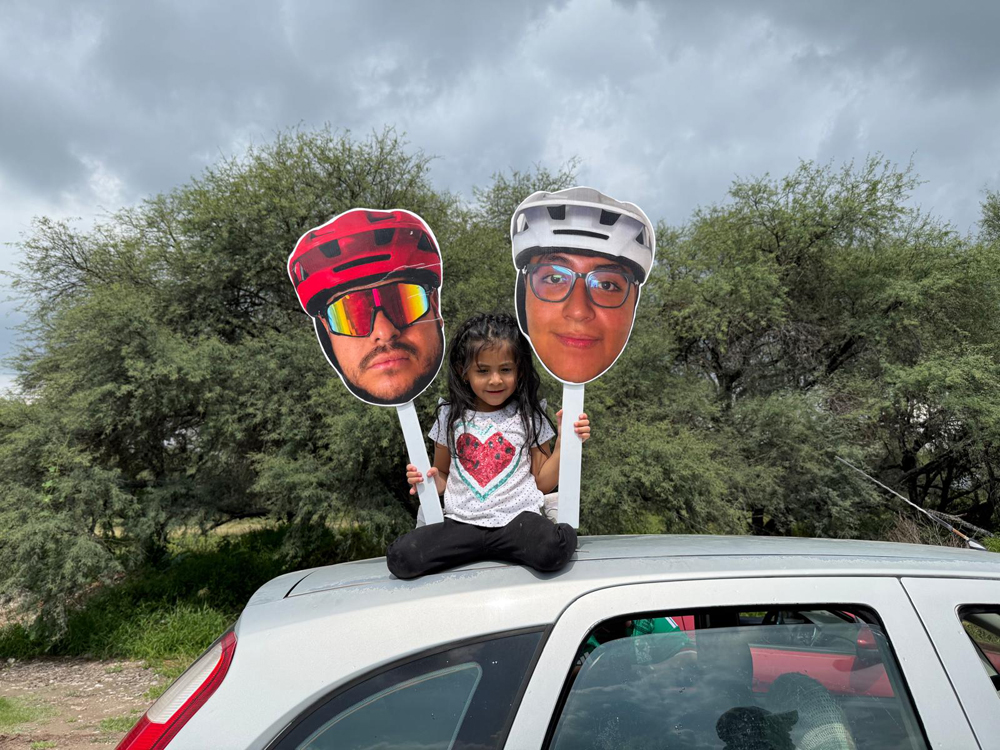
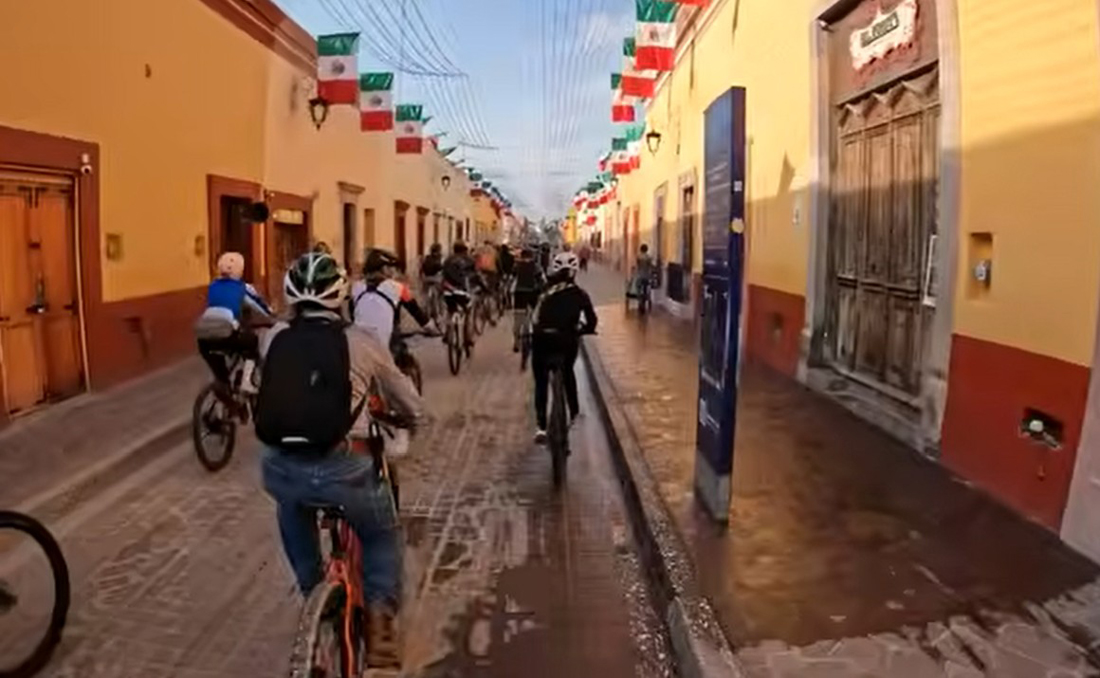
We rode out to the send-off a mariachi band, a two-wheeled re-imagining of Hidalgo's army, bikes filling the empty streets on the way to stela 2, at the old hacienda of Le Erre.
Along with others we stopped at a stand for tamales and chocolate atole. "There's no hurry," said a rider next to us, unwrapping his tamale while the crowd whizzed past. It's a ride, not a race.
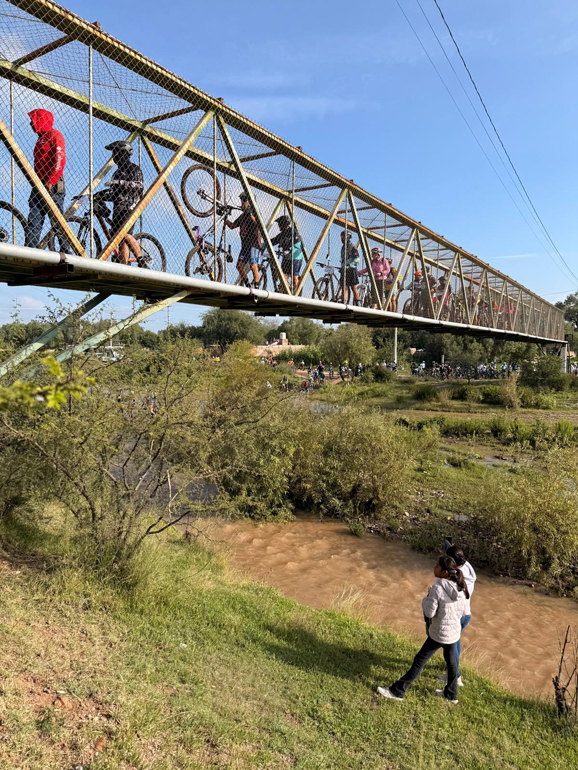
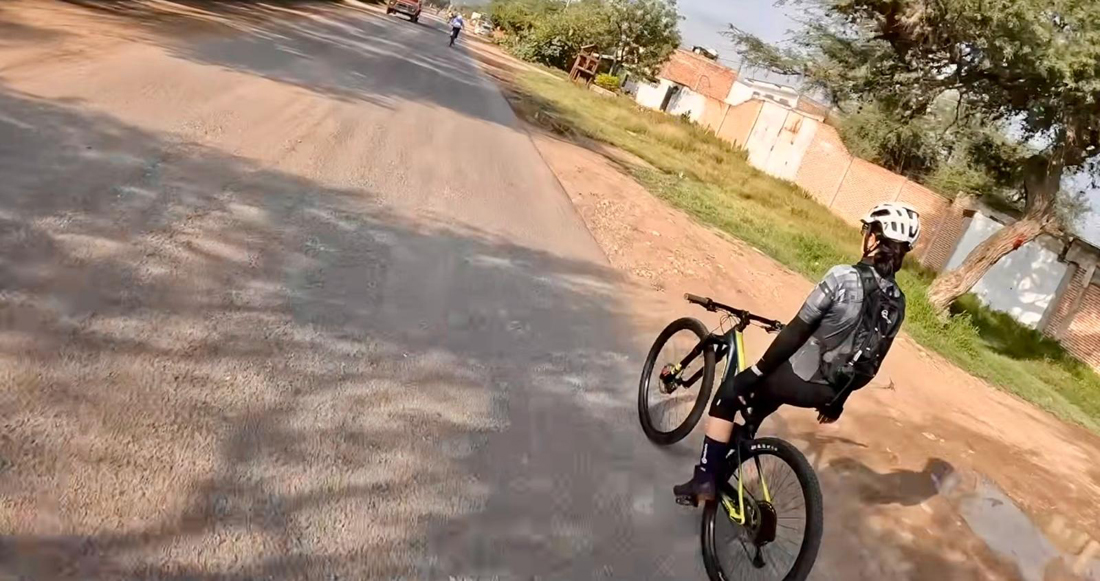
Good thing. Leaving town in the big crowd was a challenge despite the empty streets. A dog ran into Ann, but she stayed upright and it ran off protesting. Narrow trails and mud puddles from the rain created a back-up with cyclists carrying their bikes up to a narrow pedestrian bridge over the river. Our bikes were too heavy for the stairs so we followed others fording the stream. Ann again almost went down when she got cut off by a rider desperately trying to pedal-paddle through the water, but she made it to the bank with only one wet foot. I followed with two.
After the bridge the trail was soon clogged with riders slipping in the mud, trying to avoid the goo in the ruts. We all rode on the dryer edges, following the line of the wheel in front, but then when one person put a foot down, everyone behind began shifting position, trying to stay upright. There were lots of flats but only one minor accident. It was a wonderfully good-natured group, laughing when the crowding forced unexpected halts or sudden diversions.
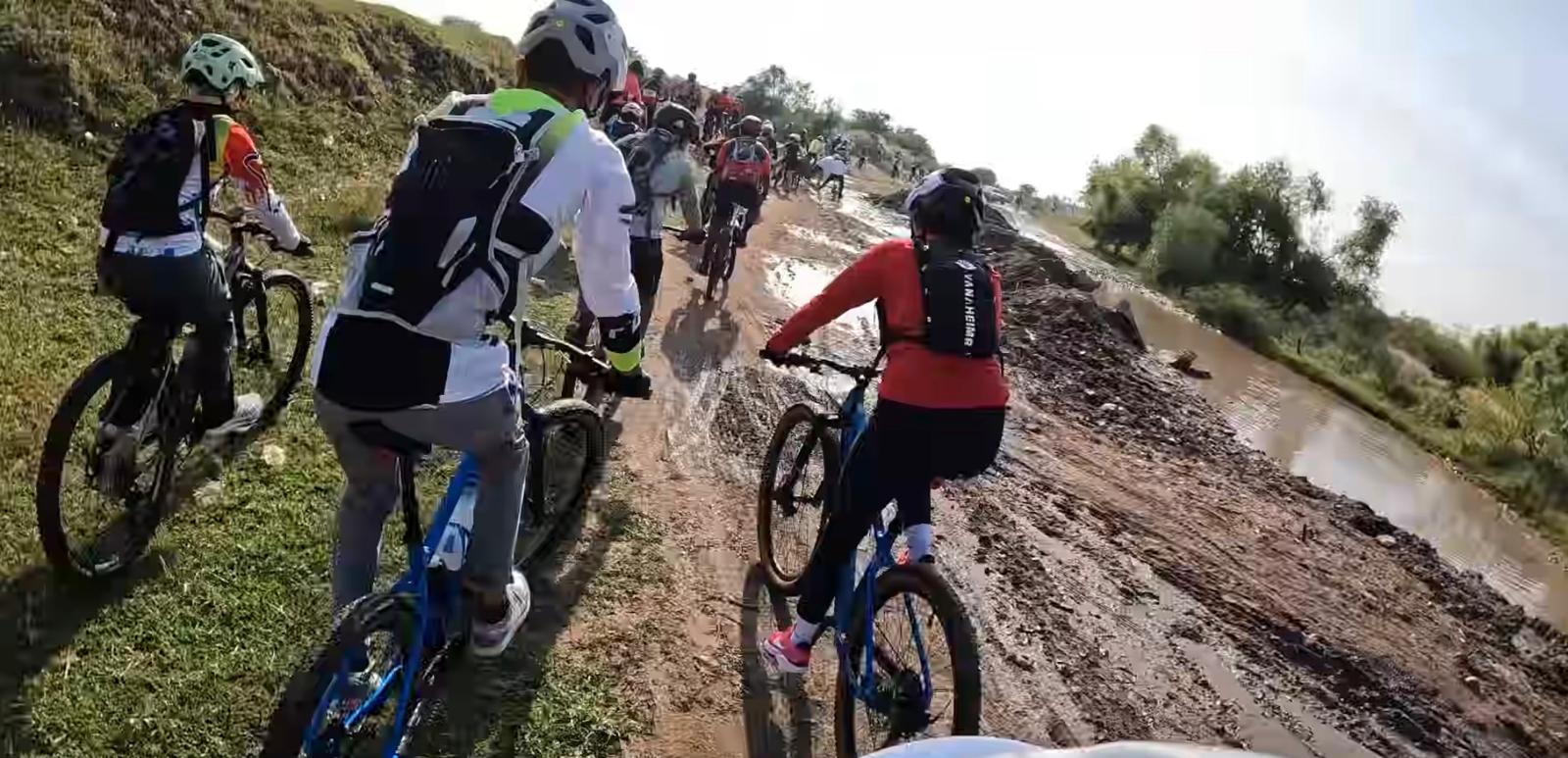
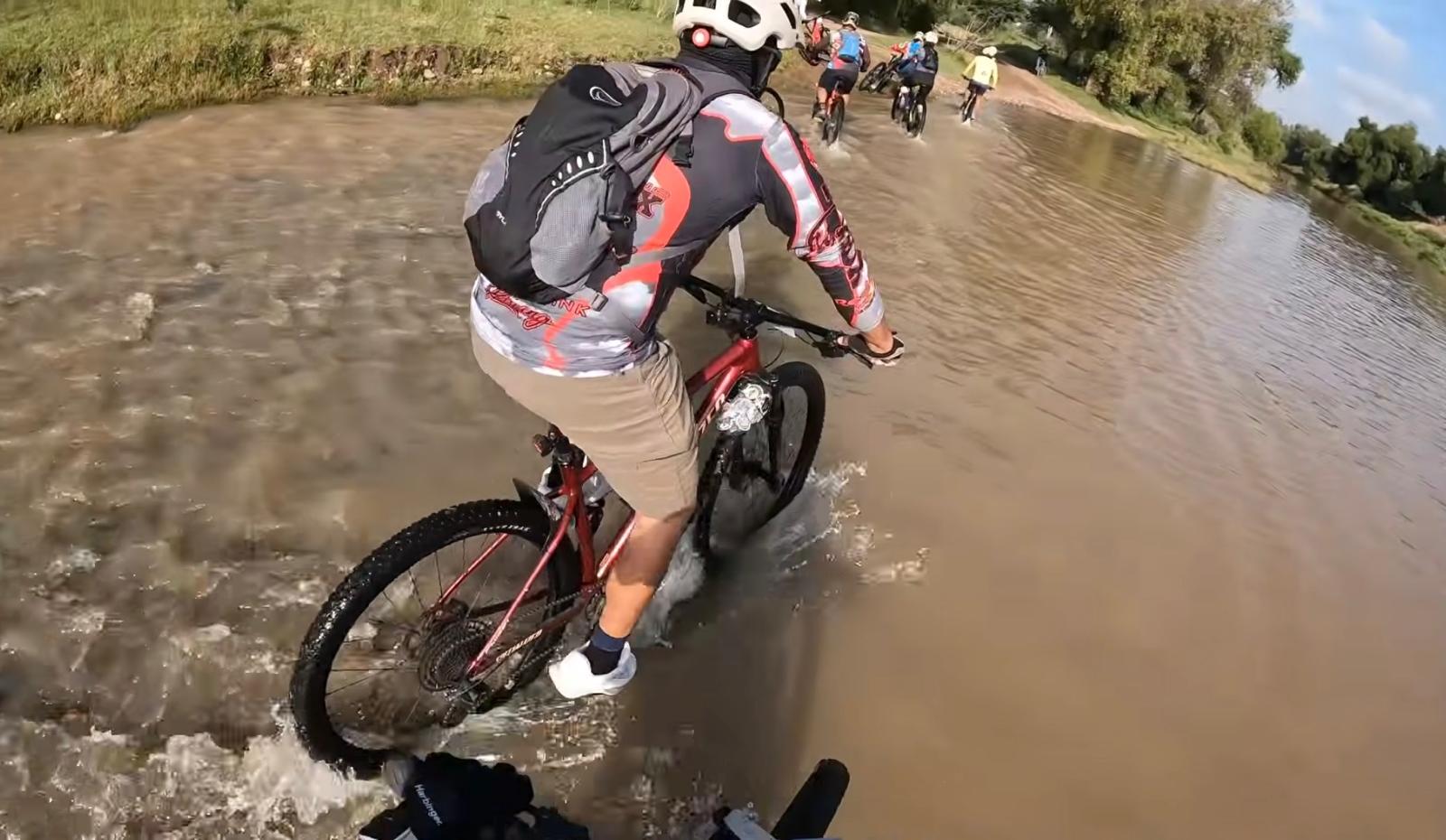
We angled around the little town of El Llanito, past corn fields and bored dogs, through a sleepy herd of cattle shuffling slowly to breakfast, and climbed up a muddy rock-strewn path to a ridge above the old hacienda of La Erre where stela 2 was located. At the top a Rodada crew had laid out fruit and cookies for riders. We parked our bikes and grabbed some watermelon and bananas. Everyone was happy and relieved. The hardest climb was over it seemed. From here to Atotonilco was downhill and from there to San Miguel mostly flat.
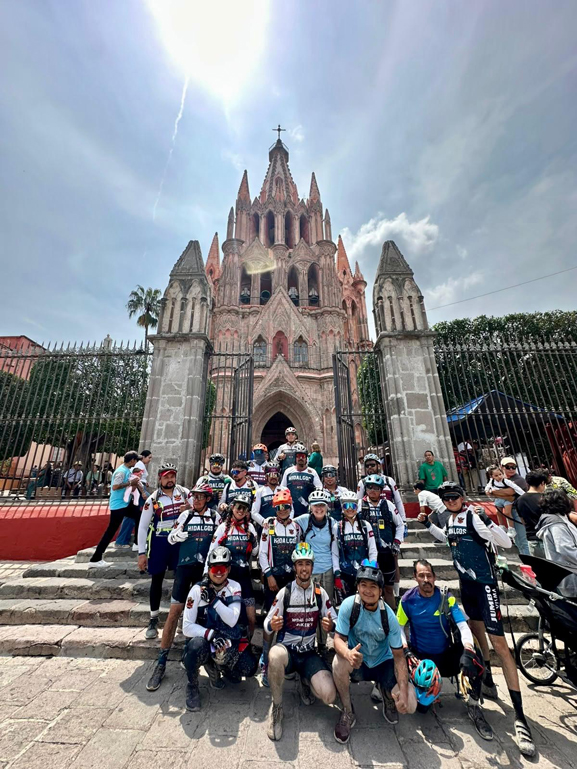
It was a spectacular downhill, the water at the Presa de San Pancho glittering off to the left, the ridge dropping down smoothly. The trail was an exhilarating pay-off to the climb, relatively rock-free and not too technical before spilling out onto the Atotonilco outskirts. It was Sunday and all the food stalls were full of Independence Day visitors and hungry bikers so we said adios to the Los Hidalgos team we had been riding with and slipped away to take the new Ciclovia (bike path) back to San Miguel. We weren't taking the back way via Cieneguitas like everyone else. We had a luncheon date at Nectar. Within 45 minutes we were making the last climb up Umaran into the Jardin for group photos followed by vegan chilis en nogada.
That night when we lay in bed, too tired to get up to watch the fireworks, Ann said "When I heard the explosions I felt patriotic, like I had really been part of something. Que viva Mexico!"
**************
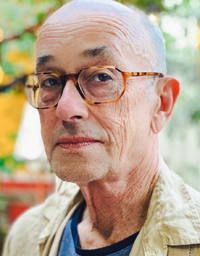
Jeff Spurrier is a writer living mostly in San Miguel. He cooks Asian after four years teaching in Japan, and grows edibles after three years of writing about gardens weekly for the Los Angeles Times. He and his wife Ann bought land here in the 1980s and built in 1995 when the print media ruled and paid accordingly. Together or individually they have covered Mexico for the New York Times, MTV Guides, Travel and Leisure, Bike Magazine, the Los Angeles Times (Travel, Home and Culture sections), Fortune, Connoisseur, Diversions and others. He has also written several books and won awards. The pair met in 1970 in Sierra Leone, West Africa. Their up-coming memoir of that time is Lorry to Kabala.
**************
*****
Please contribute to Lokkal,
SMA's online collective:
 ***
***
Discover Lokkal: Mission
**************
*****
Por favor contribuya a Lokkal,
Colectivo en línea de SMA:
 ***
***
Descubre Lokkal: Misión

Visit SMA's Social Network
Contact / Contactar