Sunset Hill School, Kansas City
Español
September 6, 2026
by Philip Gambone
Immediately after college, I moved to Kansas City to take up a teaching position at a private girls' high school. I had just turned twenty-two. My colleagues and the parents of my students welcomed me warmly, this young foreigner from the East Coast. They were full of civic pride and well-intentioned advice. There were three Kansas City legends that I should know, they told me: Arthur Bryant's Barbeque, the music of Charlie Parker, and a novel by Evan S. Connell called Mrs. Bridge.
Within a few months, I'd eaten at the restaurant of the "King of Ribs," whose legendary sauce made Arthur Bryant "the most renowned barbequer in history." In due course, I also sampled the savory saxophone bepop of the "Bird." But the novel? As a know-it-all college graduate, whose senior thesis had been on Shakespeare, I had no interest in reading what I assumed was a second-rate novel by a second-rate author set in a second-rate city. Dear reader, if you're wincing, you have every right to!
It wasn't until this year, when I came across a used copy of Mrs. Bridge that I decided to give Connell's novel a try. Happily, the years have tamed my snobbery. Mrs. Bridge bowled me over. The story of a well-off society family in Kansas City, the book magnificently captures the genteel and well-manicured emptiness of their lives, especially of the mother, India Bridge. As soon as I finished the novel, I set out to learn more about its author.
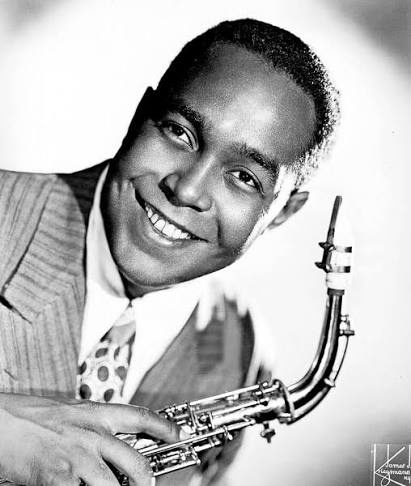
Charlie Parker
*
Born in Kansas City in 1924, Connell was a contemporary of John Updike and Philip Roth, two undisputed giants in American letters. Connell enjoyed the comfortable prosperity of an upper-middle-class family, not unlike the family he so masterfully invented for his novel and its sequel, Mr. Bridge.
As a boy, Connell loved the adventure books of Richard Halliburton. (See my "The 'Prince of Pilgrims' in Mexico," Lokkal, December 10, 2023.) When he was twelve, he came across a photo in the Kansas City Star of the Mayan fire god Chacmool. The image haunted him. Twenty years later, he wrote to a friend, "I tell you, ever since I was ten—maybe eleven—whenever it was I learned to read, and I saw an article about Chac Mool in Yucatan I've wanted to go there." In time, he would fulfill that dream.
During high school, Connell was on the track team, the debate club, and engineers club, though surprisingly he did not participate in any of the school's literary clubs. His classmates remembered him as both handsome and introverted. He dated girls from Sunset Hill, the very school where I ended up teaching thirty years later.
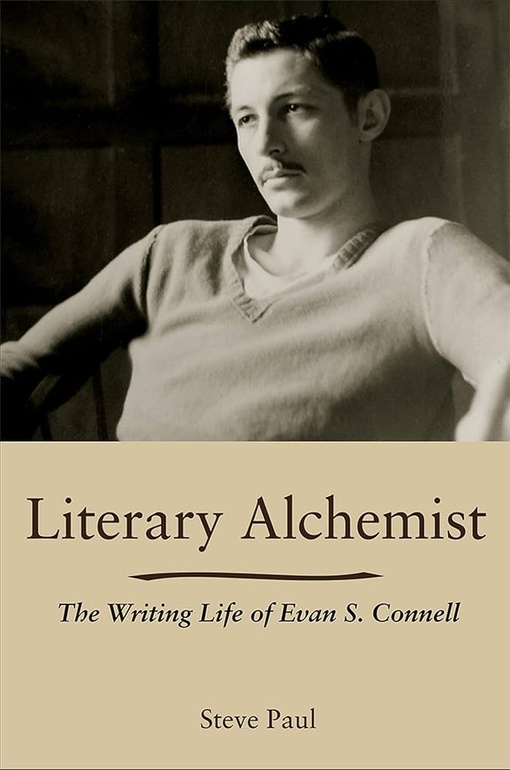
In 1941, Connell entered Dartmouth on a pre-med track. He got middling grades including C's in English. After two years at Dartmouth and with the U.S. at war, he applied for the U.S. Naval Air Corps. Though he never saw combat, flying gave Connell an escape from "the 'gilded saddle' of his boyhood," writes his biographer Steve Paul. In fact, the war changed everything for Connell. "If it hadn't been for World War II," he once said, "I would have graduated and gotten a job as a banker, and gotten married."
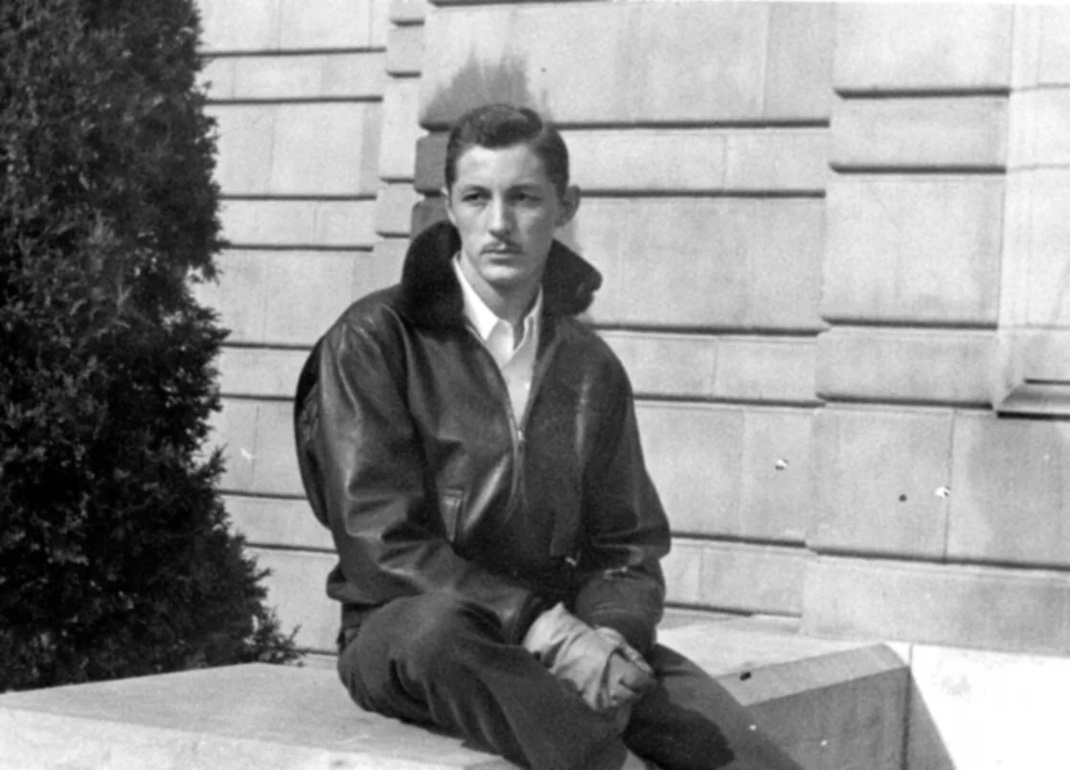
Connell at University of Kansas
*
After the War, Connell returned to Kansas City and enrolled at the University of Kansas, forty miles away. There he served as art director, writer, and illustrator for the campus humor magazine. He completed his bachelor's degree in the fall of 1947, a year in which he also published his first short story in a professional magazine. He was paid $35.
After what Paul calls "six restless years of self-discovery, geographical wandering, and persistent attempts to join the caravan of writers who filled American magazines and bookshelves with entertainment and human inspiration," Connell moved to San Francisco, where he worked on his Mrs. Bridge novel. Around this time, one of his most esteemed short stories, "The Fisherman from Chihuahua," appeared in The Paris Review, and was later included in Best American Short Stories, 1955.
While not set in Mexico, "The Fisherman from Chihuahua" is a Mexican story in the sense that it explores gringo attitudes toward Mexicans. It is set on the waterfront in Santa Cruz, California, in a Mexican restaurant owned by a guy named Pendleton. Though he doesn't speak Spanish, Pendleton serves up standard Mexican fare—tacos, frijoles, and enchiladas—"made arrogant with pepper." It's the off-season and few people come in, other than one of Pendleton's regulars, a short, fat Mexican with a face like a Toltec idol.
One evening, another Mexican follows "Toltec" into the restaurant. Handsome, tall, and dark—"almost black in the manner of a sweat-stained saddle"—this silent, mysterious man, dressed something like a dandy, is different from greasy, urine-smelling Toltec in every way. They sit at the counter and eat their dinner in silence, after which Toltec plays pinball while the tall one—we eventually learn his name is Damaso—smokes a cigarillo.
Suddenly, Damaso lifts his head and, with lips "peeled away from his teeth like those of a jaguar tearing meat," lets loose with a song that sounds like shrill screams. For the startled Pendleton, the song is "a memory of Moors, the ching of Arab cymbals, of rags and of running feet through all the market places of the East." Then, as unexpectedly as it began, Damaso's song ends and he falls silent again, sitting on his counter stool, looking ahead miserably.
The next night, Damaso repeats his impassioned performance, this time frightening a couple visiting from Iowa City. "Some woman must have hurt him dreadfully," the wife conjectures. The same scenario continues for several more nights, each time ending with Damaso silently gazing ahead, "as though he could see clear into some grief-stricken time." More customers begin to come into Pendleton's restaurant, apparently lured there by news of the strange and exotic behavior of this man who "howls like a god-damn crazy wolf." Then one night, Damaso disappears.
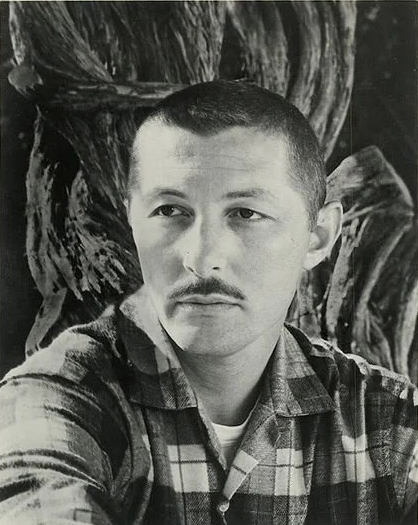
Evan S. Connell
*
As much as Pendleton has been annoyed by Damaso's rowdiness, he's curious about what has happened to the guy. He learns that Damaso is from Chihuahua—"one rough town," Toltec says. "It's noplace." And what about the howling, Pendleton asks. "Why the hell does he do it?" Toltec is not forthcoming with a lot of information, but what little he does say suggests that the world he and Damaso come from is deeper, darker, and more complex than mere tacos and enchiladas, a world Pendleton can perhaps never understand.
Connell went on to write a few other Mexican-themed stories, including "Cantinflas and the Cop," about the renowned Mexican actor, and the novel, The Connoisseur, about a man's obsession with pre-Columbian Mexican art, a passion Connell himself had developed. In 1969, he took a trip to Central and South America, hoping to find, he wrote to a friend, "a big Olmec jade in British Honduras." Most of the places he visited during the seven-week trip didn't appeal to him, but he fell in love with Mexico City's anthropological museum. He eventually amassed quite a collection of "cracked old Mexican pots and mutilated statuettes."
Connell made a second trip to Mexico in 1986, spending a week in Mazatlán and Puerto Vallarta. "Both places are steamy hot," he wrote to his sister, "which I don't enjoy, otherwise it was fun. Good food, beach, swimming pools, margaritas. Hotels are 50% gringo, Mexico still a bargain—Mazatlan bus is 8 [cents], and a good meal in a luxury hotel on the beach is six or eight dollars." "He loved travel and travelers," writes biographer Steve Paul, "and he found a resonant theme in the 'long desire' … in which explorers and seekers follow their instincts to see what unknown discoveries might appear around the next bend."
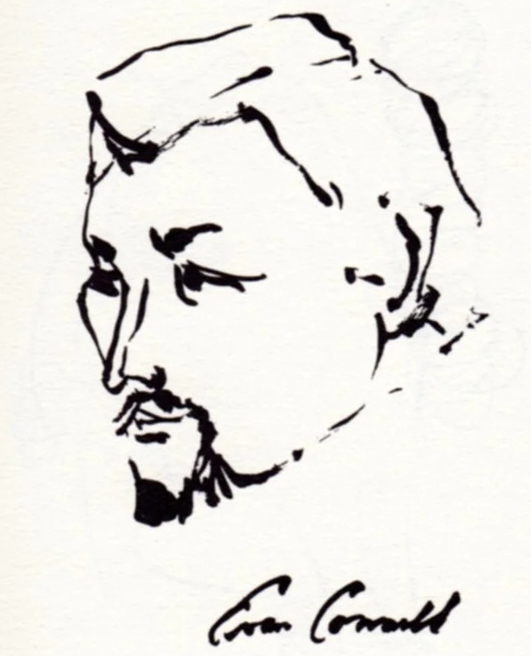
Self-portrait, 1973
*
Out of that passion, Connell began publishing essays about explorers and history. Two collections of these historical essays resulted. They are excellent—well researched, intelligent, witty, engagingly readable, and wonderfully quirky. As might be expected, several explore Mexican themes: bishop Diego de Landa's tragic burning of Mayan codices; crackpot theories about Mayan civilization and language (one nineteenth-century ethnographer claimed the language Jesus spoke was not Aramaic but Mayan!); a favorite Mexican adventure novel for boys that Connell read as a kid; and the early Spanish explorations of parts of Mexico by Cabeza de Vaca and Coronado. The essays "read like superb novels," wrote the San Francisco Examiner, which went on to say that Connell's essays establish him as "an important writer-poet-thinker with a truly original mind.
Connell died in 2013 at age 88. While he may not have reached the stature or renown of some of his contemporaries in American letters, his books, both fiction and nonfiction, are well worth seeking out. So much for my cavalier writing off of this author, who has been called the "best writer you've never heard of."
**************

Philip Gambone, a retired high school English teacher, also taught creative and expository writing at Harvard for twenty-eight years. For over a decade, his book reviews appeared regularly in The New York Times. Phil is the author of seven books. His memoir, As Far As I Can Tell: Finding My Father in World War II, was named one of the Best Books of 2020 by the Boston Globe. His new collection of short stories, Zigzag, was published last year by Rattling Good Yarns Press. His books are available through Amazon, Aurora Bookstore, and at "Tesoros," the bookshop at the Biblioteca.
**************
*****
Please contribute to Lokkal,
SMA's online collective:
 ***
***
Discover Lokkal: Mission

Visit SMA's Social Network
Contact / Contactar