September 13, 2026
by Dr. David Fialkoff, Editor / Publisher
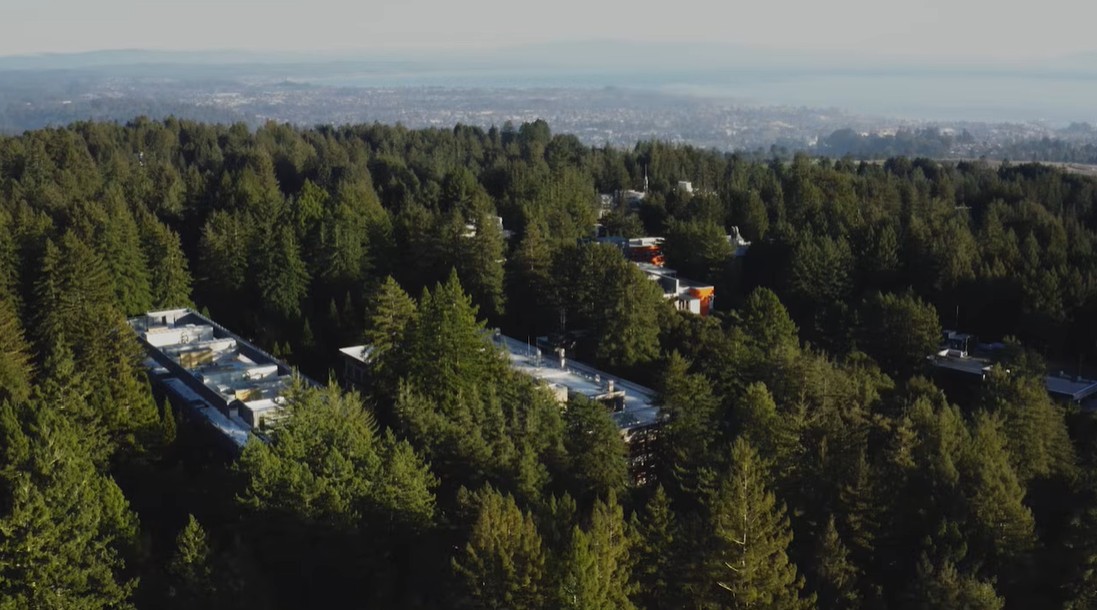
An hour and a half south of San Francisco, with Redwood groves and panoramic vistas of the Pacific Ocean, the University of California campus spreads like a fairy-land over the hillside above the already otherworldly town of Santa Cruz. At least that was the way it seemed to me at 22-years of age, when freshly-minted from my own university back east, I found myself visiting that coastal paradise, staying with some college chums who had established themselves there six months prior to my arrival.
In February of that year, 1979, I had taken advantage of an inexpensive Greyhound cross-country fare and gone west to visit two naturopathic medical schools (in Portland and Sonoma) with an eye to continuing my education. Those visits accomplished, when April arrived I found myself up on the UCSC ("Uncle Charley's Summer Camp") campus leading the Passover Seder for 30 students at the university's artsy College Five.
The Exodus from slavery to freedom joyfully commemorated, night passed in someone's dorm-room, my next morning's wanderings along academia's shaded paths led me to the deck of a rustic cafe. There I sat down at a wooden picnic table upon which already lay someone's thin paperback book.

Moments later, an older woman (Dotty was then all of 29-years-old) came out with a coffee and cookie and sat down by her book, looking me over as she did. Dotty, who was already then long-separated from her yet-dutiful husband, still resided, now alone, in a lovely two-storey married-student housing unit there on campus. Thus began the most enchanted romance of my life; you are only young once. If the town of Santa Cruz was my Shangrila, and the university was the crown on its head, then Dotty was the jewel in the crown.
Herb Caen observed about California, "It's not authentic, but it's original," and "It's not real, but it's really happening." A classmate of mine at the naturopathic college I would attend (I settled on the Sonoma school), Michael Holmes, a street savvy black man from Oakland, recounted how, in 1969, the police responding harshly during the Berkeley Free Speech movement, a friend grabbed him by the arm and said, "Come on, Michael. We're going to Santa Cruz, where the real hippies are."
That summer in 1979, after having lived with Dotty for three months (the view out her back windows of the Redwood forest floor was into another realm), I went back east to pack up and bring some things out to the forgotten town of Monte Rio, where I would be attending school that fall. There, on the Connecticut shore, I mentioned to my mother, who was herself a smoker, that the cigarettes that Dotty smoked, Gauloises, purer tobacco without all the chemical additives, smelled better than hers. At this she retorted, "You are just saying that because she is your squaw."

Mom might have been wrong in that particular (cigarettes without chemical additives do smell better), but she was correct in a larger, philosophical sense; beauty is according to its beholder, and our own shit doesn't stink. Attitude, our feelings, may not be everything, but our inner reaction is always our major leverage in any situation.
Meditation is the process of clearing the mind of thoughts, leaving the pond of consciousness undisturbed. But electroencephalograms (the machines that measure brain activity) reveal that even for seasoned meditators thoughts occur every ten seconds or so. Long before modern technology confirmed it, masters of meditation advised that this was so and counselled that the trick of success was not to follow those thoughts. While sitting on the pillow staring at a blank wall, the thought "I am hungry" arises. But let it pass unattended. Do not start wondering what will be served for lunch.
Thoughts and feelings being closely related phenomena, virtually indistinguishable from each other, recently it occured to me that not paying attention to my feelings might also be a good strategy for a calmer, more enlightened life. I have been especially motivated towards seeking such a solution because my feelings have been all over the place, passing before me in a dizzying array.
It is not that I am not happy. I am content many hours each day. It is that my happiness is frequently swept away, mysteriously or by things which, in hindsight, don't matter.
Most obviously affecting my happiness is my attitude towards my neighbor playing his over-amplified ranchero music. As we've become friends he's turned it down, multiple days at a time passing where I have to really listen to hear it at all. But then sometimes, when he gets good and drunk, he lets loose, blaring his stereo into the afternoon and night, although even then not so loudly nor so long as he did previously. The really strange thing is that after a few days of not hearing his music, I miss it. In a classic case of too much or not enough, I am discontented either way.
On arriving to live in San Miguel 15 years ago, I quickly observed that getting upset because your neighbor's dog wakes you up at 3am does not help you fall back asleep. Also, relatedly: when it's your own dog barking, you barely wake up. Just so, my growing friendship with my neighbor renders his ranchero music less offensive to me. Now that I know him, it doesn't get so far under my skin.

Yes, I have been having some success calming my outwardly directed thoughts and feelings. But how I think and feel about myself is another, slipperier matter. While I count my blessings, and have numerous reasons to be very grateful, I find myself plunging into depression, short periods of pessimism and dark dissatisfaction almost every day.
The meditator staring at a blank wall achieves success by not being interested in the thoughts that arise, by not identifying with the mind that thinks them. He hears the dog barking, the ranchero blaring, and lets it go, falling back into calmness. But the pond of my consciousness is choppy with ripples and waves, as equilibrium eludes me. The gauge that I use, far too sensitive for what is being measured, swings wildly back and forth. My moods go up and down, hour by hour.
My new strategy in this regard is one of embrace. And having given up the contest, the war, I have some peace in resignation. After years (decades) of trying to square my emotional circle, admitting defeat has paradoxically provided me with something that approximates success, a yin that complements the meditator's yang.

Since I am unable to become uninterested in, unmoved by, indifferent to my shifting feelings, I have settled for embracing the emotional rise and fall. Failing the meditator's disassociation of consciousness, I claim the disequilibrium of my mind. It may not be the deepest me, my spiritual core, but on a very deep and personal level the psychic drama is mine.
I am lucky to share this house with my second-floor neighbor. Staying up later than I do, sometimes she has her kitchen light on when I am already in bed. Then, when I turn out my reading light, hers, reflecting down off the small back patio's wall, faintly illuminates my bed. I could get a curtain, but I like the glow.
As with the French working class cigarettes that Dotty smoked, paradoxically, adopting the problem, making it mine, stops it from being a problem. Owning the bother goes a long way to stopping the bothering.

The music I was listening to while writing this article ran out some time ago, and I did not put on another selection. Then, because the cat was scratching to come in through it, I opened the window that, along with my music, had been successfully blocking my neighbor's ranchero. Now at 11pm, with the cat lying on his chair in front of the open window I suddenly realize that at least a quarter hour has passed with the cool of the night and my neighbor's music flowing in unopposed, while I have continued, undisturbed, writing meditatively. I am not yet tapping my toes to my neighbor's music, but I am moving in that direction.